"The Party told you to reject the evidence of your eyes and ears. It was their final, most essential command."
I remember reading 1984 when I was a kid and enjoying it, at no point did I think it was more than sci-fi though. I suppose it goes to show how much we took for granted the last 80+ years.
It also makes me respect Orwell so much more. Which was already very high based on how he makes tea. How was he able to see you presciently?
Like a lot of 'sci-fi' it's really about the time it was written in, extrapolated a little. Orwell came up with 1984 in around 1943 when Hitler and Stalin were hard at it.
If you haven't already seen it, I highly recommend the documentary film "Orwell: 2+2=5", it's considerably better than its IMDb rating would suggest and frames a lot of his writing around recent / current events. It also gives a little insight into his prescience.
Does anyone have a motion jump plugin they use with neovim they can recommend? I used to use a plugin where you could just to a given character in a given buffer, but I can’t remember the name or if it even works with neovim.
you press a keybind and then press one or two characters , all instances of that character pair in the viewport will get get a hint (a characteror two in highlight) , hit those two hint keys and the cursor jumps to that location
its incredibly fast to navigate around your viewport with this.
+1 Leap takes a second to get used to but I love it so much. Even if you don't get to the precise character you want, you can get so close enough that normal motion commands get you the rest of the way.
I do change the bindings, tho. I have 's' leap forwards and 'S' leap backwards.
Like the nth character in the current buffer? I believe vim has that built-in: `<n>go`. I think `<n><space>` will do it relative to your current position.
I really enjoyed your article. In regard to the parent comment: it’s also enough to say “I enjoy this and this is how I want to spend my time”. So what if it’s reinventing the wheel - the act of learning and crafting itself can be immensely satisfying regardless of the end result.
I came at your article from a slightly different perspective. Rubio monocoat is quite expensive, especially if you’re trying to run a business selling products coated in it. You’re probably already aware, but I think base Rubio is essentially oil + carnauba + a small amount of paraffin. I make large pieces of furniture, and finishing with Rubio can go through multiple cans! So making my own finish has become a priority. That’s not even accounting for Blacktail Studio coating too.
I think this article is correct in spirit but a little disingenuous in parts. Would it not be more fair to blame Russia as the primary cause for the deaths in Ukraine due to the collapsing health care system rather than USAID subsequently intervening to stop easily preventable deaths.
I say this not to defend DOGE but rather to emphasize that we should always make abundantly clear the humanitarian disaster in Ukraine lies solely with Putin
I wouldn't characterize that as “incredible commercial potential”. And especially in the case of translation, you save some of money, but also get poorer quality.
Speaking from experience I was recently in a tiny fountain pen shop in Sendai[0] where the owner doesn’t speak English and I don’t speak Japanese but we were able to talk for an hour or more about fountain pens and tomoe river paper alternatives using Google translate’s dialogue feature.
Maybe not massive commercial potential but it was pretty amazing and reminded me a bit of the Babel fish which use to seem like impossible sci-fi
I hope this win signals (to both parties) that voters are receptive and will get engaged when a clear message is presented about cost of living and quality of life issues. Some of which are taken for granted in most other western countries.
I’m no political wonk, and I’m curious what others with more insight might say about his ability to fund and implement his polices.
I’m reminided of Obama and his hopeful message but he was mostly stymied on policy goals. Specifically Obamacare as an example ended up being watered down
Only speaking for myself (also not a political wonk): I do not expect Mamdani to be able to enact all of his policies. Not because of money but because of political opposition from the powerful.
I felt the same about Bernie and Medicare for all. We have the money to do it, but the powerful will not let it happen.
However: that doesn’t mean we should elect politicians that won’t even try to make these things happen. It’s important to have a North Star to shoot for, to move the Overton window of what’s worth discussing and to keep an eye on what political machinations block it from happening. I will never vote for a politician who pre-compromises with an imagined opposition, because that tells me they have a different North Star than I do in the first place.
Absolutely, elect enough Mamdani’s and the powerful will not be able to stop the changes. It’s the expectation that a single Mamdani or Sanders can fix much that has lead to extreme apathy from much of the electorate.
There exists a power that no amount of political power will bend infinitely. Eventually, reality will stop bending and bounce back, and no amount of populists will be able to hold the backlash.
That said, I'm sure there are lots of good things Mamdani can do that are not in conflict with reality.
There are plenty of examples in the world to turn to to learn what happens when you get a critical Mamdani-Sanders mass. They tend to be rather unpleasant examples which are usually done away with using a variety on the "true socialism has never been tried" claim. No, Mamdani will not be able to turn New York into Caracas just yet. Let's all hope that nobody will be able to accomplish this.
There's no reason we should pay 2x what everyone else does, and live 10 years less (for healthcare).
We could accept a good deal of socialism into our system and see only benefits; there are a number of things which should not be profit-motive driven at all.
Most of the basic medical research is funded by tax dollars.
Also, are you sure the bureaucracy isn't exactly the point? If you're too sick to fight off a denial and die, they keep the money.
I think we're subsidizing Wall Street's profits with our garbage system, but the sooner people realize our system is totally failed maybe we can knock it down and do something else.
Obama was hated by San Franciscan progressives because he came in with all of these promises and then backtracked on almost all of them. He basically turned into a Bush-lite, and he even maintained every single one of Bush's policies as well as deadlines. For example, he talked a lot about abortion and then immediately said it wasn't a priority for him once he got into office. He never closed Guantanamo and in both elections said he didn't support gay marriage.
ACA is a failure and the only thing it did was make it mandatory and unaffordable at the same time. Income inequality skyrocketed under him as well. Anyone who wasn't rich enough to afford some sort of asset like stocks or real estate was left behind and is now suffering.
I'll give you one reason, among many, it wasn't a failure. It made it illegal to deny people health insurance coverage based on pre existing conditions. That was a big step forward in a broken system to restore some humanity to the system.
I'll throw in extending parental coverage to 26. I have a sibling with type 1 diabetes and it's impossible for me to describe the positive impact those two provisions have had on their life.
Just because a piece of a legislation includes painful compromises doesn't mean we should ignore its huge wins.
That has in part become the issue in modern politics, any compromise no matter how minor is seen as a loss.
Neither sides most ardent supporters was willing to accept anything that looked like a compromise and so you end up with things as they are now, with someone where compromise shouldn’t happen because there is no practical compromise.
US politics has collapsed down to the scorpion and the frog.
> That has in part become the issue in modern politics, any compromise no matter how minor is seen as a loss.
Because to those who are now getting hit with huge insurance bills as a direct effect of that compromise, and may have to go without insurance at all, it is a loss.
And nothing has been done to address the underlying reasons and bad incentives that have led to this outcome. Which is also a failure.
>Because to those who are now getting hit with huge insurance bills as a direct effect of that compromise, and may have to go without insurance at all, it is a loss.
Because the Republicans slashed the premium tax credits to pay for tax cuts for rich people.
The fact Republicans wouldn't repeal ACA but would repeal the tax credits just shows both sides prefer it to be broken. Democrats could shove through enough votes to repeal ACA to make health insurance cheaper for lower-risk groups without tax credits; Republicans could re-instate tax credits. Instead we are stuck in this bastardized half-socialized model that gets the worst of all worlds.
Politics in the USA has basically gridlocked to it being much cheaper to shit on the other guy than to fix things. In two party system you can actually win by only making the other guy look worse, which only requires breaking things in a way that can be pointed at the other guy, somehow we are stuck in this local minima.
> The fact Republicans wouldn't repeal ACA but would repeal the tax credits just shows both sides prefer it to be broken.
It really doesn't. All it shows is that team R is following it's usual playbook of "The government is broken - elect me, and I'll make sure of it."
> Democrats could shove through enough votes to repeal ACA to make health insurance cheaper for lower-risk groups without tax credits
The only true part of that statement is that they could get enough votes to repeal it without replacement. But it wouldn't make anything cheaper.
The only way insurance would get cheaper is if it went back to not covering pre-existing conditions, which is contrary to the whole point of insurance.
It's wild that you're blaming the dems for... Not repealing without replacement, and pushing us straight into a completely broken shitshow?
> lower-risk groups
Oh, I understand now. You're are explicitly unhappy that the dems aren't agreeing to your plan to massively hike rates for anyone with a pre-exisiting condition, or literally any complication that would get them discriminated against prior to the ACA.
Sorry, that's a shitty thing for you to be fighting for, and they are in the right to not do it.
ACA without subsidies is a regressive tax due to the price differential cap from young to old. It's a wealth transfer from younger/poorer people to older/wealthier people still on private insurance. Health risks track most closely with being older and thus on average wealthier.
It's just the people that have tricked you, have used statistical correlation and cover of pre-existing condition to hide the fact what they're actually doing is robbing from the poorer to subsidize the richer.
It's a wealth transfer from healthy people to sick people. That's the whole point of health insurance.
Older people are sicker and older people are wealthier, but older sicker people on ACA plans are not wealthier than the median.
It's a sleight of hand to collate the two (old-rich and old-sick), but sure, if this is such a large concern, the solution is adding means testing, not just leaving sick people with care they can't afford.
Due to the way ACA works (disallows pre-existing condition discrimination) it's young-average[for age] vs old-overage[for age] with a cap on the ratio. Which functions as a regressive wealth transfer when the premium subsidies get gutted.
This is nonsense. You have Democrats working to get more healthcare to more people, via increased taxation, and you are blaming them for Republicans holding them back.
It's both of their faults. Blaming one party or the other is what got us into this this hole and what keeps making it deeper.
The ACA was passed in 2014. Congress (both Republicans and Democrats) have had since then to get off their butts and do something to fix the serious flaws it came with. Flaws that made insurance too unaffordable for millions of people so they had to risk it and go uninsured.
    Years      Pres  Senate     House     SC
    2013-2015   D    D(+8)      R(+33)    R(+1)
    2015-2017   D    R(+10)     R(+59)    -(+0)
    2017-2019   R    R(+4)      R(+47)    R(+1)
    2019-2021   R    R(+8)      D(+35)    R(+1)
    2021-2023   D    D(+0.5)    D(+9)     R(+3)
    2023-2025   D    D(+2)      R(+9)     R(+3)
    2025-2027   R    R(+8)      R(+4)     R(+3)
When exactly were the democrats supposed to "fix" the ACA without compromising?
Dems haven't had solid control of all three legislative bodies since it passed, and Republicans have vocally made it their priority to oppose the ACA in any way possible, and are unwilling to give an inch. Even the hair thin margin post-2020 was unusable for this due to the handful of DINOs that all needed to vote in lockstep.
Meanwhile, R's had unilateral control of the government for four straight years, and they voted to make everyone's lives worse, as you're complaining about. They said over and over they were going to repeal it, like you suggest, and then turned around and made it obvious that was a blatant lie. Because despite its flaws, even the gutted ACA is still wildly popular and a vast improvement over the previous status quo. (It turns out keeping workers healthy is critical for the economy)
This is not a symmetric problem. It really is one party making it worse.
> When exactly were the democrats supposed to "fix" the ACA without compromising?
The Democrats did have full control when they first passed the ACA and they ended up getting in their own way.
But I never said that the Democrats were supposed to fix it on their own. I said both parties are to blame.
It shouldn't require one team have full control for something to happen. That's the real issue. They refuse to work together, and somehow this gets them more support (votes). Both sides. Total shit show.
> The Democrats did have full control when they first passed the ACA and they ended up getting in their own way.
They didn’t. They had to heavily compromise with an Independent.
> After the Finance Committee vote on October 15, negotiations turned to moderate Democrats. Senate Majority Leader Harry Reid focused on satisfying centrists. The holdouts came down to Joe Lieberman of Connecticut, an independent who caucused with Democrats, and conservative Nebraska Democrat Ben Nelson. Lieberman's demand that the bill not include a public option[161][175] was met,[176]
> But I never said that the Democrats were supposed to fix it on their own. I said both parties are to blame.
This doesn’t make any sense, because 99% of Dems have tried to increase access to healthcare, and 99.9% of Repubs have tried to reduce access to healthcare. The sole exception being when McCain provided his vote to not repeal ACA.
> This doesn’t make any sense, because 99% of Dems have tried to increase access to healthcare, and 99.9% of Repubs have tried to reduce access to healthcare.
This is the problem. All conversations about policy lead to "it's the Republicans fault" or "it's the Democrats fault", never about the actual substance of the issue or any attempts to fix the underlying problems.
The fact that both parties think they're "winning the game" right now by shutting down the government is a joke.
I did point out the actual substance of the issue, Repubs don’t want to expand access to healthcare as it would require a wealth transfer, hence they have opposed all efforts.
The Dems (by and large) bring up bills to provide paid parental leave, increase minimum salaries for overtime exempt workers, fund education, increase access to healthcare, and here you are saying they don’t focus on the substance of the actual issues, whatever that means. Meanwhile, the only thing Repubs have done is cut taxes, and block all those efforts.
> The fact that both parties think they're "winning the game" right now by shutting down the government is a joke.
The fact that you would even bring up both parties when one has control of all 3 branches of government is a joke.
And now the US is having the longest govt shutdown ever, millions of people losing their food stamps, millions of people potentially seeing their Healthcare costs skyrocket, and neither side seems willing to compromise, with the GOP blaming the democrats for the shutdown, which really is not productive.
The original plan was for single-payer, but the Blue Dog democrats fucked it up, because they didn't want to lose their seats, so they pushed for a compromise solution.
They then all lost their seats to tea-party and proto-maga types who were screeching about FEMA internment camps and death panels killing grandma.
Absolutely. We have this bad habit of hating policies and politicians that make things 10% as good at they tried to do, but shrugging and ignoring politicians and policies that actively make our lives worse. Perfect is ideal. Better than we started with is still better.
The real problem is not politicians per se, its lobbyists. If you want blame the shortcomings of the ACA on anyone blame the insurance lobby. We need to get rid of lobbyists and put in term limits. period. It doesnt matter what party you support neither of them are looking out for your best interests. We should vote for people based on their individual beliefs and policies and not have to worry about what they are going to do in office because they get threatened by their party to vote this way or that way and hold the line ebcause if they dont they will primary you. If we have term limites, getting primaried doesnt matter as much anymore. It shouldnt be a career to be in DC. It should be a public service. The sooner we all realize this and quit picking a tribe the sooner things will get better.
In my circles of news and friends, plenty of people are actively hating against politicians and policies that make our lives worse, or who spout dangerous rhetoric (and do nothing else but that).
Usually it's just Trump, but my local congressman gets a lot of hate too.
Sometimes it is just "orange man bad" but cmon building an opulent ballroom and remodeling a bathroom in marble and having a grand old Halloween party while millions of Americans have no idea how they're gonna have their next meal is some Marie Antoinette shit. Sure that's not really a "policy" per se but it sure makes it look like he doesn't give a shit about policies that actually help the American people.
Had the ACA gone further and actually provided a single payer system, I'd consider the block on denials based on preexisting conditions a win.
As it is we have a system of private "insurance" that can't consider the risk level of those being insured. All that means is the companies charge everyone else more to subsidize the cost of those who are more at risk.
That bastardizes the whole point of private insurance. I don't want to pay more for my car insurance because the person next door bought a Porsche and the insurance company isn't legally allowed to consider the cost of repairing a Porsche.
Don't get me wrong, morally I don't want to see anyone denied health insurance. I also don't want this half-in half-out program where its no longer really private health insurance nor is it a centralized single payer system.
Health insurance that can discriminate against people based on pre-existing conditions rapidly becomes health insurance you can’t use. Sure, it’ll be cheaper for a few years. Then, with non-negligible probability, you’ll develop a serious condition. At that point the cost becomes anywhere between “high” and “infinite”. If the point is just “private insurance is dumb”, sure, I mostly agree.
It isn't insurance if the provider can't consider risk factors for the policy though.
If we don't want people's health to be dependent on insurance that's fine, but we should replace it with a system that isn't based on risk at all rather than bastardizing something that still sort of looks like risk-based insurance.
> It isn't insurance if the provider can't consider risk factors for the policy though.
Insurers are welcome to consider risk factors... for populations in aggregate.
It turns their actuarial models into population-subset models instead of individual models.
Which is easily the most "fair" (to individuals) option.
Allowing insurers to consider individual risk factors (preexisting conditions, genetics, etc.) would make the advertising data mining industry seem quaint. And I don't think any American wants to live in that world.
So we can talk about whether insurers should be able to offer lifestyle incentives (yes!), preventative care incentives (yes!), and be backed by catastrophic reinsurers (like mortgages, maybe)... but enrolling people blindly is one of the best things ACA did.
(Unless one happens to be young, rich, family-less, healthy, and have no moral compunction about fucking others over for ones own benefit)
Also, important unremarked benefit of ACA -- capping maximum insurer "administration" costs.
Firsthand from inside the industry as it was implemented, I can tell you that drove efficiency improvements inside insurers, as they couldn't bill for broken, slow, manual processes in additional premiums.
Granted, it caused other problems (attempts to self-deal and harvest profits through quasi-related provider / pharmacy entities or Medicare Advantage), but it did focus insurers on being efficient facilitators.
Where do you draw the line on individual vs population subset risk levels?
The insurer must decide what subset (s) of the population a person fits into, preexisting conditions are a factor that would almost certainly weigh heavily on the risk factor for that subset.
Are you proposing that it is irrelevant with regards to an individual's risk if they have diabetes, for example? Or are you simply arguing that we aren't comfortable with the costs it would require for an individual with diabetes to get health insurance if that factor is considered?
I fall into the latter personally and would prefer a real solution to health care that isn't some form of insurance. As long as it is insurance, though, the former seems impractical.
Insurance is a simple business: collect enough money so that in the long run you earn more than you pay out.
American health insurance generally does this in two broad ways. (1) Insure a large enough population group that averages hold and you can price based on actuarial/statistical probabilities. (2) Negotiate deals with provider groups so that they get something they want and you can bound their prices.
Neither of those things are contingent on knowing anything about individuals.
Insurers will generally pick {more randomly-selected customers} over {knowing more about each customer} any day of the week.
Maybe I'm misreading you, but you seem to want insurance that's accurately priced to exactly your circumstances and health (say, how custom high value property insurance is sold).
That doesn't solve insurer's concentrated tail risk problem though, and it means you're fucked if you ever develop a complicated condition, like cancer.
I have multiple actuaries in my family that work primarily in the insurance industry. I can assure you they are tasked with determining individual risk rather than risk of an entire pool of people with no regard for the individual.
It's also quite convenient that the contributor group (youngest adults with very little time spent to acquire wealth) are basically subsidizing the richest groups (older adults but still young enough to be on private health care).
It's effectively a regressive tax, transfer from the poorer to the richer, due to the way ACA caps the price spread.
Your neighbor buying a Porsche was a choice they made. Nobody chooses to have a pre-existing condition. We're also talking about a luxury vs simple survival. I am not sure how you can compare them.
What insurers in some countries do is charge higher premiums for people who engage in high-risk behaviors, like smoking, drinking, or extreme sports. Those are all choices so it seems fair to charge a sin tax for them. Higher premiums would discourage risky behavior and improve the health of the country as a whole.
Are you sure about that? Plenty of medical conditions are the result, at least in part, of decisions a person makes.
A person with lung cancer seeking health care could very well have smokes for decades. A person with type 2 diabetes may very well have eaten poorly for decades. Obviously those aren't always directly linked to life choices, but they often can be.
Nobody _intentionally_ signs up for a pre-existing condition.
Whether a past action caused a condition, sure, but where do you draw the line? If you become disabled in a car accident, despite knowing full well that accidents can happen, should you be denied insurance in future because you did something risky? What if you were a smoker for the decades when cigarette companies suppressed the research about how bad it was?
Also, how would you even prove that a condition was self-inflicted? My old dog had lung cancer despite (to my knowledge) never smoking (and nor did anyone else in the household). I lost a close family member to liver cancer despite being a lifelong teetotaller, but how would anyone even prove that? The moment you start means-testing people, you're adding a whole lot of extra cost to taxpayers and stress for patients.
Denying healthcare to the most vulnerable members of society is simply cruel. It is kicking them when they're down. Having the condition is punishment enough. We can do better than that.
That's simple though. For insurance the line is drawn at how expensive it will likely be for a private company to insure you over the course of your policy.
It doesn't matter if someone intended for a decision to lead to higher risk, the only question at the point of signing an insurance policy is how risky that private company views the policy.
The whole insurance debate often feels misplaced. Many people simply don't want healthcare to depend on an insurance system. And I get that, I also would rather people be able to get the care they need regardless of their individual risk.
As long as we have anything claiming to be insurance that simply isn't how the system works. If the game is insurance the insurer should be able to consider individual risk. If we don't want that, build a system that isn't dependent on an insurance scheme at all.
>As it is we have a system of private "insurance" that can't consider the risk level of those being insured. All that means is the companies charge everyone else more to subsidize the cost of those who are more at risk.
That's what social insurance/welfare systems do throughout the developed world -- make sure everyone's covered at some minimal level even if it wouldn't be profitable when evaluated individually; it's just using insurance companies as an arm of the state to pull it off.
If, as it seems, your only objection is to labeling it "insurance", that's not a substantive objection to the merit of the policy, only how it's marketed.
What you're describing isn't insurance. There's nothing wrong with that and maybe (probably) its better than what the US has today, but if it claims to be insurance than it must be allowing the insurer to consider the risk of each policy it writes.
Not private insurance. We all pay into it obviously, but our individual rates in an insurance market are based on individual risk. My rate is only impacted by others in a relative sense, if I'm more risky than someone else I pay more.
With preexisting conditions off the table, my rates may go up only because someone else is a higher risk and the insurance company can't charge them for it.
I said this in another post, but morally I don't want others to be denied health care. I don't want health insurance at all in that case because insurance implies that you pay more for riskier coverage.
The purpose of insurance is to mitigate the risk of a very costly but unlikely outcome by paying a smaller amount over time, thereby spreading that risk among those of similar risk.
Not being able to consider individual risk means that insurance makes no sense for those with a low risk profiles, because they’re in the same cohort as those who will _definitely_ file claims.
Cohorts are based off of your employer, because we, inexplicably, tied health insurance to your employer. If you work for a very young and hip company then no, your cohort might not file claims.
There's levels of broken-ness to healthcare in the US. Even if you allow health insurance to discriminate based on health conditions, it will still be broken in other ways.
That's one way, true. I've mostly been considering the ACA here and those getting coverage that can't get it through an employer.
Employer health insurance rates fan still get wonky for small businesses though. It probably can't happen today, but I was at a small business where everyone's rates went up shortly after one person was diagnosed with cancer and another one or two with diabetes.
That is an example of it not really being individual insurance though. The insurance company is just lumping the employees together and setting rates based on the relative risk of the whole group, not dissimilar from getting an individual policy where the rates are based on a group of one.
How do you propose we address adverse selection in insurance markets then? That's the part you're overlooking and making you go "Huh?". It's clear to everyone else.
Health insurance is intended to mitigate the risk of unexpected high costs, not pay for your normal healthcare.
You're thinking of a healthcare _plan_. Trying to make the insurance model fit where it doesn't work is the root of the vast majority of our issues in the US.
How do you address adverse selection then? There's no private insurance where you don't address adverse selection. Either you force everyone to have coverage: ie car insurance in US or universal health insurance systems or you force them to get insured in groups (US employer based insurance), or you accept outrageously expensive rates for it.
Healthcare already being expensive doesn't make it amenable to that last option unlike insuring your laptop where you might be okay paying 2-5x the expected loss for peace of mind. Criticizing the method of addressing adverse selection is fine, but not the existence of it. You need something. There's no such thing as completely free market of health insurance. Any economist can easily explain this to you.
Yes, either we have a risk-based insurance system or we have a single-payer system that isn't insurance at all. Being stuck in the middle is worse than both extremes in this case.
I'm not sure if it's in contention, but efficiency is also important. Life isn't an optimization for health care. At the middle class and below, people are already spending most their earnings on essentials.
Maybe you can alter healthcare so people are paying through the nose (either through highly regulated private entities coupled with incentives/mandates, or through taxes) but more people are covered, and so now they are less able to afford housing, good education, healthy foods, child care, and other stuff. Then they are not necessarily better off.
It's an analogy. They are not comparing the worth of a human being to a car. They're saying that someone else's high risk should not increase your premium.
I stongly disagree with the premise that someone else's high risk should not increase your premium. How do you control your insurer? How do you know who's in their pool?
Why should your premium be tied to someone else's risk? There will always be some level of connection, the insurer has to stay in business, but that's very different.
Without preexisting conditions your premiums go up only because they can't charge the higher risk individual for that risk. That is no longer insurance at least at the individual level - you're effectively being asked to vouch for, and pay for, someone you never met.
> you're effectively being asked to vouch for, and pay for, someone you never met.
That is the basic premise of insurance. Collectivized risk. That you disagree with a specific detail in the implementation and that part, and that part only is vouching for someone else is undermining your point, not reinforcing it.
Everyone in the developed world has injected government heavily into healthcare, because its the lynchpin of a healthy and efficient workforce. That's the real solution.
No, it isn't. You'd have to define "developed world" here to make your argument more clear, but more importantly you'd have to define insurance in general if the government is stepping in to control those markets.
If we just want healthcare to be covered for the entire population that's fine, but don't call it insurance.
They can't deny coverage for pre-existing conditions anymore, but insurers still have hundreds of other ways to avoid paying.
There's no silver lining in the U.S. healthcare system -- it's built to exhaust, confuse, and bankrupt patients. And it's only gotten worse in recent years. (Will only get worse with the addition of more AI.)
Joe Lieberman, a supposed Democrat, killed any real chance for reform we had in our generation. He then left Congress and quickly died -- his legacy is the broken healthcare system we have today, totally rigged against the very patients it's supposed to serve.
Joe Lieberman and basically every Republican ever, for decades.
And the Republicans on the Supreme Court that hobbled what the Democrats managed to narrowly get through the political process.
But sure, direct all the anger for that towards Democrats, that will result in better Healthcare any day now. I hear Trump has concepts of a plan that he's been working on for over a decade that he'll let us know about in just 2 weeks.
I'm so tired of "this plan wasn't perfect, it failed. Democrats suck".
And meanwhile the republican plan was to do nothing or actively make things worse than ignoring the problem. Why are some people seemingly hardwired to just blame democrats for any or everything? Because the plans they have don't immediately benefit them, the middle class person who was never down on their luck?
Even then, I fail to think of any policy that legitmately benefits the middle class either. Did abortion bans improve your quality of life? Do immigration raids help your 401k? Did that cut to EV credits get you better public transit?
> Murc’s Law is typically phrased as: "the widespread assumption that only Democrats have any agency or causal influence over American politics".[5] [6] It reflects a perceived journalistic double standard, where Democrats are held responsible for political outcomes regardless of context, whereas Republican obstruction or extremism is treated as a given. This framing, critics argue, absolves Republicans of responsibility and creates an unbalanced political narrative.
Like half this sub-thread is driving me insane. The deep hatred of Democrats (for decades) from the left is very frustrating to me. They may not be as left-wing as those people might like but they're in fact not nearly as bad as the Republicans.
This is a bit of an aside, but why isn't medical tourism more popular in the US? If you could set aside a couple tens of thousands of dollars, as a rainy day fund, you could get close to the very best possible care for even serious conditions from countries that have highly developed medical tourism sectors.
Granted, I acknowledge, that the US will likely still provide better care at the absolute high end, and asking most people to save that much can be quite a tall order, but from what I gather, a lot of people either bankrupt themselves, and end up paying much more than that and/or receive substandard care for conditions where treatment regime is established like treatable forms of cancer or congestive heart failure.
I remember Trump blasting Obama about Medicare, and proposing to 'open up' the system, introducing competition to drive prices down instead (which is the real problem of the US system, socially subsidizing it is just a bandaid fix imo). I guess not much has come off that.
The sort of people who can set aside a couple tens of thousands of dollars are also the sort of people who probably have good health insurance through their job. Generally, the US's healthcare problems _mostly_ impact low to middle income people, and they usually can't just magic up 30k or so.
100%. I have known a couple of people that did some form of "medical tourism", mostly for expensive dental work. In both cases they did some form of tech contract work as a sole proprietorship and bought their own health insurance (not through a partner). The overlap of people who can save up thousands of dollars for treatment abroad and have poor health insurance is probably not too large.
There are a lot of misunderstandings in this post. I'll try to explain a few of them, which maybe can help realign your whole understanding.
For starters, American insurance has a "maximum out-of-pocket" amount, which means the maximum you can possibly pay for healthcare costs. My plan, from just a regular unknown company doing boring things, has a maximum out of pocket of $5k for an individual. So there's no scenario where I'd ever benefit from spending "a couple tens of thousands of dollars" because even if I spend the whole year in an ICU bed at a cost of millions of dollars to the hospital, I only pay $5,000.
Also, "a lot of people either bankrupt themselves, and end up paying much more than that" doesn't make sense. Declaring bankruptcy means you don't pay the debt, you wouldn't pay a lot AND declare bankruptcy. You'd see the amount was too much to pay, declare bankruptcy, and have the debt wiped out.
Keep in mind that millions of Americans have essentially no assets that aren't protected in a bankruptcy (car, home and retirement accounts are generally safe). It's not like millionaires are going bankrupt from medical costs, it's people who had nothing to begin with declaring bankruptcy when they got hurt while uninsured and going back to zero (instead of negative).
The real problem of the US system isn't the subsidies for the poor, it's the opaque, convoluted billing system between insurance companies, pharmacy benefit managers, and providers. Billions of dollars are siphoned out of the system as profit to insurers and hundreds of millions are wasted on salaries for the bureaucracy of managing the billing system.
> Declaring bankruptcy means you don't pay the debt, you wouldn't pay a lot AND declare bankruptcy. You'd see the amount was too much to pay, declare bankruptcy, and have the debt wiped out.
Bankruptcy isn't a magic get out of debt button. First you have to prove your inability to pay, which generally means not having much in the way of assets. So you probably have to spend a significant amount of money on the debt before bankruptcy is even an option. Then once you have successfully declared bankruptcy it means, aside from a few classes of protected assets (e.x. your primary residence if your sufficiently lucky to be a homeowner) your creditors get to divy up what you have left amongst themselves. THEN the debt is wiped away. It's a last resort that keeps every penny you earn for the rest of your life from going to creditors, not a way to walk away with your assets and lifestyle intact.
No, what made it unaffordable was scrapping the penalty on not having health insurance. If you force health insurance to cover everyone then you also need to force everyone to have health insurance to keep the system balanced. One way to do that is have everyone automatically covered in a public system: rejected. Another way is to tell people they don’t have to sign up for health insurance but they do have to pay into the system.
Obama care was not a Democratic win it was another Republican win in a long list of Republican wins, where the dems tried to work with the republicans in good faith and implemented their policies for them. Sadly they realised to late that you should never work with right wing fascists because if you give those people your hand they will take the whole arm.
No that is a huge failure. That is perhaps the biggest failure of Obamacare.
That means I, as someone with healthy lifestyle habits, has to pay largely the same premium as someone who smokes, is obese, and doesn't exercise. And sure enough, life expectancy in the US immediately stalled after the law's implementation: https://www.macrotrends.net/global-metrics/countries/usa/uni.... Exactly what economics would predict would happen.
And what if you, despite being healthy, get diagnosed with cancer right one your employer fails, thus becoming uninsurable? This type of thing happened to people.
It’s nice the above can no longer happen. You could, at the same time, still allow insurers to charge a premium to smokers and obese and for other lifestyle risks within one’s control. They are not mutually exclusive.
The entire system of linking health insurance to one's current employer is bad. I should just be able to buy it with money I earn from doing anything that pays me, just like I do with my car insurance or any other type of insurance.
Look at this Ubermensch that will never have a stroke, develop cancer, or any number of debilitating conditions. Must be nice!
It is the basic duty of every human to do their best to make sure every other living human is afforded a life of simple human dignity. Full stop. We have the resources. Let's just do it.
Sadly we do not have, and will never have, the resources to help everyone, even to a baseline of human dignity. Surely we can't give people unlimited talk therapy, MRIs, and cancer treatment for free. But some people sorely need these things.
Preventative/propylactic care is orders of magnitude cheaper than treatment once a disease has manifested. It makes sense to me to punish people for not doing this care, thereby choosing to impose more strain on an already overburdened system.
Note that GP only mentioned things we have control over -- exercise, weight, not smoking. Of course I agree that it would be cruel to disadvantage pre-existing conditions.
That's the point of insurance. It's the idea that everyone pools together money and when something bad happens to one person, its finances are mitigated by the input of others. Some will benefit more and others benefit not at all. But no one can predict who is on what end.
Yes, if everyone gets cancer at the same time then Health Care is boned. But then again, so is society. So why worry about that worst case scenario?
>Note that GP only mentioned things we have control over -- exercise, weight, not smoking.
We couldn't pass laws to help control what companies put in food, and failed to subsidize healthier food options. I wish you the best of luck with healthcare trying to pull off that endeavor with punishments for obesity. I'm guessing it wouldn't be poolitically popular.
> Sadly we do not have, and will never have, the resources to help everyone, even to a baseline of human dignity.
This is really a matter of choice. There is a level of treatment that most people could have with far less friction. We just have decided to organize our economy otherwise.
Broadly, we need to stop seeing our economy as a zero sum game. It's dehumanizing. So what if there are a few bad actors that abuse the situation? Most don't. If everyone is doing something harmful, eg smoking, then we need strong public education, etc.
Does every other country have a boarder that "allows" millions of people in every year? These EU countries are tightening hard on immigration as they have found that it crushes their social nets. Not to mention keeping defense spending adequate relative to allies.
Immigrants are easily exploitable labor. They aren't sucking up our resources. If anything, we're sucking up their resources.
I live in Texas. Look around me. Who's building these 500,000 dollar homes? Not fatass white people. And who is buying them? Not the people building them.
Several million people migrate to EU countries from outside the EU every year, yes. The number will be lower than a million for most individual EU countries, but then the individual countries also have smaller populations than the US.
> That means I, as someone with healthy lifestyle habits, has to pay largely the same premium as someone who smokes, is obese, and doesn't exercise.
Do you live a healthier lifestyle than every single other person in your insurance plan or are you just a hypocrite who’s decided the line is acceptable when it includes you, but not one inch beyond that?
The obese and smokers actually cost less because they die early vs healthy people who live a long life and need a lot of care when they're aged.
"Smoking was associated with a moderate decrease in healthcare costs, and a marked decrease in pension costs due to increased mortality." https://bmjopen.bmj.com/content/2/6/e001678
The UK did a study and they found that from the three biggest healthcare risks; obesity, smoking, and alcohol, they realize a net savings of £22.8 billion (£342/$474 per person) per year. This is due primarily to people with health risks not living as long (healthcare for the elderly is exceptionally expensive), as well as reduced spending on pensions, etc..
This is despite no-one paying (directly) for health care.
Would you be willing to submit to invasive investigations into how you live to identify any risk factors you have (both under your control, like choosing to drive, international travel, and not under your control, like genetic predisposition to heart disease) to ensure your premium can be accurately calculated?
Blaming people for their illnesses is something we have historically gotten wrong a lot, and regardless, it’s pretty inhuman as a society to leave people to suffer and die because they can’t afford healthcare.
> Would you be willing to submit to invasive investigations into how you live to identify any risk factors you have
To be fair, there are insurance policies (at least in the UK) which give you discounts if you drive "safely"[0] or health insurance that rewards you for "being active"[1].
[1] https://www.vitality.co.uk/rewards/ "you earn Vitality points by getting active or attending your health check-ups [...] rewards, including a reduced excess and lower renewal premiums"
Example 1 is car insurance, not health insurance, so not really apples to apples. Being able to drive is not the same as being able to access healthcare.
Example 2 is private healthcare insurance, which does exist in the UK, but only about 10-15% of the population have it, and it's mostly about getting access to healthcare provision faster. These private providers can of course do what they like, same as in the US, with the caveat that everybody is entitled to free, comprehensive healthcare through the NHS if they don't have private healthcare insurance.
However, folks that can afford to sometimes like to skip the queue.
It's worth noting I suppose that the UK has significantly more in the way of 'sin taxes' than the US. For example, tax on cigarettes is 16.5% of the retail price plus £6.69 ($8.73) on a packet of 20, meaning on average cigarettes retail for around £15 (~$20). This compares to the US average of somewhere around $3 tax and retail of around $10 (varying based on state).
It's more complicated to calculate for alcohol, but again, the UK taxes alcohol more heavily than the US.
This additional tax revenue helps to fund the treatment of those who use those substances (although to be clear, it doesn't cover it fully).
I would be very surprised if taxes on tobacco did not cover the increased costs to the State from tobacco users. When I last looked at it tobacco users were dying early before they imposed huge costs on the State during their old age years and this produced an enormous saving to the State. This was ~20 years ago and we might be much better at keeping people alive and this has changed the calculus.
However, net cost to the state when you factor in inability to work, etc is estimated at twice the tax revenue.
Your point that smokers die younger and so cost the state less is a contentious topic with lots of debate. One thing that is clear is that tobacco firms are actively pushing that narrative, which, given the industry’s history with regards to data and studies like this makes me instantly suspicious: https://www.wsj.com/articles/SB995230746855683470
> it’s pretty inhuman as a society to leave people to suffer and die because they can’t afford healthcare.
this is mostly about drawing a line between the tradeoffs of costs and the benefits of increased lifespan and better quality of life. almost no-one actually believes all of societies resources should be committed to healthcare to achieve some small marginal health gain. claiming people are inhuman because they want to draw the line differently is messed up.
That’s a fair point. But whether a person lives or dies should not be a function of their income.
The NHS for example today doesn’t spend infinite resources on any individual. In some cases, the decision is that the cost of treatment is not justified by the benefit.
Whether someone is a smoker is a factor in that decision: how much longer they may live, their expected quality of life. Also their lifestyle is taken into consideration when determining the order of a transplant list, etc.
But the decision is never made based on their ability to pay.
I remember being denied coverage after aging out of my parent's healthcare plan. The cited reason was "pre-existing conditions", which were allergies and a congenital cleft lip and palate (I had a number of corrective procedures as a kid). I was a healthy and relatively normal young adult.
Life expectancy flatlining could be any number of things. Correlation != causation
I heard this somewhere and its true of every politician:
you campaign in poetry and govern in prose.
ACA is NOT a failure. It did address some really critical pain points but left others. There is no bill that can address every single pain point in a system that is as complex as the US healthcare.
> Because San Francisco progressivism doesn’t win on a national stage.
If the message that Democrats take from this is NY progressivism wins on a national stage, we'll certainly lose the next presidential election, and maybe even fail to gain a majority in either the House or Senate during the midterms.
Mamdani is a disciplined New York progressive. He’s left of the median voter. But the Mamdani that won the D primary was also left of the median NYC voter.
One can take a shallow policy lesson from this election. Or a deeper political lesson in the value of pragmatism and respect for the voter (versus the holier than thou crap that has polluted the far left).
So an n of 1 that has yet to take office and prove that he will live up to the label?
The day after election day 2016 I recall trying to reassure myself that another candidate who won had to be more disciplined when governing than when campaigning. That the rhetoric his campaign put out was only because his supporters were to the right of him. How sad I was to find out that wasn't true. Hope I'm not let down again.
> Mamdani is a disciplined New York progressive. He’s left of the median voter. But the Mamdani that won the D primary was also left of the median NYC voter.
I hope you are right, that he is more like Obama than Trump. Time will tell.
Personally, I haven't seen any evidence to support that hypothesis. If you have, I'd love to feel more assured you are right so please share.
Frankly, the Democrats have done nothing but pander to people who hate them, who will never vote for them, and fucking LOVE their opposition for years now. If there is one thing to take away from the Trump campaigns, it's that pandering to an imaginary moderate is not nearly as effective as being really exciting to your base. All ceding ground to the opposition does is lead to disillusionment and apathy amongst the people who might vote for you. You win over no one with morally bankrupt, least common denominator bullshit.
What you are advocating for is the same bullshit that cost the Democrats the election in 2016, and in 2024. We've tried it your way and it is nothing but a losing strategy. People want progress, people want change. If a candidate can't at least have balls to lie about wanting that too, then they are unfit to win an election.
In that case, the base of the Democrats, as you seem to define it, is destined to be a permanent minority in national elections.
And maybe you are right. I'd love to see America move to 4 or more major parties. With the far-left and far-right of each separated out into their own parties. Would even settle for 3 parties.
They're really not a permanent minority, though. Obama's campaign promises (not to be confused with his actual politics once in office) demonstrate that positive, progressive change is a perfectly popular political position.
And frankly, that's all besides the point: The reason exciting candidates do so well (Trump, Obama) is because voter turnout in the US is abysmal. It's gotten better (because the Fascists are excited for Trump, and everyone else is at least a bit energized by "oh god we can't have the fascists win"), but it's still very true that if you could convince at a quarter of the nonvoters (half of the half that might vote for you) to show up to the polls, you'd have a blowout victory the likes of which haven't been seen since the Bill Clinton campaigns.
The Democrats have been playing a strategy that tries to win over the rational fringe of the Republican party, but it's becoming increasingly obvious to apparently everyone but the DNC that those people don't exist. The kind of person who can be convinced to vote for Trump (ESPECIALLY TWICE) are not the kinds of people the Democrats will ever win over without royally pissing off most of their voter base.
> Obama's campaign promises (not to be confused with his actual politics once in office) demonstrate that positive, progressive change is a perfectly popular political position.
But as you said, Obama didn’t govern the way he was perceived to have campaigned. And up and down this thread people express their disillusionment with him. Including you.
So I’m not sure how Obama campaigning to the left of how he governed makes the case that without Democrats moving to the center they can successfully turn out the number of supporters needs to win national elections. Unless we keep electing people then throwing them out next cycle because they didn’t govern like they campaigned (which is which I think we’re going to see for the foreseeable future)
Also this was almost 20 years ago. The country has gotten significantly more polarized since then. I’d make the case that since Obama the democratic part has failed to move to the center, but instead clung to identify politics. And in the case of presidential elections anointed the nominees rather than give citizens a real chance to choose them.
Hope I’m wrong, since Democrats don’t seem to be moving to the center and I also don’t want federal governments like this one. But I’m not convinced I am.
Obama won off his campaign. That suggests that enough people agreed with his platform to vote for him. He didn't win additional votes by shifting to the center: he shifted to the center after already having received said votes.
And polarization of the voter base helps that argument: people want real, radical change. On both sides of the political spectrum. The right is having their demands heard through the rise of Trump's fascist tendencies. The Democrats need to notice that the "moderate" Rebuplicans were more willing to vote for a fascist than for a moderate Democrat, and re-evaluate their platform.
But the change many people want is not immediately achievable, at least not without a period of intense suffering as a result of drastic upheaval (read: war). It defies basic laws of humanity.
You seem to suggest that politicians like Obama failed to achieve all their campaign promises, even though they could have. I suggest that they could not have. that it wasn't a bait and switch, but rather laying out an aspirational vision and then trying to achieve as much of that vision as reality allows for given the many needs and competing interests that co-exist in the world at any given time.
> pandering to an imaginary moderate is not nearly as effective as being really exciting to your base
The takeaway should be there is no one size fits all.
Under Biden, donors pushed climate and identity politics that don’t work outside far-left Democrat strongholds. Then Kamala clumsily tried finding a centre in a multidimensional policy space which may not have a definable centre.
Mamdani won New York. But “moderates,” i.e. politicians who spoke to economic populism and don’t get distracted by the base, kept Pennsylvania, Virginia and New Jersey. If we want to control national politics, we have to concede that West Virginia and Arizona voters don’t care about the same things as folks in Manhattan and San Francisco. That’s okay. We can embrace that diversity. But it also means we have to respect it and cut out the name calling because a promising candidate on the other side of the country doesn’t embrace your pet issue or identity language.
(Obama campaigned for Mamdani and Spannberger and Prop 50.)
> If we want to control national politics, we have to concede that West Virginia and Arizona voters don’t care about the same things as folks in Manhattan and San Francisco. That’s okay. We can embrace that diversity. But it also means we have to respect it and cut out the name calling because a promising candidate on the other side of the country doesn’t embrace your pet issue or identity language.
> Times are changing. The pendulum swing back from MAGA is going to be interesting
The pendelum swings in multiple dimensions. MAGA went mainstream in a way the Tea Party and conservativism did not by abandoning policy purity in favour of, first, messaging, and later, idolatry.
The preserved component between MAGA's messaging and Mamdani's rise is populism and, to a lesser degree, divisive politics. Where MAGA failed and Mamdani may deliver is in pragmatism (and not being corrupt).
There is an opportunity to unify "abundance" policies with inclusive progressivism or villanisation of wealth. (I'm not convinced you can do both. If you want to pursue growth and cost of living, you need to turn the capital spigots. Accumulated capital facilitates that. If you want to tackle inequality and billionaires, you'll need to temporarily destabilise those capital structures. You'll also, presumably, be increasing the lower and middle classes' purchasing power, which limits how much public spending you can do without spiking inflation.)
San Francisco progressives can influence national politics. But anyone insisting on copy-paste purism is a godsend to MAGA.
“…the only thing it did was make it mandatory and unaffordable at the same time.”
That’s such a fraught statement, because the _opposite_ is claimed by supporters of the ACA after the repeal of the mandatory rule.
I’m old enough to remember the failed attempts for healthcare reforms under President Bill Clinton. The ACA felt like a miracle. It wasn’t what everyone wanted, but it was a start with principles. It has only been legislatively weakened over time, rather than improved.
Whatever alternative, employers should not be where we look for our healthcare. Can’t understand why anyone would trust their employer or expect good outcomes in the post-lifelong employment age.
>I’m old enough to remember the failed attempts for healthcare reforms under President Bill Clinton. The ACA felt like a miracle. It wasn’t what everyone wanted, but it was a start with principles. It has only been legislatively weakened over time, rather than improved.
I am also old enough to remember. And the health insurance companies spent heavily on lobbying and advertising ("death panels" and "healthcare rationing" and all sorts of other crap). It was sad.
Fast forward to the ACA and as I recall, insurers were spending USD1 million/day on lobbying efforts to block it.
I didn't think the ACA was a "miracle" though. Back then I used the analogy that it was like RFC 5386[0] ('Better Than Nothing Security'), as it wasn't single-payer and didn't even have a public option (thanks for nothing, Joe Lieberman -- I hope you're roasty-toasty in hell), but it was better than nothing.
I even have an ACA plan which costs me an enormous amount, but again, it's better than nothing.
I hope Mamdani turns out to be as good as Obama was.
What was so impressive about Obama was his incredible leadership skills and ability to get elected president DESPITE his racial and ethnic background. That the things the far left saw which drove them to support him were not the ones that led him to be such a good leader for the country.
In 2008, I spent most of the year backpacking through Europe before starting college in the fall. So I truly don't remember much of Obama's first campaign or the tone of it at the time. But there is very little evidence in my mind that Mamdani has any of Obama's abilities. Hopefully either I'm missing something again, or he'll rise to the occasion despite the lack of evidence to suggest it.
> ACA is a failure and the only thing it did was make it mandatory and unaffordable at the same time.
This is absolute, unequivocal bullshit. I get that you aren't under 26, that you don't need subsidies, never were denied coverage for having had the audacity to get sick years before, and that you've never had to pay for expensive care, so you probably don't know what you're talking about in the first place, but suggesting it was a "failure" is absurd. The idea that actual coverage was less affordable after the ACA passed is such spectacular nonsense I don't even know where to start.
Sometimes it's ok to NOT have big, strident opinions on things you know you don't even slightly understand, and to ask questions or approach things with curiosity, instead.
I always called him a Bush-lite too, such a disappointment. Did everything I disliked about Bush and nothing about the things he said he'd do. If anything some of the things he did were worse, like executing a US Citizen with a drone without trial or crime to get a man that wasn't even there.
"He never closed Guantanamo" is missing a lot of context. See [0] for more context around Congress blocking his efforts[1].
(While searching for a decent article, I found [2] which has the hilarious-in-retrospect quote: "It just doesn't happen in, you know, traditional American justice that someone is essentially arrested and disappeared with no access to attorney" - oh the sweet innocence of 2017.)
[1] Which, to be fair, were hamstrung by his refusal to override the Republicans - a sensible approach (at the time) because a) the right wing would have gone mad (see: literally anything Obama did) and b) it opens the door for ruling by Presidential fiat which, sadly, was kicked wide open by Trump-1 and the entire wall removed by Trump-2 with the help of SCOTUS. On the whole, though, Obama wasn't as good as promised, definitely.
I kinda feel Obama is more of a Trojan horse. It was not he tried and failed to get what he campaigned for implemented, it was more like he did a U turn after he got elected. e.g. he called for universal health care but once he was elected he started saying it was "too radical".
I hope the same doesn't happen with Zohran. If he was going to fail after all, I wish that will at least be after he had fought as hard as he can.
> he called for universal health care but once he was elected he started saying it was "too radical"
ACA was the most radical package that could have passed, and it still cost Democrats the Congress.
This line of argument reminds of the folks who complained about Sinema and Manchin. You know what we’d have with a few more Sinemas and Manchins in the party right now? A majority.
The bill that passes is better than the ideal that doesn’t.
Manchin and Sinema shouldn't be mentioned together in the same sentence.
Manchin was genuinely the best Democrats could hope for from West Virginia. Sinema was absolutely not the best Democrats could hope for from Arizona. Manchin was also, while not perfect, more honest in much of his opposition than Sinema was, and sometimes he was actually right.
> Manchun was genuinely the best Democrats could hope for from West Virginia. Sinema was absolutely not the best Democrats could hope for from Arizona
Sure. My point is both are preferable to a MAGA enabler. If you lose perspective and start aiming for perfection at the expense of the good enough, you lose power.
Maybe, maybe not. The problem with being fine not 'losing power' but without actually doing anything that your constituents need while facing an uncompromising opposition that is trying to destroy the way of life of your constituents is that you end up losing most of the battles while losing any active support. When people only vote for you because they are afraid of the opposition and not because they think you are going to help them, then your motivations are not in line with the people who voted for you, especially if you can't even provide an effective resistance against the opposition when they blatantly do illegal things.
At least with a MAGA enabler things can get bad enough that people might realize what they have to lose.
In a country as conservative as yours, if you're culturally in line with the 'coastal elites' (forgive my use of this term), you can't expect a stable majority by being uncompromising.
Because of Manchin and Sinema, the people broadly saw the Democratic Party as ineffective and unwilling to actually try to enact their policies.
This is a part (far from all, but a real part) of why they turned to someone who claimed to be willing to get things done—even if he had to break rules to do it.
I'm not going to say that I wish those seats had been filled by Republicans, instead, because I don't know how much worse that would have made things. It's very possible that we still would've gotten 2 Trump terms even so.
But I don't think it's fair to paint them as unquestionably better, when the second-order effects are real, and, while impossible to measure, potentially devastating.
That was always my impression of him. It was easy to feel like he was breaking ranks, but realistically he seemed to vote exactly how his electorate wanted him to.
I think people had rose colored glasses about Obama because he was, by far, the most charismatic President we've had in modern times. His speeches still give me goose bumps, even when I disagree with what he's saying! That man has the gift of gab. Him also being intelligent further, sadly, makes him an outlier in modern times.
But many of the things he did were dubious and ACA is a perfect example of this. It's little more than an subsidy for private insurance companies whose profits dramatically increased relatively shortly after adapting to it. Universal healthcare doesn't have to be adversarial towards private insurance, but it should not directly drive increases in profits because, especially once its mandated + subsidized, profits need to be controlled as the government is effectively guaranteeing them.
Medical loss ratios (insurers must pay a minimum percent of premium revenue on medical costs) are obviously insufficient since they do nothing to motivate lower costs. On the contrary, it directly incentivizes maximizing costs which is exactly what's happened. For one specific datum medicare administrative costs are around 2% - private insurance administrative costs start around 12%.
---
Basically there is no way this was even remotely close to the most socially motivated (I don't see radical as a desirable adjective) package he could get have gotten passed. And now with the country so divided, it's unlikely we'll be getting anything better anytime in the foreseeable future, because whichever side tries to pass it will simply be opposed by the other, regardless of merit. Hopefully Mamdani isn't a complete failure, because more parties in power is perhaps one way to break the divides in society.
The ACA was, I believe, a
highly intentional better-done-than-perfect effort, fully cognizant of the historical cycles of political will around major healthcare policy in America. If you review in depth the efforts in the 90s under Clinton, and earlier under Johnson, I think the approach was well considered. A more ambitious policy proposal ending in failure very well may have have put the topic to bed for another twenty years. The loss of the “public option” did sting, though.
It is that, but it also could have been much better than it was if the Democrats had not made so many concessions trying to win Republican votes, before finally giving up and pushing it through without bipartisan support.
> there is no way this was even remotely close to the most socially motivated (I don't see radical as a desirable adjective) package he could get have gotten passed
What are you basing this on? Again, Pelosi lost her House because of ACA. Republicans shut down the government multiple times trying to repeal it. They narrowly missed, but because the compromise was powerful. Had Pelosi and Obama pushed harder on ACA, chances are high it would have never passed.
I’m not saying it was perfectly calibrated. But the problems you’re mentioning would have meant battling entire new categories of powerful interest groups. That's what, in part, sank HillaryCare.
> Obama ... was, by far, the most charismatic President we've had in modern times
Watching old Obama speeches, I find him mostly run-of-the-mill. Trump, whether or not you like him, is far more charismatic - his success is built on his charisma. Also, look up Bill Clinton or Ronald Reagan speeches, by maybe that isn't what you mean by 'modern times'.
I don't like Trump, and I rank his emission of word-shaped noises somewhere between picking random items from autocomplete suggestions, and my pre-ChatGPT experiments with GPT-3 models.
Charisma is a different axis to all of that.
A lot of people, for reasons I cannot even empathise with, demonstrably like him. One could even describe their response as "idolising" him. (Where does one draw the line between "a cult of personality" and "apotheosis" anyway?)
I work with a small university psychology department, and one of our recently-retired faculty made a several-decade study of charisma, particularly among political leaders.
Her primary theory is that it is built out of a combination of formidable and approachable traits/behaviors. Naturally, there is a fair amount of personal variability in what we perceive as "formidable" and "approachable", so what seems charismatic will vary from person to person; it's not fully objective.
But her theory is that this is why you can have people who are, objectively, more repugnant still read as charismatic, and people who are very pleasant read as less charismatic: the latter may be very approachable, but they don't have enough formidability to synthesize that into charisma, while the former add just enough approachability that they can.
Compared to Trump, Bush was more charismatic. Apart from the inability to reliably form coherent sentences or speak with any intellect showing, Trump is so consistent in spleens and weird mannerisms, literally every person exposed to it can imitate it recognizably as parody. He's a caricature.
People talk about Trump because he/his team excels at distraction through outrage. He's not charismatic, he's dopaminergic.
Dude, I am European. I only watch what's been forced onto me. But yes, I've listened to a few long form interviews as a challenge to myself. Not all of it, because it's unbearable deflective and unorganized, honestly. The longer he speaks the worse it gets.
I mean, even his supporters are constantly trying to "decipher" his messaging. He is constantly failing to recite basic facts correctly, and I don't mean the general lies, but you know stuff like basic geography/history knowledge and stuff. He doesn't come off as primary education pilled.
But sure, it's all fake news. He'll make the US great again and all. Any day now.
I wonder if you would challenge yourself the same with Mamdani or Obama, or somewhat unrelated: Hunter Biden.....
Also Trump is a great comparison to Obama. Obama spoke very well, but did little to nothing, people hated him.
Trump is nearly opposite, he doesn't speak as well clearly. But his actions are stronger, and thats what the voters want. They don't want a smoother talker that tells you what you want to hear and does nothing.
> Trump, whether or not you like him, is far more charismatic
Really? Maybe a decade ago, but now? He cannot keep a coherent thought for more than a few seconds, so every speech is a fucking rambling mess. Even subtitles cannot help make sense of it most of the time.
> - his success is built on his charisma
Bullshitter sales people can be very charming at times, I will give you that.
With 20/20 hindsight I'd say that's the wrong lesson. The actual lesson is that if you're struggling to get 40% of the legislature to make obvious improvements to your country, you should use your majority for even more radical things. If they'd used that same majority to pack the supreme court, pass a nationwide anti-gerrymandering law, break up hundreds of large corporations, and so on, we might have averted a ton of disaster. At the time perhaps it was hard to see, but in retrospect what we saw in the period 2008-2010 were early warning signs of how the flaws in our system of government were going to send us on a downward spiral.
It wasn't hard to see at the time. People just thought the West Wing was how politics should work. That somehow all the players come to play good, fair ball. Many of us were out here caucusing against Obama and Gore and Biden because they represented an obvious losing strategy in the long term.
> ACA was the most radical package that could have passed, and it still cost Democrats the Congress.
People aren’t excited by half measures that let health insurance companies generate tons of money and CONTINUOUSLY raise premiums. People still go bankrupt receiving cancer care here.
The person who gets free healthcare and cuts overall costs by destroying health insurance middle man will be massively popular and, once the effects are borne out, win congress in a landslide.
Perhaps Obama couldn't have made it happen, but he didn't try. He could have made a speech about "how we will do because not because it's easy, but because it's possible because every other western nation has this same basic thing." But here we are with a crappy compromise.
> once the effects are borne out, win congress in a landslide.
There is a deep, foundational information problem that would need to be overcome for this to ever actually happen. Medicare, for example, is viewed incredibly favorably, but tons of people don’t even know it’s a government program! This survey found only 58% of people over 65 recognized that: https://www.nerdwallet.com/article/insurance/medicare/medica...
We are in an information twilight zone where perception of policy outcomes is basically entirely dependent on choice of news sources.
The solution is simple. Expand Medicare. But you need to do it slowly or it will implode.
For ten years, every year, drop the eligibility age by 1 year. Then for the next ten years, every year, drop the eligibility age by 2 years. Maybe keep going at 2 years every year from there, but it should probably be adjusted over time as the effects of rising enrollment show the acheivable enrollment rate.
In the meantime, start covering all kids with Medicaid from birth to X, adding 6 months every year for the first 10 years, then 1 year per year until it overlaps with most people getting enough social security credits to be eligible for Medicare. At that point, you can probably just make Medicaid available for everyone, if you don't have 40 social security credits by age 35, you probably qualify for Medicaid under current rules. Again, it'd be helpful for Congress to supervise and adjust as needed.
A lot of Americans don't even realize that Obamacare and the ACA are the same thing -- even in 2017 it was 1/3. I believe the skew is even worse today.
Only because American discourse and thinking is so utterly poisoned by the absolute bullshit that is “American exceptionalism”.
In terms of almost any possible quality of life metric you can think of Europe is ahead of the US.
That combined with just a breathtaking level of ignorance of what Europe is actually like in any meaningful sense. You saw this a lot in this NYC election where they were trying to paint Mamdani as an actual communist because well over half of the country has no idea what “democratic socialism” means let alone communism.
Yeah, but this only strengthens the parents point that "It works in europe" is not a good rallying cry in the states. It's also too easy for opponents to counter and point to random europeans who complain about their own system and win cheap debate points on that front. It might be better to just lean into the exceptionalism and say, "We're America, we're richer, we can make a better system." Or something along those lines.
Counterpoint: The country really needs to learn how to have a grown up conversation and not allow the dumbest people in the room with the least generous interpretation of everything possible who were never going to vote for you anyways to constantly set the agenda.
Sensible voices are a rare thing in this climate and it’s incredibly easy to stand out as one if you stop playing by a set of rules that were intentionally designed to make you fail in the first place.
Honestly I think the American exceptionalism shit is a cancer on the society and I find it incredibly hard to distinguish from the "Deutschland über alles" nonsense that the Germans went through. It’s just a fundamentally flawed way of looking at the world. It’s like a story a small child might believe but it really doesn’t stand up to even the most gentle of scrutiny.
Just to be clear we are currently in a thread talking about someone who won against all odds and stupid amounts of money by not sticking to the supposed “centrist script”.
Also we aren’t talking about your personal preferences here in terms of quality of life but about hard data. The numbers aren’t even close. The one you listed as your personal favorite comes last in those categories.
I’m not trying to be rude but it sure seems like you’ve taken your preference of living in a rural area vs living in a city and then tried to build an argument around that.
Just to be clearer, Mamdani's whole platflorm was alluding to "making the best city in the world more affordable". If that's not appealing to New Yorkers's feeling of exceptionalism I don't know what is. Stop conflating positivity with hollow centerism, you're buttering Maga's bread.
More about accepting that they are never going to vote for you to begin with and that you’re very literally wasting both your time and killing the support you do have in trying to reach them. They are entirely unrecruitable.
How many genuinely ex-MAGA people do you know? I think for most people that number is at absolute best a very low single digit number.
There are a whole bunch of people out there who are entirely disenfranchised who just can’t be bothered to vote however who could be inspired to do so and this thread is very literally about someone who went with that strategy and won.
I’m simply making the argument that you should spend your time there instead and keep your integrity in the process. People actually want something to believe in and a concept of fairness, affordability, justice and anti-corruption is an incredibly wide tent already. Stick with that.
>Honestly I think the American exceptionalism shit is a cancer on the society and I find it incredibly hard to distinguish from the "Deutschland über alles" nonsense that the Germans went through.
I think it would be wise for us to remember that it is/was not only Americans that believed in American exceptionalism, but immigrants that were actually trying to come to the States among other possible options who believed in it-- prior to this administration that is. You would have to admit it would be a ridiculous thing for them to do if they couldn't distinguish it from "Deutschland über alles".
>>You can go to live in France, but you cannot become a Frenchman. You can go to live in Germany or Turkey or Japan, but you cannot become a German, a Turk, or a Japanese. But anyone, from any corner of the Earth, can come to live in America and become an American.
This was the Republican president Ronald Reagan speaking. The world has caught up obviously since then in this regard as well, but prior to this administration it would not be a stretch to say this was true of America more than any other nation.
The majority of Americans live pay check to pay check back in the real world. It’s the only country I’ve seen outside of a war zone where people are regularly trying to crowdfund money for basic things like food, education, justice or medical care. The story you’re telling yourself is entirely divorced from reality.
I remember the parent of an ex of mine who was from NY tell me how lucky they were to have such incredible insurance and medical coverage when his wife got cancer because he only had to pay the first $100k/yr out of pocket and then the rest was “free”. It was repeatedly stressed to me what a rare thing this was and most people would be in such a worse position.
Anyways, long story short… They hit that limit by February and then spent the rest of the year getting denied by their insurance company until the day she died. But at least she was treated at “the best cancer hospital in the world”.
> But at least she was treated at “the best cancer hospital in the world”.
Last time I checked, Australia had better cancer survival rates than the US, higher quality of life, greater expected life span, and a hybrid medicare / private insurance system that covered almost the entire population such that very few faced medical bills outside the reach of their income (or lack thereof).
I had a stent inserted to clear a clot that travelled to my heart from a knee injury - free (surgery, two and half days in hospital, follow up recovery and lifestyle advice appoints).
The ambulance cost more as I was between St John's Ambulance covers at the time, that was $500 which I was happy to pay (myself, my father, and multiple family members have all worked as volunteer ambulance drivers and paramedics over the years).
Yes, that was the sad joke unfortunately. The hospital was genuinely world renowned but what good does that do you if you can’t afford to use it. You die… hence the difference in survival rates.
"Average Cancer Survival Rates by Country:
United States: 68% (overall), UK: 63% (overall), Canada: 67% (overall), Australia: 70% (overall), and France: 65% (overall). " -google
You're not wrong, but this thread makes it sound like the US is completely backwards when it's off by 1-2% and higher than other "socialist" countries.
Judging people by the content of their character and their opinions, and not their superficial characteristics is an American value. Is that an alien concept to people who supposedly enjoy such a high quality of life?
What on earth are you talking about? I’m asking why you’re scared of losing magic internet points and need to hide behind throwaway accounts and you’re here talking about the inner fortitude of the American character.
For what it’s worth, not that you asked but this year in particular has really only cemented my view of the general US citizen as a very scared individual who is terrified to stand up for anything.
What you’re doing right now is actually great example of that under what could only be described as the lowest stakes scenario possible.
You could probably learn something from the “cheese eating surrender monkey” French who you’re all to happy to compare yourselves against but at least they are willing to fight for what they have.
> Laughable statement, considering Europeans give a leg and a arm to live in America.
No we don't.
Sure, most of us used to like the USA a decade ago, but even back then it would have to be a right weirdo (everywhere has them) to think that highly of the USA.
If anything, I'm thinking of a healthcare cost comparison a while back, which said that for the cost of a single hip replacement in the USA, someone could fly from the USA to Spain, get it done privately, spend a year just living normally in Spain while recovering, break the other hip and get that replaced too, and still come out ahead.
(I never fact-checked that meme, what with me living in the UK at the time where the NHS supplies everything free at point of use unless you opt for private care that very few bother with; I'm now in Germany whose system is basically what the UK left fears is dangerously American and the US right fears is dangerously like the UK's NHS).
Or some of the stuff we hear about Americans considering the 2nd amendment to be a "god given right". No thanks: safety isn't where I can get armed up, it's where I don't need to.
But now? Trump's reelection has coincided with a lot of people changing from thinking of the place as "ally sharing our values" to just "a necessary partner", a downgrade to significantly less than you describe.
> Perhaps Obama couldn't have made it happen, but he didn't try.
They barely passed ACA after over a year of negotiating with the Republicans and removing lots off provisions from it. How do you expect someone to just come along and pass an even more radical reform?
> ACA was the most radical package that could have passed
And they only passed it by bypassing the fillibuster and using the budget reconciliation process.
But arguably, if they were more aggressive and offered bigger benefits, they'd get more support. The GOP has been extremely aggressive, generally. People don't vote for those hesitant and afraid of conflict.
> You know what we’d have with a few more Sinemas and Manchins in the party right now? A majority.
True, and it's also true if the Dems had a few more Sanderses and Warrens - and then they'd have a solid majority rather than one that caved like Manchin. But they'd need a bunch more to pass a healthcare bill without reconciliation.
The fact that people are still saying things like what the post you're replying to is saying really makes it so clear how Democrats have to face endless false propaganda from the left and the right while Republicans generally don't have the same problem.
I think there's an argument to be made that many of the allegedly "radical" Democratic policies fall into an uncanny valley of wonkiness, where they're enough of a reach to get people riled up emotionally but not enough to have the kind of punchy, obvious benefits that would get people to be supporting on a similarly gut-level basis. Arguments about whether the minimum wage should be $X or $X+2 seem like accounting tournaments. There's no appetite for saying stuff like "we will seize $100 billion from the wealthiest individuals and give it to everyone else as cash payments".
The other problem is that the Democrats don't seem to realize that incremental change doesn't really work when the system of government is messed up like it is. Every little small-ball policy the Dems try to push through can just be undone later by administrative gimmicks as long as we have the level of ambiguity we do about executive power. Beyond that, they can be rolled back by countervailing legislation because the Republicans are focused on gaming the system. "Substantive" radical policies like universal healthcare are unlikely to be achievable without first enacting "procedural" radical policies like anti-gerrymandering rules or abolishing the senate.
> There's no appetite for saying stuff like "we will seize $100 billion from the wealthiest individuals and give it to everyone else as cash payments".
Indeed. Because anyone who is numerate enough to do the division quickly realizes that this works out to about $300 per person, and stops being excited about the Wowie Big Number.
Radically changing healthcare works out great in people's heads, but then they immediately whine about their Ozempic no longer being covered like in socialized healthcare countries which don't use expensive cutting edge drugs as a first resort. No matter how competent the government is, which ours isn't, any radical change (besides just throwing more money at the problem) will make things worse before they are better and voters are the most fickle bunch there is.
Semaglutide isn’t exactly cutting edge, it’s 16 years since it was invented. GLP-1 drugs go back to the 90s. They are undeniably trendy but it’s odd to consider them cutting edge.
Semaglutide was approved in 2017. By cutting edge, I suppose I mean covered by patent. Luckily for Canada, Novo Nordisk forgot to pay their for its renewal.
I was just pointing to an example of why healthcare reform is politically difficult. One relevant to the ACA was ending discrimination based on preexisting conditions, which caused a majority of people's premiums to go up to subsidize those who are chronically ill. Morally, most people agree it's the right thing to do, but it was politically disastrous since one person gets one vote.
FWIW, semaglutide is available in Australia via the Pharmaceutical Benefits Scheme (part of the socialized healthcare system), when prescribed for treatment of type 2 diabetes. Which means it is cheap, because the government bulk-buys it at a negotiated price.
There are plenty of treatments that aren’t subsidized, but it’s not as restricted as it might be perceived. There’s very little whining about things not being covered, because most things are.
> FWIW, semaglutide is available in Australia via the Pharmaceutical Benefits Scheme (part of the socialized healthcare system), when prescribed for treatment of type 2 diabetes
Compare the "restriction" section of Ozempic vs metformin. Ozempic is absolutely not allowed to be prescribed as a first resort against type 2 diabetes. Contrast that with a lot of American private insurance, particularly at good employers, where restrictions are much looser. This performative generosity for common treatments, especially trendy ones, is why most people view their private insurance positively, much higher than the state of healthcare in the country.
Well sure, but do you think Fox News wasn't already going as hard as they could? Were they really rewarding the ACA we got versus a hypothetical public option by hammering it slightly less hard?
Yes, that's basically their corporate charter in a nutshell. Fox News was founded to limit the damage that a future Watergate Committee could do. Later, the Republicans realized it was much more useful than that. It gives them a fulcrum to move the Overton Window by dragging wedge issues into the limelight and making sure they stay there.
> The bill that passes is better than the ideal that doesn’t.
For your resume, sure.
Sometimes reform only works when you fully commit and if half the country isn't on board, it's not better to pass some mutilated and watered down version.
Yes, but it does not provide health care, it provides a subsidy to the health insurance companies (I.e., throwing even more money at lucrative companies that profit by denying coverage). It is sad that it is the best our government can do for us.
That seems like a difficult one to provide evidence for. A major problem in the US seems to be that they've got this impenetrable thicket of legislation around healthcare, insurance and employment that makes it impossible for people to make rational decisions.
Just not having that legislation, letting employment & insurance decouple and a sane market for healthcare develop might easily be better than the ACA.
> Just not having that legislation, letting employment & insurance decouple and a sane market for healthcare develop might easily be better than the ACA.
Maybe? But what is the mechanism by which employment gets decoupled from health insurance? That would require a different law, I suppose?
But that wasn't what I suggested: I said having the ACA is better than not having it, not that having the ACA is better than other possible alternative laws. I can think of quite a lot of alternative healthcare reform laws that would be significantly better than the ACA.
And I think it's reasonably safe to say that in "ACA vs. nothing else", ACA wins, if we judge by the millions of people who will lose healthcare coverage if the ACA were to be repealed and not replaced with anything new.
> But that wasn't what I suggested: I said having the ACA is better than not having it, not that having the ACA is better than other possible alternative laws.
It seems to be the only way to interpret what you suggested. How could it end up in a situation where there aren't other alternative laws? There are automatically laws governing what people do - laws exist. The conversation is entirely about which laws are best. In this case, I'm arguing that generic rules (not specifically tailored to healthcare) are probably better, since a generic market seems to outperforms the US healthcare system.
> And I think it's reasonably safe to say that in "ACA vs. nothing else", ACA wins
Well I can't control what you think but I can point out that it is a hard stance to provide evidence for. Healthcare is fundamentally less important than really urgent and essential services like food production or utilities and they manage to get great coverage with relatively limited fuss. The reports I've heard are that people find the situation in healthcare to be quite substandard.
I honestly don't understand why good healthcare should develop under free rational conditions. Why shouldn't a hospital charge your everything while you are in critical condition? I mean, it's a voluntary deal, take it or leave it, right?
You could ask the same question most things. Food and water for example - both more urgent and more necessary than most medical care. The costs are still low.
For food and water, if you were caught in a tough place, I suppose I could charge you for everything. But most people aren't refugees in a hostile land, so they have the time to drive around.
For a medical emergency it does make sense for a doctor to ask if you would like to voluntarily consider an interesting bargain.
The vast, vast majority of the spending in the healthcare industry is for things that you have time to drive around for.
And I'd still rather have a private option in the event of a medical emergency. Ironically, insurance in a free market is actually really good at sorting out that sort of risk. The insurance company has strong incentives to negotiate what will happen in an emergency and it isn't that hard to make agreements with people in advance.
I'm not really arguing against the ACA in particular, just the general sentiment.
I do, however, think the passage and defense of the ACA has completely stopped any kind of healthcare reform movements from Democrats and completely turned Republicans against the idea.
The ACA was more or less the GOP's healthcare reform plan[0]. They fought so hard against it because they didn't want the Democrats to get credit for it. The ongoing animosity toward it from Republicans is ridiculous, and Democrats are even further from being able to pass any more healthcare reforms than they were when the ACA was passed. The all-too-brief excitement for Medicare For All is somewhat emblematic of that.
[0] To be fair, it did go further than previous GOP proposals. They did include individual/employer mandates and a marketplace, but not stuff like the Medicaid expansion and higher taxes on high earners to help pay for it.
Maybe I wasn't clear. Let me try again. Many of the policies behind the ACA had long been championed by Republicans, or even originated in conservative circles. For example:
1. The individual mandate was something the Heritage Foundation (a conservative think tank) originally came up with back in the 80s, and was presented as an alternative to Clinton's healthcare plans in the 90s.
2. The state-based exchange system was something already present in some red states like Utah, and the concept is very similar to Republican proposals (again) back in the 90s. (This shouldn't be surprising: conservatives tend to prefer that states administer programs like these. Not a criticism; just noting a tendency.)
3. Much of the ACA's framework is similar to Republican Governor Mitt Romney's healthcare reform in Massachusetts from 2006.
Sure, there are parts of the ACA that Republicans genuinely didn't support (e.g. Medicaid expansion, high-income-earner tax increases, requiring insurers to cover contraception). But big, fundamental parts of it were similar to or exactly like conservative healthcare reform plans that had been proposed over the past couple decades.
The only reason I can see to explain why Republicans so vehemently fought and voted against the ACA (and have subsequently repeatedly tried -- and failed -- to repeal it) is because they didn't want Democrats to get credit for enacting it, and once it became "blue policy", it was automatically capital-B Bad to them.
It's also telling that Republicans have failed so miserably at repealing it (though they have done it damage). That's because they have no alternative... because the ACA is more or less what they wanted in the first place.
Actually come to think of it a very similar pole reversal happened in Canada with the "Trudeau/Liberal Carbon Tax" -- a program originally proposed by the British Columbia Conservative Party, first implemented in Alberta by a Conservative Party and proposed federally by Stephen Harper of the Federal Conservatives.
Yup, that's a huge reason why I think all of this is just petty bullshit from the GOP. Granted, even though Romney is a Republican, that doesn't mean that every other Republican has to agree with him.
While Romney has said a lot of mixed stuff over the years about the ACA, starting with pledging to repeal it during his 2012 presidential campaign, his more recent rhetoric has softened by orders of magnitude, voting against some of the repeal efforts, voting in favor of some modifications, expressing the need for a replacement plan before repealing it, and acknowledging that repealing it would cause millions of people to lose coverage. I don't agree with his position overall, but I think he's been a fairly "reasonable Republican" about it, including his belief that this sort of legislation belongs at the state level and not the federal level.
But there are plenty of Republicans in the House and Senate (more in the House, I suppose) that just seem rabidly, irrationally anti-ACA. Even while chanting "repeal and replace", they seem to forget the "replace" part of it.
Republican voters seem irrational as well: while opposition to it has softened since the Obama years, it's still pretty high (~70% or so), but you get weird effects. Like if you refer to it as "the ACA" instead of "Obamacare", Republicans don't hate it as much. Or if you don't mention "Obamacare"/"ACA" at all, and instead take a bunch of parts of the law and ask if they support them individually (like "do you support requiring coverage for pre-existing conditions?"), you see less opposition, and even see a majority of Republican voters supporting some of its provisions.
No, for everyone. Some voters like politicians who pass zero legislation while holding firm to their values. Occasionally they get rewarded. Most often, they’re branded–correctly–ineffective. (And, I’d argue, unfit to lead. If you’re using millions of Americans as human shields to pass an ideologically-pure package, that’s immoral and belongs with Twitter celebrities, not leaders.)
By that logic, we can never pass anything, ever. And that more or less is represented with congredd Grdidlock for the past 20 years. Is that a better outcome?
I see it as Sprint vs. Waterfall. Except Waterfall takes 8-10 years in policy to do and no one is in office long enough to finish the task. So we gotta pass in a lot of smaller tickets until we get there.
This attitude is why Trump is president. Yeah we have a terrible leader, but we could have had a mediocre leader and I guess that is somehow worse in people's minds.
You are right in a deep way (as you often are on this site). Wins Against Replacement isn't something most people can comprehend. If you look at baseball, you'll see that a lot of what they're doing with what they think is advanced moneyball would seem like normal statistical techniques to anyone. But then you realize that what is trivial in an HFT firm is kind of black magic to anyone else. Even WAR is beyond the comprehension of the average person.
The average person wants someone who "totally dunked on the other guy, dude" and then loses the election but "never sold out, man". Part of the wisdom of supporting Rosa Parks and not just the first Black woman who was in that position is about being good at winning so your cause advances.
Our lives in America are so good that winning or advancing your cause doesn't really move the needle as much as "making a stand, dude" is. Given that life is really good and change isn't immediately to acute suffering, almost all politics for the average person is about posturing and signaling.
From closer to home, people are annoyed in San Francisco that the state speed camera laws are not permanent and the fines are not humongous for someone going 100 mph over the limit. Most people fantasize about things happening as God placing down edict from upon high, rather than the thing that can happen on the political frontier.
This line of thinking died the moment that the parties began another realignment with 2024. We are in the beginnings of the 7th party system.
Curtis Sliwa was significantly to the left of both Eric Adams and Cuomo on a whole host of issues, which is one of the many reasons why Trump refused to endorse Silwa (they hate each other). If we didn't have a Sinema or Manchin, we might have liberal republicans like a Silwa who would be objectively better if you're a liberal.
The ACA was essentially the Republican plan for healthcare reform. They just went scorched earth on it because they were pissy that he got the credit for their plan. That's also why they haven't been able to come up with a coherent replacement.
Obama had a plan early on to be inspired by Lincoln's cabinet of rivals and to try to unite the parties. Because of that he didn't push nearly as hard on the right wing of his party early on like Lieberman, who were the holdouts who pushed for the lack of a public option to have true universal healthcare.
Republicans in Congress never wanted or proposed anything like ACA. It is weird half truth because Massachusetts, one the more liberal states, with Democratic supermajorities in both houses, passed something similar while Mitt Romney was Governor. It was the brainchild of Jonathan Gruber, MIT Economist and Democratic consultant who worked on the ACA for Obama. You can go back and read the GOP platforms of the time, there is nothing like the ACA proposed.
The 1993 HEART Act was very much like the ACA, built around the individual mandate to purchase private health insurance, primarily through your employer. Romneycare was massaged out of this.
From what I understand, the HEART act wasn't really backed by Republicans, it had only 20 or so R's on it and was actually more of a ploy to prevent other more substantive bills from passing. It was designed to obstruct not to pass, later Dole supported a more restricted bill and HEART was never even debated. The vast majority of R's didn't support it, it was basically a political maneuver.
It was straight up co-sponsored by very nearly a majority of Senate Republicans (18 out of 42 at the time). It's hard to say a "vast majority of R's didn't support it". Though recently Republicans have been trying to distance themselves from it because it doesn't make their reaction to the ACA look great. There's a lot of rewriting of history.
Yes it didn't get debated, but the formal debate stage of a bill is pretty late in the process these days. It's been theater at best for at least a century. The actual debating happens at the stage the HEART Act got to.
It got dropped because the Republicans won congress in the midterms and didn't actually want to change anything about health care; the HEART act was just what they came up with as a proposal if they were to be forced.
It got dropped because the Republicans won congress in the midterms and didn't actually want to change anything about health care;
Right? So Republicans did not support it, or want it. It was just part of the Clinton Plan politics and negotiation. When Clinton failed, HEART totally disappeared.
recently Republicans have been trying to distance themselves from it
Of the 18 Republicans who co-sponsored it, none are still in politics, 14 of the 18 are now dead. Republicans today have literally nothing to do with it. It is getting silly to say a Republican today has any connection or responsibility for this proposal that never even came close to a vote, and not one current Republican has any connection to.
> Right? So Republicans did not support it, or want it. It was just part of the Clinton Plan politics and negotiation. When Clinton failed, HEART totally disappeared.
The ideal Republican plan was to have no healthcare reform. When faced with the proposition that no reform would cease to be tolerated, this was absolutely the Republican plan for health care reform, broadly supported by Republican leadership.
> Of the 18 Republicans who co-sponsored it, none are still in politics, 14 of the 18 are now dead. Republicans today have literally nothing to do with it. It is getting silly to say a Republican today has any connection or responsibility for this proposal that never even came close to a vote, and not one current Republican has any connection to.
They still mostly existed in politics at the passing of the ACA and the initial push back from the Republicans. Both the HEART Act and the ACA existed within the US's Sixth Political System.
Good point! But HEART was just a tactical response to the Clinton plan. Never a part of the party platform, not something candidates ran on, and it disappeared as support for the Clinton plan died. When Republicans won the presidency back in 2000, and held the house, and briefly the Senate, they didn't make any attempt to bring back HEART. It was never the Republican plan for health care. It is also somewhat of a mischaracterization to call it a mandate for health insurance, it was much more narrowly focused covering catastrophic events.
Some side notes. It was introduced by Lincoln Chafee, who then switched to the democratic party. Heritage itself disowned it. The author later wrote, "I headed Heritage's health work for 30 years, and make no mistake: Heritage and I actively oppose the individual mandate, including in an amicus brief filed in the 11th Circuit Court of Appeals to the Supreme Court." There was also never any intent to have a punitive mandate, just a tax credit would be lost if for people who didn't buy insurance - more carrot than stick.
> Good point! But HEART was just a tactical response to the Clinton plan. Never a part of the party platform, not something candidates ran on, and it disappeared as support for the Clinton plan died. When Republicans won the presidency back in 2000, and held the house, and briefly the Senate, they didn't make any attempt to bring back HEART. It was never the Republican plan for health care.
It was the republican plan for healthcare reform. They didn't want to reform healthcare, but when forced to, this was their plan. And it had been for years; the Heritage Foundation had been kicking the plan around since about 1989.
> It is also somewhat of a mischaracterization to call it a mandate for health insurance, it was much more narrowly focused covering catastrophic events.
That's not my read. Can you point to where in the draft text of the act that makes you say that?
> Some side notes. It was introduced by Lincoln Chafee, who then switched to the democratic party.
It was introduced by John Chafee, lifelong Republican.
And it was co-sponsored by Bob Dole (Senate Minority leader before becoming Majority leader the next year, and who would become the Presidential nominee in 1996), and had the support of Newt Gingrich, the Republican Leader of the House, and frankly the leader of the Republican party at the time.
It had broad Republican support including by Republican leadership.
> Heritage itself disowned it. The author later wrote, "I headed Heritage's health work for 30 years, and make no mistake: Heritage and I actively oppose the individual mandate, including in an amicus brief filed in the 11th Circuit Court of Appeals to the Supreme Court."
Yeah, over night any Republican caught supporting the ACA would be metaphorically tarred and feathered by the party. That didn't mean that they didn't previously literally write the basis for the ACA, only that they were trying not to get blamed for it.
> There was also never any intent to have a punitive mandate, just a tax credit would be lost if for people who didn't buy insurance - more carrot than stick.
It literally called for a tax to enforce the individual mandate. Honestly more of a tax than the ACA which simply withheld tax refunds and at the time was still grey area as to whether or not that actually counted as a true tax.
> SEC. 1501. REQUIREMENT OF COVERAGE.
>
> (a) In General.--Effective January 1, 2005, each individual who is
> a citizen or lawful permanent resident of the United States shall be
> covered under--
> (1) a qualified health plan, or
> (2) an equivalent health care program (as defined in
> section 1601(7)).
> (b) Exception.--Subsection (a) shall not apply in the case of an
> individual who is opposed for religious reasons to health plan
> coverage, including an individual who declines health plan coverage due
> to a reliance on healing using spiritual means through prayer alone.
...
> ``SEC. 5000A. FAILURE OF INDIVIDUALS WITH RESPECT TO HEALTH INSURANCE.
> ``(a) General Rule.--There is hereby imposed a tax on the failure
> of any individual to comply with the requirements of section 1501 of
> the Health Equity and Access Reform Today Act of 1993.
I genuinely can't believe, still, that I have to spell this out for people.
Obama did not do a U-turn. It is the worst naivete to think that what happened was "he had big ideas and he changed his mind." He had to bring up big ideas to get elected, and then he got elected the first Black president and some of you seem entirely too dense to actually grasp what that means. President. Not King.
Subject to all of those checks and balances you hear about and then some.
You people act as if he could wave a wand and just sweep away everyone and everything who was against his big ideas, when the opposite was at play.
There are plenty of instances in which Obama, despite campaigning on a platform of change from Bush-era policies, continued or even furthered those policies. A good example which is relevant here involves government surveillance:
Snowden has also spoken about this at length, saying he expected a change when Obama was elected due to his campaigning against the PATRIOT Act, but there was no change. This is only one of many policies in which Obama changed his stance after he became President.
Other people have mentioned mass surveillance and other ways that Obama expanded the law enforcement power of the federal government, but I'll add another thing.
Based on Rahm Emanuel's advice, the Obama administration did not focus political capital on the federal judiciary. Not only did Obama fail to get RBG to retire when she could be confidently replaced by a liberal, he didn't take judicial placements in the lower courts as seriously as he should have. The courts are substantial part of how we got here.
Yes, Obama was not a king. But there was stuff he absolutely could have done, especially during his first two years when he had the trifecta, that he didn't take seriously.
It is of course RBG's fault at the base of it. Obama couldn't fire her or whatever.
But by all accounts Obama did not push her very hard or treat this as a priority. He shouldn't have just asked nicely and then gone away once she said no. They could have built a public media narrative around pressuring her to retire.
It's quite possible Obama considered that and decided he would get the sort of response you would get telling your teenage daughter not to date the bad boy. Sometimes pressuring people backfires.
> Not only did Obama fail to get RBG to retire when she could be confidently replaced by a liberal, he didn't take judicial placements in the lower courts as seriously as he should have. The courts are substantial part of how we got here.
I imagine there was a lot of complacency based on the (erroneous) assumption that Hillary Clinton would be his successor.
It does appear that RBG wanted to be replaced by a Clinton appointee and the Obama administration didn't push terribly hard to snap her out of this. This was, of course, outrageous foolish politicking and contributed to the mess we are in.
RBG was a 75 year old cancer survivor in 2008. She should have stepped down in 2010 and the Obama administration should have put public pressure on her to do so.
Consider the framing today: "Trump is doing all these terrible things, making all of these drastic changes, exploiting the system to his will."
The Dems can no longer use the excuse that the president is handcuffed. Trump 2.0 is showing us what the president can do. The dems consistently use that excuse to prevent popular policies from being enacted. Obama even had a ~6mo super majority where he could have codified abortion rights. But instead they keep it around as an outstanding issue because it is a good fundraising issue.
It is astoundingly naive to think that the forces in America make it such that "whoever is the president has unlimited power, whether they're an old rich white billionaire or a relatively young black guy on the Dem side."
We'll never know because RBG chose not to retire when Dems could have done anything, and every Dem after that just politely waited for GOP to take advantage of them. It's still happening with folks like Jeffries today being utterly willing to capitulate on policy if it means the institution is respected.
I don't want my President to act like a dictator even if they're on "my side." Some things are more important than policy.
Obama understood this and respected the office. Trump took a fat dump on the office and I'm not sure if our country's values will ever recover from this race to the bottom.
At a bare minimum, he signed into law the NDAA of 2012, which authorized the government to ignore people's civil liberties in cases where they were suspected of terrorism. On that basis I do not personally agree that he respected the office.
This is apologetic liberal tactic to keep the status quo. US president is still the most powerful political position on the planet. They can do stuff you know.
Obama is not some good hearted hero who had his hands tied. He ran on pretty progressive campaign because it polled well and when he came to office he just did what his sponsors wanted - keep status quo.
It was keeping the money in pockets of billionaires and corporations while talking about promise of potential change by the most charismatic president ever.
>It was keeping the money in pockets of billionaires and corporations while talking about promise of potential change by the most charismatic president ever.
Are you talking about Obama or Trump?
> US president is still the most powerful political position on the planet. They can do stuff you know.
And this is why people don't trust republicans. They are all "checks and balances" and "Constitution" until the dictatorship they want is upon them.
Biden try to forgive student loans. The courts blocked him. They clearly cannot just "do stuff you know". Not without risk of impeachment for executive overreach.
To be clear Trump is also about keeping status quo. He is just much more blatantly corrupted so he will sell to highest bidder instead of honoring past allies/deals.
These limits of power were always Obamas excuse when he was supposed to push for something inconvinient. That was the narrative to not try too hard. When you start to look at what hes done… the small things, the mundane and the stuff he had clearly power over. It's not good. Biden was very different in that aspect.
>Trump 2.0 is showing us what the president can do.
If a Democrat did any of the hundreds of actions performed this year, they'd be blocked by the SCOTUS, and then impeached by the House because they ignored the SCOTUS. And probably Convicted by Senate.
A democrat has not been able to do something as bold as blasting through the courts since FDR (and for that time, the term "democrat" may not even be the correct word to use), and that was under a depression with very popular support from the people. Imagine if congress flipped and fought as hard against SS as they did against the ACA. The Silent and Boomer generations would be in shambles decades later.
There was a government option in the original ACA. Dems couldn’t get the votes to overcome the filibuster in the senate to pass it. It had nothing to do Obama u turning. It was an amazing feat to get it passed in congress and get 60 votes in the senate.
The u-turn came long before that acronym existed, as I remember it. The Dems had been trying to build consensus for some kind of single payer plan for almost twenty years by that point, and practically the first thing Obama said after being elected was that as a show of good faith he would take single payer was off the table.
Maybe today the ACA is thought of as progressive, especially in the sense that the right wants it to end and the left doesn't; but in its time I think it was rightly understood as the Democrats caving to a massive transfer from the public to the private sector. I recall the private insurers' stock prices all going up 10-20% that week.
Obama was pretty timid. Especially at the beginning of his presidency he assumed that his fellow democrats like Lieberman and Baucus were rational and wanted the best for the country and not just being pawns for the insurance industry. I bet if he had pounded the table, he would have way more success. Heck, LBJ made senators cry to get things done.
Hindsight is 20/20. I recall Obama later saying he wished he was more radical because he only realised too late that the holdouts to ACA were never going to vote for it. Essentially, they negotiated in bad faith but Obama only realised this after they’d made all the requested changes and still couldn’t get the votes.
My ex worked at Congress at the time and even stupid me realized quickly that Obama was being played. I remember having fights with her when I told her that Obama is naive. Maybe they don’t see what’s going on when they are on the inside.
I can totally believe that. I mean, look at the shock that Democrats have had to Trump doing all the authoritarian things he said he'd do!
I saw a similar thing in the UK where the newly-minted Labour government thought they could combat ReformUK on asylum policy. Luckily, I think they're slowly starting to realise that, no matter how hard they tack, ReformUK will always promise something more insane and unworkable.
I can't help but think of the American left as Charlie Brown and the right as Lucy holding the football. Once you realize the left is always willing to cede real power to win a moral victory over itself, it's just too easy to push that button and keep pushing it until the resistance eats itself.
They'll find something on Zohran, or else he'll make some compromise that makes the left turn on him. It's just a matter of time.
The Affordable Care Act wasn't a complete solution - and I don't get the feeling universal health care was necessarily achievable - but it is the reason that I have health care and mental health services today. So I consider it to be a meaningful - if incremental - improvement. I imagine there are quite a few people aside from myself who are happy to have it.
> [Obama] called for universal health care but once he was elected he started saying it was "too radical".
He "called for" a bill that would pass (barely, as it required a filibuster-proof majority that will never happen again in our lives), and it did. It's absolutely infuriating to me the extent to which the American electorate fails to understand basic civics. Presidents take all sorts of legislative positions, but they don't run congress and never have.
And so the cycle continues. Presidential candidate says "I thinks Foo is good", electorate takes that as a promise to deliver Foo. Foo fails to appear, electorate gets mad and votes for the other guy promising to deliver Bar.
Never mind that MetaFoo actually passed, Bar is impossible, and the Barite party wants to enact hungarian notation via martial law. Electorate is still pissed off about Foo, somehow.
I feel Obama was trying to appease the Republicans as well, he appointed many of them who back stabbed him shortly after. Maybe he was trying to no be too radical just because he was black and knew how racist a part of America was and it turned out it was right, Trump mainly got elected because "Democrats" put a black person in the White House. In retrospect, yeah, maybe he should have been more radical.
Not too radical to be good and effective, too radical to break through current political constraints. You have to confront the reality of what can actually be achieved within the system you’re working in.
Proper Obamacare wasn't implemented because healthcare industry interests held up legislation until the midterms at which point the Republicans took over congress.
Why would someone do that? Especially for presidency which is the final stage of their career? They're not beholden to or reliant on anyone no more so shouldn't have to be swayed by any adverse interests.
They run from the left in order to get elected, that is the sham. They tell people things that people want to believe that they know they can't deliver in order to get elected.
Then they govern from the centre right status quo which aligns more with their actual beliefs.
A presidency lasts 8 years of your life, best case scenario. And the presidential salary will not make you rich. So, if your only goal is a good life, you have to use your presidency to get people to make you rich afterwards, which means favors for the wealthy.
Interestingly, the ACA can trace its roots to the Republican counter proposal to Hillarycare written by the Heritage Foundation of recent Project 2025 fame.
"I’m curious what others with more insight might say about his ability to fund and implement his polices."
Zohran has the largest, youngest, mandate in
NYC in a very long time.
The key is thats it's NYC and the place has an energy all it's own, and Zohran has that, and understands that NYC is always broke falling down, rich, and building up.
Think about it, this guy just stood up, and Gotham said Hey!, you!, YES!
NYC is pumped and ready to out work, out think, and out party, the entrenched, but tired and old, establishment.
Lead, follow, or get out of the way(and cheer)
You seem to be conflating the margin between the winner and the next candidate with an overwhelming majority of people all feeling the same way. The former is a mandate, the latter is just being the least disliked.
And remember, the day after the election last year people thought Trump had gotten a majority of the popular vote. But then, once absentee ballots were counted he fell just shy of it. This morning there was still 9% of the vote uncounted in NYC, so it’s not unlikely here also Mamdani will have a plurality rather than majority.
You are confusing a 2-way race with a 3-way race. Mamdani could've won with a lot less than 50% (since there was no ranked choice - and even if it was, I doubt any Sliwa voter would have given Cuomo any 2nd place votes).
The fact that he cleared 50% in a 3-way race is itself a mandate.
> The fact that he cleared 50% in a 3-way race is itself a mandate.
Most people would not agree with this.
To put it another way, he is leading a city where a majority or close to a majority did not support his candidacy. A mandate is when a large majority of the people you are leading supported your rise to leadership and you are no leading with their approval.
>To put it another way, he is leading a city where a majority or close to a majority did not support his candidacy. A mandate is when a large majority of the people you are leading supported your rise to leadership and you are no leading with their approval.
No. A majority supported his candidacy. In case you're confused about that, a "majority" is more than 50%. Mamdani received more than 50% of the vote despite something like 40-60 million dollars in attack ads making all sorts of unsubstantiated claims and outright lies about him, his policies and his background.
His victory with a majority is not in question, is it? How, exactly do elections work here? The person with the most votes wins. Full stop. Are you making some sort of claim that such is not the case. If so, where's your proof?
I'd also note that Mamdani's margin of victory (~8.5%) is right in line (with a few exceptions) with margins going back decades.[2]
Mamdani was, by far, the best candidate in the race. HIs opponents being a handsy, disgraced serial sexual harasser, a bribe taking incumbent who oversaw the most corrupt mayoral administration in decades and a media clown whose claim to fame was that he used to ride the subways at night with his gang and beat up random strangers.
As such, who should we have voted for in your opinion?
Actually, if you don't actually live in NYC, we don't care what your opinion might be. We don't tell you how to vote in your local elections, so mind your own damn business!
All that said, are you claiming that Mamdani should not be allowed to become mayor? Do you claim that his election somehow illegitimate?
Shall we, as some have suggested, strip Mamdani of his citizenship and deport him[0][1] as well?
People should also remember Democrats won contested Governor ships as well. This wasn't just a Mamdani election/victory night, though the far left want to make it look that way.
I have some confrontational views about this, but in good faith I’d like to invite some discussion with it (not an American).
TLDR: You will see more Mamdanis in other cities. This is a treasure trove for MAGA. Expect at least 12 years of secure nationwide wins for whoever is championing that platform
> I’m reminided of Obama and his hopeful message
This is the gist of the PR campaign, voters fell for. It goes in line with him getting away with being “grassrootsy” when in fact he got tremendous funding from the typical NGOs (Open Society etc) and is a son of a Professor who was/is basically paid to tell American and African Top 5% why white people are bad.
His win also shows the effect migration has on elections. Immigration inherently is a deal where incumbent residents define the terms, and when the other party returns the favor by electing anti-incumbents into office some incumbents will have profound buyer’s remorse.
Fertile soil for the right.
Mamdani’s success also puts a spotlight on foundational problems of the democrats.
After all Mamdani is charismatic, yes, but more importantly he appealed on the issues. His policies will be abysmally failing to resolve the problems he criticized, yes - but that is unimportant to the voter. Important is that he believably criticized them.
How is it, that these well-established circles of the democrats, these well oiled machines, where in states like CA or NY (or most US cities) mayorships, senatorships, congressional seats, and governorships are basically handed out by the DNC, fail to win on those issues? It’s not like making life affordable is not a core branding of the party.
Well, it appears that the DNC gerrymandered itself to death. The dissolution of political contest from the public into internal primaries has stymied the platform’s vitality to a point where it can be easily hijacked by radicals.
Expect many more Mamdani-esque wins locally. Which will mean many wore wins for MAGA nationally.
>How is it, that these well-established circles of the democrats, these well oiled machines, where in states like CA or NY (or most US cities) mayorships, senatorships, congressional seats, and governorships are basically handed out by the DNC, fail to win on those issues?
You should know this better than the US, but our "democrats" are center right for the rest of the world. The goal is to sound progressive but then act in neoliberal ways to appeal to donors, after the attention isn't on them. I call these "Establshment Democrats", more concerned with keeping the status quo and being a PR machine to the people than actually making policy that benefit the people.
That's why Mamdami can cut through by saying the things that Establshment Dems hated. And early on in his campaign when he gained momentum you can see the resistance against him by the Establishment, up to Cuomo decided to run independent after the primaries. I can't speak for the common person, but those actions speak a lot louder than any words Mamdami said.
There is a rift in the US Left, but I think it's one Estblashiment Dems had coming for a while now. If absolutely nothing else, the rampant destruction of the country by the Trump admin has absolutely activated people in ways not seen since 9/11. And when people are active, words aren't enough anymore. They want action, to not see military roaming their streets and kidnapping US citizens. They want to see actual ways to fix the economy as these trade wars sap at their wealth.
The collorary here is that the MAGA movement is also causing a rift in the US Right. There's definitely Esablishment Republicans that do not like this situation either. And there's the fact that all this is propped on one obsese, Dementia-ridden, 79 year old man. If/when he passes, there's going to be a huge power vacuum, and none of the headrunners are ready to fill that.
If anything, the split on the Right will be worse than the split of the Left, when it eventually happens. At least the Left is having new blood to try and push that rift from the bottom up compared to the house of cards that is Trump and everyone who tried bundling under him.
>You should know this better than the US, but our "democrats" are center right for the rest of the world. The goal is to sound progressive but then act in neoliberal ways
You won't know this, but us living in the Czech Republic know that your "democrats" are left of center left. And for a lot of other countries that exist in the real world.
Is this proof that the "democrats" are indeed extreme left? If not, in what percentage does or does not? Do the politics of all these countries affect the "democrat" alignment in any way?
See? That is a non-argument, and it signals more about the person using it than the "democrats".
>Is this proof that the "democrats" are indeed extreme left? If not, in what percentage does or does not?
I'm not a geopolitical scientist, but I'm sure if we compose North American, South America, Europe, and Asia's countries and apply a spectrum on major policy points, you can in fact make an nigh- objective statement here.
But if you want a better lens, sure. The US is center right compared to the EU spectrum, which already congregates 20 other countries to compare to. It's likely center left libertarian when compared to many Asian countries.
I don't think the rest of my analysis is impacted by these lines drawn in the sand since the rest talks about policy and not hard definitions of spectrums.
Pretty sure both parties already know this. They both just don't want that to be a topic of conversation to control the window of what can / cannot be discussed in terms of what benefits the parties.
These people are not dumb. They are just very very interested in self-dealing.
> Pragmatism without principles is still no principles. Mamdani has principles
Ex ante versus ex post facto.
New Yorkers aren’t idiots who vote in pie in the sky absolutist lunatics. I’m hopeful Mamdani can show new ideas are electable, even if his particular pitch is finely tuned to the deep blue.
> one way to say Mamdani is also a plant, just like AOC imo
He’s a candidate who won and can keep winning. I know a lot of dyed in wool democratic socialists. They’re nutjobs. Not only that, they’re clearly nutjobs from afar.
Every politician in a single-party jurisdiction has to pivot between the primary and general. Mamdani and AOC did it well. The hypothetical non-“plant” you’re looking for is a Democrat analog to Kari Lake.
> Nobody’s health insurance is better or cheaper than before.
Speak for yourself. Before Obamacare if you had a pre-existing condition you couldn't switch jobs. There were lots of lower-priced health insurance... but had low life-time maximums (like $50K) which means it was useful only for doctor visits.
Yes, the mechanism of this is a wealth transfer from people who likely don’t have health conditions to people who do. This hurts young people. With the added benefit of having for profit institutions as a middleman.
The distortions caused by ACA will be papers in 20 years. It is so much worse than single payer or the previous corporatist insurance oligopoly.
I wholeheartedly agree that it's significantly worse than single-payer, but to say it hurt young people simply doesn't match reality as I saw it play out.
The ACA allowed me to get insurance for the first time since I'd left home several years before. I knew lots of other freelancers at the time who were in the same boat.
Of course in the following years, insurers found plenty of loopholes to increase prices significantly year over year - and this is why leaving the middlemen in the middle was a TERRIBLE choice - but at the very least the quality of those plans still has a reasonable low bar.
I still find myself on the ACA from time to time. I can't afford it. But the plans are still significantly better and thus more affordable than what was available before.
If life was perfectly predictable then, yes, insurance wouldn't have much of a point. But alas.
We all pay in a bit and those of us unlucky enough to need a huge amount of help can have access to the resources they need. Hopefully that will never be you! But as they say: The reward for a long life is to get to experience the decay of your own body. Good health is temporary for all of us.
That said, you're right: Single-payer would be a huge improvement. Let's do that.
I got to stay on my parents health care for additional years because of Obamacare - as have millions of others. That gave me flexibility to experiment and during that time I learned to program.
Bringing down costs while expanding the number of people getting healthcare was never in the cards unless someone had a magic machine to mint thousands of new doctors and not have to pay for patented medicine. Not to mention enormous tort reform.
However, the increase in costs did slow after ACA:
> … unless someone had a magic machine to mint thousands of new doctors.
That exists. Just buy them from overseas.
Grant special visas to doctors who commit to working at clinics for X years. Pay them some guaranteed wage that’s higher than they make in their homeland and they’ll take the deal.
That would increase the supply of providers, which shifts costs down due to basic economics.
Sure it’s not “fair” to the rest of the world, but that’s not our problem to solve. Too bad the AMA hates this idea.
>Grant special visas to doctors who commit to working at clinics for X years. Pay them some guaranteed wage that’s higher than they make in their homeland and they’ll take the deal.
Do those folks get bodyguards to keep the ICE thugs from disappearing them? If not, I'd expect they wouldn't come here for any price. Just sayin'.
Which was another stupid part of the ACA. Capping profits at 12% of the gross just means the only way to increase profits is to increase your costs. It directly incentivizes raising prices!
> Nothing, absolutely nothing, in the ACA brought down costs.
How it possible to calculate this theory when you don't have a control group? Said differently, if everyone is subject to ACA you can't compare it to a group of people that aren't subject to ACA. Also, insurance premiums are a direct result of how many people are in the pool.
If the control group was "just use the previous year before ACA" then there was absolutely scenarios where people got cheaper healthcare after ACA even without the subsidies. Like real estate markets, insurance markets aren't national, they're local.
FWIW - I'm neither advocating nor opposing the implementation of ACA, just stating it's not easy to conclude "healthcare costs more/less now".
Given that the ACA forced insurance companies to sell insurance to people they previously found unprofitable to sell insurance to, basic economics suggests that the ACA probably raised the cost of insurance. That's not to say it makes it a bad thing. I would actually argue the opposite.
Also the ACA requires insurance companies to make a max gross margin of 20%. This looks like a cost saving measure at first glance, but it's actually the opposite. Now insurance profits are actually increased by an increase in medical costs, and therefore the insurance companies are disincentivized to control costs.
If you believe that adding higher risk people into an insurance pool doesn't raise average costs, that is a conspiracy theory. Showing insurance rates over time is not relevant here because there are a million different reasons why the market as a whole will get more or less expensive.
It’s basic economics, supply and demand. To lower prices you need to either increase supply or decrease demand. The reverse shifts the curves the other way and costs go up.
The ACA did nothing to increase supply. There were no new doctors or clinics.
And the subsidies and mandates to purchase insurance increase demand for medical care.
> Nobody’s health insurance is better or cheaper than before.
It’s far better than before. You can’t be denied for pre existing conditions, there is no benefit limit, and a lot of preventative care is included.
>(before someone argues this, be aware that your state (taxes) heavily subsidizes this)
No, state taxes have nothing to do with ACA. The biggest subsidy is from young people due to the age rating factor capping highest premiums at 3x the lowest premiums. The second biggest subsidy is healthy to sick people, since pre existing conditions aren’t a factor in premium. And the federal government is what subsidized the premium tax credits for people with lower income.
He’ll have a hard time getting most of his stuff through. Rent regulation and busses are controlled by authorities that work for the governor, and she is facing an election against Sara Huckabee Part 2 - Elise Stefanik. The MAGAs will dump lots of cash into that race, and there’s plenty of dudes who will vote for her.
You’re mostly wrong on healthcare. The increased state costs are people who didn’t know they were Medicaid eligible who are now enrolled. The biggest failure imo of Obamacare is that it encouraged consolidation and creation of regional health networks, which have increased prices.
This is fantasy. Obamacare slowed the rising cost of healthcare, fullstop. It helped people get coverage who could not before. It was kneecapped and could have been better, but acting like it wasn't an improvement is so far from reality it is ridiculous.
Yes, a single payer system would be better, but this was better than doing nothing.
Before the ACA, insurance companies were allowed to have these things called “lifetime limits.”
Basically, once your healthcare got expensive, they could just cut you off and say they wouldn’t cover you any further. And because of pre-existing conditions (which the ACA also eliminated), you couldn’t get new health insurance. You were basically fucked.
My mom got cancer a few years before the ACA passed. So far as I’m concerned, the old insurance system killed my mom when she was only 40 years old. I lost my only surviving parent, and my little brother lost his mom when he was only 10 years old. So forgive the utterly flabbergasted look on my face as I read your comment.
No? The policy is to freeze the rent in rent-controlled units for his entire term, which is as long as he can. The long-term solution is of course to build more units.
The freeze will have the same effect that rent control has always had, for the past decades in NY and elsewhere: make the situation worse. It being "temporary for his entire term" just means that the negative consequences will be "temporary for his entire term"; is that supposed to be a selling point?
It will have the same effect it always had if we proceed to do the same thing. i.e. fail to build more affordable housing.
How about this time we actually do it and stop blaming glue for not being a welding mold? Rent controls aren't supposed to be long term. Mamdami realizing that is already a good sign. So I'll see if he can get housing projects off the ground next.
The NYC Rent Guidelines Board is already tasked with keeping rents lower for rent stabilized tenants, except with long term sustainability in mind. A pledge to put your thumb on the scale to freeze rent for 4 years is a clear sign of prioritizing short term political optics. The clever part about this is even if tenants suffer, he can just blame any negative effects on "greedy landlords."
It is worse for anybody looking for an appartment. Of course the person already living in one isn't worse off, but that has never been the issue that rent control creates. It disincentivises repairs and new constructions.
I think the core of the critique against rent control is that it mostly is a wealth transfer to the already wealthy, and that doesn't seem sensible. Or very leftist.
Obamacare being what it was is 1,000,000% Obama’s failure - he’ll tell you this same thing over coffee too. Just outmost disaster through and through how it was implemented.
Zohran can easily fund which is why every single GOP Senator and Congresman went publicly against him. Can’t have people get any crazy ideas that they could actually have nice things. WTF does Congresman from a some shithole county in Alabama give a fuck about who Mayor of NYC is? but GOP is a well-oiled machine so it was all-hands-on-deck to prevent these ideas from infecting the nation…
even though this seems like a victory, starting in about 10 minutes the entire GOP message for 2026 is going to be “Zohran is Democratic Party now” and it just might work
exactly this - the GOP is sooooooooooo good at this that there isn’t single GOP politician who didn’t publicly go off against Zohran… can’t have these crazy ideas that people can have nice things :)
I don't think so. Americans want populism, doesn't really matter who provides. If you can focus the people's hate away from minorities and unto billionaires before it is too late, you might just save your democracy.
Oh, yeah, Obama being aloof was why the white men who questioned his citizenship openly - who are now entirely complicit in or supportive of an unaccountable gestapo randomly kidnapping people from the streets wth no ID or due process based on their skin tone - weren't "charmed" by him.
Obama took a mea culpa on parts of implementation, namely the federal marketplace website (they weren’t expected as many states to opt out of the marketplace) and the “keep your plan” narrative.
It was a compromise law that was in alignment with Bush era mainstream conservatives. The fatal flaw of Obama and Biden is they underestimated the power of the nutcase wing of the Republican Party. (Along with the institutional GOP folks)
that isn’t the fatal flaw. the fatal flaw is campaigning and staking your entire political career on something and the delivering something sooooo subpar.
the sad thing is, history will remember him as first black President and that’s really about it. and most of us cried watching that speech from lincoln park.
our current president is causing most of us to cry daily but will be remembered as one of the most influential presidents in the history of this country… sad, very sad, but all true
presidents don't pass legislation, and the original Obamacare was too radical even for all the Dem senators, not to mention needing some GOPs to get 60 votes
Maybe, if Obama had been as ruthless as Trump and used blatant lies and targeted attacks on senators to make them so fearful of re-election that they would play along, he might have gotten it passed, though probably not even then. Plus, as much as I wish we'd had the original Obamacare, I'd rather have a watered down version with balance of powers, than a tyrannical president who cowers the legislative branch into submission.
> original Obamacare was too radical even for all the Dem senators
This statement alone is the craziest thing about our country (I don't disagree...). However, if you make something a centerpiece of your entire political life and then you do not deliver you have effectively failed. I am sure if Obama had a do-over he would either get this done right or punt and focus his tenure on something he could have actually delivered...
I understand your point. I’m pretty sure Obama thought he could at least get it through the Dem Congress; it is a sad statement on our country’s political elite that even the Dems couldn’t agree to it. But I disagree that he made it the centerpiece of his entire political career. I also think it was a monumental positive step forward even if not the change I wanted. He has no control over what future Congresses might do to it.
There is already a lot of research into this, and as with most things there no one size fits all answer.
“ Along with being more educated and reporting poorer health status, the majority of alternative medicine users appear to be doing so not so much as a result of being dissatisfied with conventional medicine but largely because they find these health care alternatives to be more congruent with their own values, beliefs, and philosophical orientations toward health and life.”
This reminds me of an an approach in mcmc where you run mutiple chains at different temperatures and then share the results between them (replica exchange MCMC sampling) the goal being not to get stuck in one “solution”
exactly. i listen to fiction, but i work from home. if i don't go out either on errands or just for a walk, i don't get any listening time. that itself is a motivation to go for a walk.


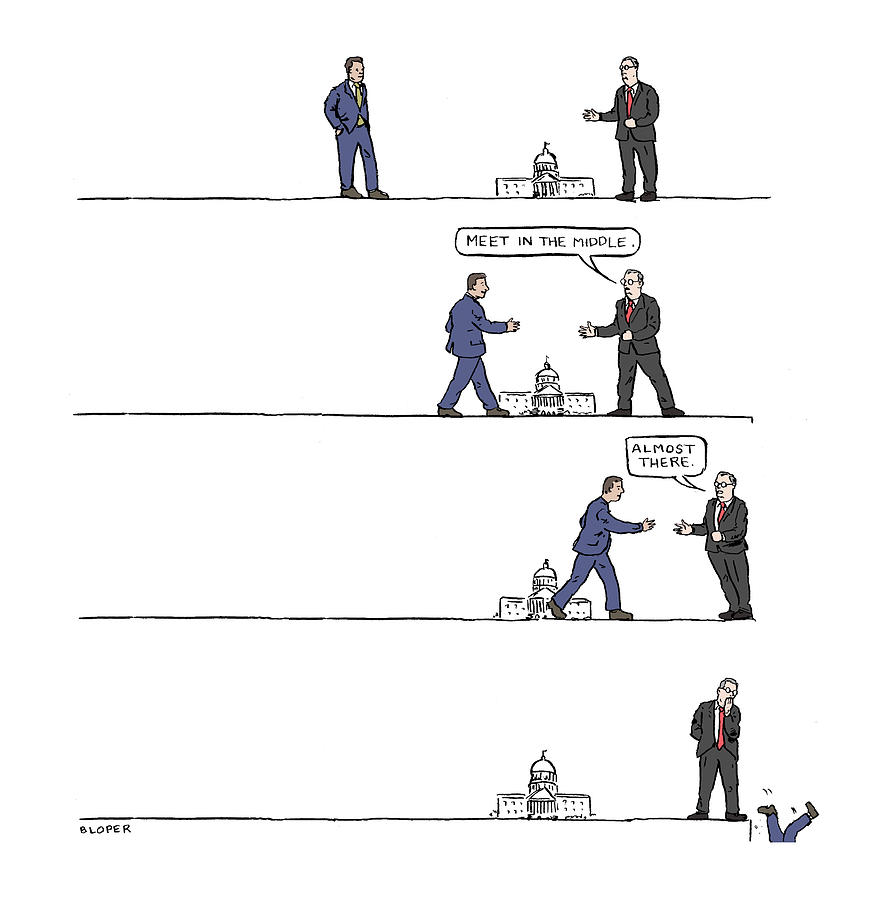
I remember reading 1984 when I was a kid and enjoying it, at no point did I think it was more than sci-fi though. I suppose it goes to show how much we took for granted the last 80+ years.
It also makes me respect Orwell so much more. Which was already very high based on how he makes tea. How was he able to see you presciently?
https://www.orwellfoundation.com/the-orwell-foundation/orwel...
reply