The problem is the rich are getting richer, and the middle class is shrinking. Actual inflation-adjusted pay for most people hasn't risen in 30 years, while for the top of the top it's skyrocketed. Meanwhile, everything is more expensive, and unemployment is high thanks to the apparent political impossibility of introducing stimulus spending in a time of lowered demand and zero interest rate (cutting interest rates is the usually the easiest way to stimulate the economy, but you can't do that when you're at zero already). The money moved into finance, distorted everything thanks to deregulation, and screwed up the country, and the world to a certain extent. Europe in the meantime is addicted to debilitating austerity measures; the populations haven't exploded yet only because most of them have excellent social safety nets.
Things really were better in the 60's and 70's from the point of view of how everyone was doing, what they could afford and with how much effort spent to afford it.
Also, if you're a tech guy living in a tech area, cost of living is probably higher than average. And the US has expensive health care, thanks to, until recently, stubbornly refused all attempts to socialize it.
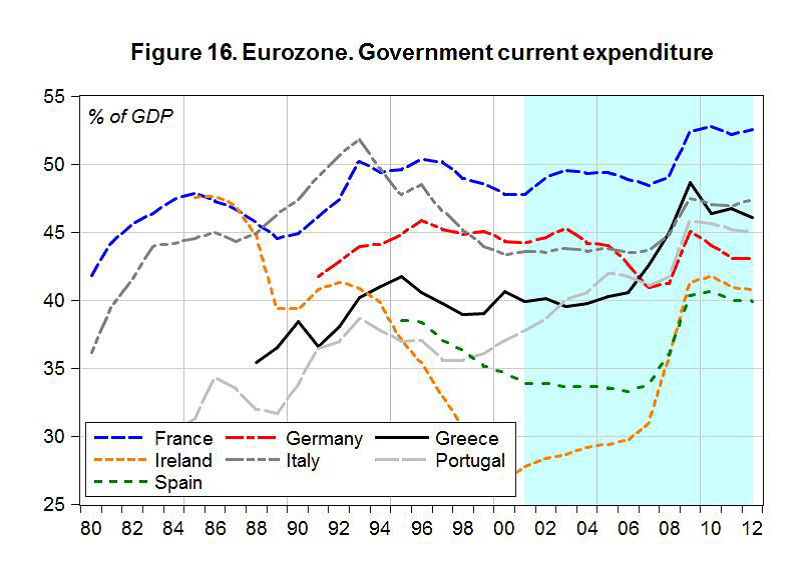
As % of GDP? Gee that mightn't be because the GDP and revenues plummeted would it? And aside from automatic raises in spending for social security, what do those graphs say about cuts in other areas? These are very misleading.
There's no actual debate on whether or not austerity measures were implemented. They were, and the governments of said countries brag about it, or are pressured into it. And suffer for it.


Things really were better in the 60's and 70's from the point of view of how everyone was doing, what they could afford and with how much effort spent to afford it.
Also, if you're a tech guy living in a tech area, cost of living is probably higher than average. And the US has expensive health care, thanks to, until recently, stubbornly refused all attempts to socialize it.