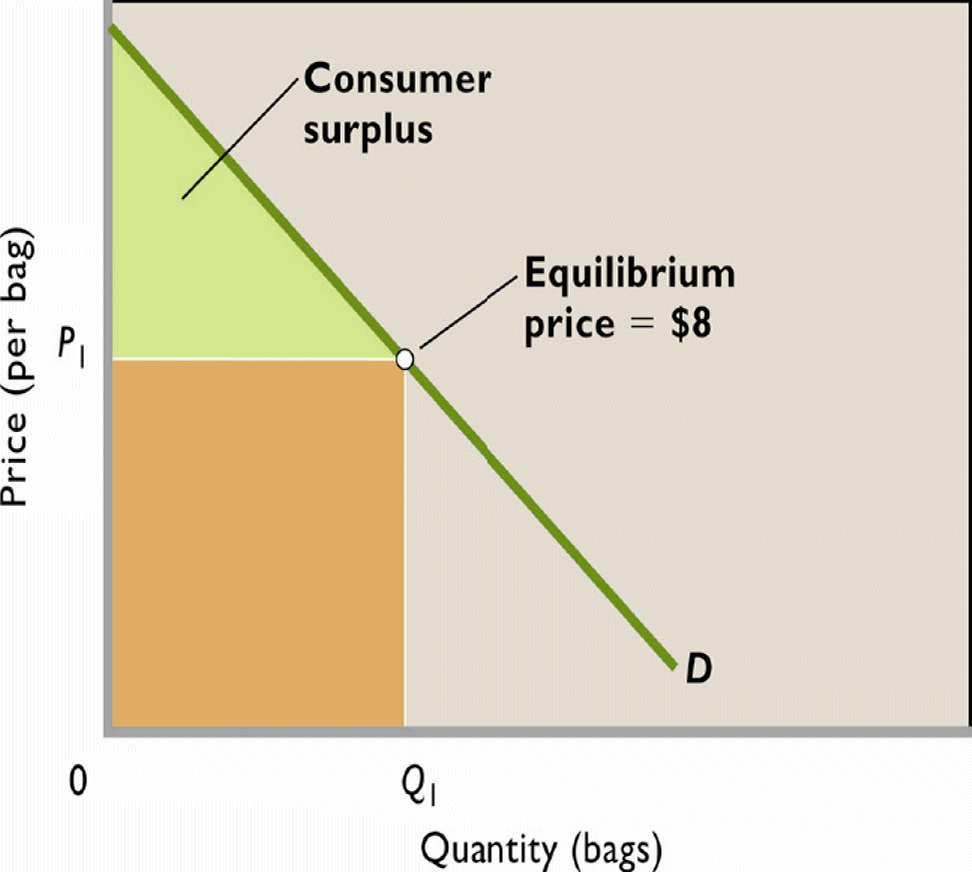
Undercutting doesn't really address the area below the demand curve, but above the equilibrium point. You can draw out the supply and demand curves of the undercutting scenario you're describing and see for yourself.
HN doesn't support charts, but here's a snippet from wikipedia:
>Consumer surplus, or consumers' surplus, is the monetary gain obtained by consumers because they are able to purchase a product for a price that is less than the highest price that they would be willing to pay.
Sure, producers can claim that surplus by charging more (up to the willingness the consumer is willing to pay), but if there's a competitor that isn't doing this, then the consumer will switch to the competitor and keep their surplus.
I don't disagree that's the case when a producer sells at a single price. Their revenue is the the rectangle formed under the demand curve[1] bounded by price * quantity.
What I'm saying is that having a single price means that consumer surplus is left on the table and that charging each consumer exactly what they'll pay for the good will capture that surplus. It will essentially "fill in" the space not captured by the revenue rectangle.
In microeconomics this is called first-degree or perfect price discrimination[2].