About 15 years a go I worked with a web designer that would take a photo and apply a filter to it in Photoshop and claim it was now copyright free and could be used. Fortunately, we told him to get something where we could either license it or have documentation it didn't have to be licensed. Paid license, CC, whatever, but we needed proof we were allowed to use it. Our designer thought using famous people instead of stock photos would sell more. The designer went on to start a web design company that got sued for infringement, and ended up having to settle.
I always wondered why if, my designer friend had to settle, how Warhol got away with it.
The Warhol was previously presumed to be “transformative” work due to Warhol’s reality distortion field. I’m not trying to be facetious, warhol’s “Campbell soup” genuinely transformed the imagery/iconography of a Campbell’s soup can for his generation. And “transformative” makes it not infringement, legally.
But removed from that transformative force, it’s clearly copyright infringement. So by 2023, things look different.
The soup can was not used by Warhol to sell soup. The Prince art was being used in an article about Prince. And that point was a major part of the Supreme Court decision.
This is the big distinction. The "transformation" of the soup can is just one of the four factors in the fair use analysis, and I might argue one that weighs against Warhol compared to Campbell's own marketing material.
It seems the court's argument is that using a slightly changed work for a different purpose does not present the same copyright issues as using it for the same purpose. It is one thing to use the transformed photo for a gallery painting; it is quite another to use it for license revenue from a magazine. This is at least realistic: the gallery painting does not compete with the original photographer to nearly the same degree as the licensing does.
It does however create a new problem that whether a work is infringing or not depends on the context of its use.
So if Warhol put his Prince artwork in a gallery it’s not infringing, but then if you take a photograph of that artwork in the gallery and use it in a magazine, that photograph of an artwork is magically infringing again?
It means that artworks can harbor zombie copyright claims that come back to life when you ‘hold it wrong’.
This is a point that deserves closer attention -- thank you for mentioning it. The notion of an affirmative defense is an important part of how our legal system balances rights.
When the work of art is context itself that makes perfect sense. In „Black square“ by Malevich it was not the black square that was the artistic invention, but where he placed it at exhibition. Copyright must not prevent such uses of images, so it is perfectly normal for Warhol to transform the images the way he did. The copyright was infringed by the foundation which was supposed to preserve the works, not to alter them by licensing for the use not intended by author.
Some people think the rich should be taxed more, some people think the poor are a drain on society. Some people think the earth is flat. We regurgitate the memes that get installed in us throughout life based on our experiences and the larger cultural zeitgeist.
The copyright landscape looked a lot different in the 1950's when the author probably formed much of their world view. It was also updated throughout her life to reflect the will of large corporations and institutional copyright owners. There were no computers, no digital cameras, and certainly no generative AI applications.
Many of the Supreme Court justices are also a product of this era and style of thinking.
Content gets created so quickly now that the very concept of copyright seems an odd fit for the world we now find ourselves in. It's too long and too broad. People today like to remix, reference, reuse. Content is ephemeral and fleeting. It's much easier to make.
The framework society uses is mutable. It changes and evolves as we collectively want it to. Copyright is something that seems very likely to change - it seems like it needs to change. After all, we don't find ourselves adhering to the guild rules of the 1500's labor market. Why should works from the early 1900's be unavailable to us? Or even 1970, 1980?
FWIW, the point of "transformative use" is that you are transforming the use, not that you merely applied some kind of transform to the content. In the case of Campbell Soup, the use of the resulting work does feel extremely different from the original product label design for the can of soup.
You don't understand the Court's point if this is what you are saying. The soup can is a different use, for a different purpose, which is one reason why it's transformative compared to the prince photo (which is basically just the photo, used for the same exact purpose).
Perhaps a lawyer can explain a little more to me the logic behind the "transformative" rule when it comes to copyright protection, and particularly how there seems to be a totally different standard when it applies to music.
While Ed Sheeran just won (in my opinion, thankfully) his copyright lawsuit, the writers of "Blurred Lines" famously lost the lawsuit filed by Marvin Gaye's family alleging infringement of "Got to Give it Up". In my opinion, that was the wrong decision - while you can argue there are some similar beats and chord progressions, I don't see how anyone could believe that Blurred Lines isn't at least a "transformative" depiction of "Got to Give it Up" (to be clear, I think it's much more than that - the songs sound completely different to my untrained ear). Even in cases where there is no dispute, where one song legally samples another song but pays royalties, in many cases the use of the sample is completely transformative, again in my opinion, use of the original song.
So basically what I'm asking is why do judges appear to apply the "transformative" rule to visual arts but not to auditory ones.
The article basically clarifies a good reason why
> the first fair use factor instead focuses on whether an allegedly infringing use has a further purpose or different character, which is a matter of degree, and the degree of difference must be weighed against other considerations, like commercialism.
if you made a transformative version of Marvin Gaye's song (perhaps as part of a gallery installation), even if was just pitch altered or something like that, there would be no 'commercialism' involved and your version would not be competing with the original.
Warhol's version here does seem like it would be transformative enough to be in the gallery, but not, as it was in this case, to be sold for marketing purposes which evidently is in competition with the original photo.
> Perhaps a lawyer can explain a little more to me the logic behind the “transformative” rule when it comes to copyright protection
IANAL, but…
First, its not a rule of copyright protection, its a rule of fair use, which is only an issue when copyright protection exists.
Second, there is not really a specific “transformative” rule. Whether use is transformative is an aspect of the “Purpose and character of use” factor in fair use analysis. That a use is “transformative” (that is, that it has a different character and use – that it becomes a work of a significantly different kind) is typically, where present, a finding which ways in favor of fair use, but it is neither by itself neither necessarily necessary for nor necessarily sufficient for fair use (though in a specific case it can be either), there is no hard and fast rule, and fair use analysis is highly context-specific.
> So basically what I’m asking is why do judges appear to apply the “transformative” rule to visual arts but not to auditory ones.
The defendants in the Blurred Lines case did not assert fair use, they asserted that there was no use at all, and that there was no copying and no substantial similarity in the works resulting from copying. Whether they might have prevailed had they done so instead of denying copying at all is…speculation, but it is not an inconsistency that they did not win on an argument they did not make, even if consistency would demand that they should have if they did.
One of the major problems with songs is they often “borrow” from songs in competition or even the same style. Art that’s appealing to wildly different customers is given significantly more leeway where art that competes head to head is more suspect.
This is one reason comedy is given so much freedom. It’s much easier to argue South Park retelling a story isn’t economically harming the original creators. That isn’t to say transformative only applies in economic terms, but such things make the arguments a lot easier.
As an example of this, Blizzard actually provided significant help in creating “Make Love, Not Warcraft” which shows just what transformative reuse can look like.
> Blizzard actually provided significant help in creating “Make Love, Not Warcraft” which shows just what transformative reuse can look like.
Actually, it shows how copyright owners can cooperate when a third party's use comports with their interests. If, however, South Park had appropriated imagery, music, etc., from Blizzard without permission, then that may have been copyright infringement outside the realm of fair use. (Note: South Park probably still could have parodied World of Warcraft, albeit without using any of Blizzard's materials.)
The point was Blizzard’s willingness is a sign of the transformative nature of the copying. "Weird Al" Yankovic similarly seeks permission even if it might not be needed, but he also regularly receives it.
By comparison it’s relatively rare for say k-pop stars to either seek or revive permission from other k-pop stars.
Most of his songs are not commenting on the original so permission is definitely needed. "Smells like Nirvana" and "Perform this way" are making fun of the original songs, "Amish Paradise" could be argued either way.
Bringing up Weird Al is doubly interesting, because he asked for permission from both the recording company and Coolio to parody Gangsta's Paradise. Though the recording company agreed, Coolio refused permission.
I would have sworn that I'd heard Weird Al had been misinformed and believed that he did, in fact, receive permission, but I'm not seeing any evidence of that. Either way, the most Coolio could do is write a diss track, though he later came to regret not supporting it from the beginning.
All of this is made even more ironic since Gangsta's Paradise is itself a very obvious reworking of Stevie Wonder's Pastime Paradise
I just listened to Pastime Paradise. That's wild man. I assume Coolio was required to get permission for that, because, that's a VERY obvious reworking. I never understand music IP law, like how Queen was able to sue Vanilla ice because of one 7 note chord in Ice Ice Baby:
I'm sure in principle the rule is the same for all mediums, but in practice our sensory systems are not unbiased and its far easier to hold up two pieces of art side by side than it is to listen to two different songs in two different ears.I think it may be as simple as visual similarity is just more obvious and easier to point out.
I'm not going to put this and similar cases quite in the class of just applying a Photoshop filter or similar transformations. But I'm not sure it's that far off either. Which seems to fall into an area where you can't just take someone's photo, apply a couple straightforward changes, and now it's yours.
One of the problems, was that Warhol stole from Lynn Goldsmith, who is about as big-time a celebrity shooter as you can get. She's in the same league as Annie Leibovitz.
She was able to devote years and years, to get it all the way to the top.
Personally, I think it went the way it should, but I'm biased. My company worked with her, and I think she had a serious network; not just a single artwork. She's very popular, and has friends in high places.
Other photographers probably don't have the capabilities that she has. Many of them have probably licensed through outfits like Getty Images, who would probably go after folks that used their works, but if they didn't, I don't think the photographer would have a whole lot of recourse.
As a non-lawyer, I basically agree. This seems like a case of license the thing already. It's an edge case but, especially given existing case law, seems like a less-difficult one. The main complication here seems to be big name photographer on the one hand and big name pop artist on the other. So this wasn't Andy Warhol repurposing some random pedestrian photo. Arguably the difference shouldn't matter. But it does.
The animated gif in the article sure does make it seem like a very simple filter. I guess the "Warhol aesthetic" was at one time novel and seems basic now, but just changing the colors of a photograph isn't particularly transformative.
> I always wondered why if, my designer friend had to settle, how Warhol got away with it.
Your designer friend didn't have to settle.
Warhol went to district court and got the undesired result.
Then went to appeals court and got the desired result.
Then went to the Supreme Court and got the undesired result.
Your designer friend could have done all that too and created the exact same case law in a complete coin toss that affects everyone for the next few decades. They didn't. The secret ingredient is money.
I wonder what is going on inside heads of people like this when they do stuff contrary to the entire world thinking that they know better. I've seen it in tech as well, people reimplementing SQLite, Boost and Tensorflow because they think they know better. Sheer hubris.
Sure he had to settle, but the question is how much did he have to settle for ($X), and how much money did the web design company net him ($Y)? And how much more was $Y than $X?
This is because you're not equipped to judge what's transformative or not. Transformative is not just about the visual, art's also about the context.
You should have wondered, why can't your designer pal do it, if it's OK for Warhol?
The answer may have been: Warhol's process, coloring, final result, context, was way more transformative physically, and also semantically.
I think this is where we need art experts who are advising judges, it's sort of like maybe that trope where judges are making judgements about encryption and they don't understand the technology. Not assuming these judges were not art buffs, it's the SC, it's probably a very complex, refined, elaborate, and legally sound judgement...but I think they're missing some key connection to art to have gone this way.
2 dissenters thank God. Hopefully overturned in future, or further refined to protect artists and great art. I think the plaintiff here is less an artist and more a "professional paparazzi with a lighting set up".
The court generally tries to avoid playing art critic. It may be better that they do.
To that end, a lot has been made of Warhol's soup cans, but the big distinction here is that he's not using them to sell soup. Sure, they are a different medium and all, but the really important factor is that those paintings don't have the same commercial purpose as Campbell's ads.
In this case, his art did have the same commercial purpose and was a close copy, meaning that the fair use analysis didn't go his way.
Thanks for that analysis. So...really? The prince work was editorial art commission and the purpose of that is to sell magazines? Is that idea?
I think that sounds a little weird. Walk into the downtown corporate building of big firms in any city in the world, and I think you often see large scale art in the high ceilinged foyer: these pieces are often specially commissioned by the building owners or firm. Would the purpose of those, by that judgement, be to "sell the firm" (or equivalently raise its profile to by a chain of events, eventually increase revenue?).
To me that just sounds weird, because often they are great art in themselves, and indeed many go on to be sold to other collections, or loaned to museums, and throughout their life they are rotated through the firms buildings or collections--just like regular art.
But maybe I'm misunderstanding your meaning or the connection here.
Well, the work wasn't necessarily for a commercial purpose on its own, but the combination of the work and the contract made it commercial, and this is the risk you run with any sort of "fanfiction" like this.
You have a lot of latitude to produce it for fun, but if you want to actually go to sell it into the same market as the original work, then there are problems.
> That you would copy an image, apply a random filter, then call it your own and sell it, is ridiculous.
It's pretty easy to counter your assertion by simply saying, "I find no value in the original work but I find value in Warhol's rendition". Since the argument is that the court is supposedly defending Goldsmith's right to prosper from her works, then you cannot say that she would have benefitted unilaterally because I would not have paid her for her art, only Warhol. Personally I don't care for Warhol much and I'm using the royal I, but to say that applying a filter to an image cannot create a new work is, I think, preposterous.
Personally I don't think this case has clarified "fair use" one bit. All it does is add more confusion into the mix. So if Warhol hadn't commercialized the work, would it have been fair use? That's now an open question after reading the supreme court's majority opinion/ruling.
All this case does is demonstrate that in this specific instance 7 of 9 judges didn't obviously see how Warhol's work transformed the original source material enough to constitute a new work, or Warhol foundations' lawyers didn't make it obvious enough. And it now throws into the mix that "fair use" is not solely dependent on the idea of transforming a work, it's in fact way more complicated and so yes let's open the flood gates for a bunch of new copyright cases arguing that one artist, even though they did transform an original work, was too adjacent and not distinguished enough to constitute fair use.
I mean honestly I'm super confused how to interpret fair use now.
> But the real scandal is that copyright survives the artist. Marvin Gaye, Andy Warhol... Dead guys. So called "estates"... Insects feeding on corpses.
> Personally I don't think this case has clarified "fair use" one bit.
Having read various fair use decisions over many years, I think it's reasonable to conclude that fair use law is indeterminant and incoherent. Courts try to apply the four fair use factors and maintain consistency with previous decisions, but it's just a mess. If you look at this case, the district court decided it was fair use, the appeals court decided it wasn't, and the Supreme Court agreed it wasn't but with a 7-2 split. The point is that even expert judges can't agree. It's kind of hopeless to try to make sense of fair use law.
> I think it's reasonable to conclude that fair use law is indeterminant and incoherent
Logically speaking fair use would have to have some degree of indeterminance and incoherence given that there is not mathematical formula detailing specifically how much change is needed for transformation in relation to commercializing that change. Without such a formula there will always be edge cases that will look wacky in relation to everything else.
> It's pretty easy to counter your assertion by simply saying, "I find no value in the original work but I find value in Warhol's rendition".
Finding value is not a concern of the various copyright and IP infringements though. Nearly any copy will find value, as that was the point of copying it in the first place.
so.... no intergenerational wealth transfer then? if estates can't pass on intellectual property, then why should they be allowed to pass on physical property? If they can pass on physical property, then why not intellectual property, at least within the legally defined (and IMO far too long) windows of protection?
"To promote the Progress of Science and useful Arts, by securing for limited Times to Authors and Inventors the exclusive Right to their respective Writings and Discoveries;"
The question is does the heritability of IP promote the progress of science and useful arts, or does it simply enrich heirs? I can see the argument that people wouldn't create art or do science if they couldn't profit from it, but it's much greyer whether they wouldn't do it if they couldn't pass it to their heirs.
I'm not an expert on the science part, but as far as the arts are concerned, IP being inheritable not only does not promote progress, it actively harms it. See: The Marvin Gaye estate and the damage they wreak on the music industry by thrashing about every few years with another cash grab lawsuit based on hamfisted and incompetent explanations of music theory.
I don't think it's grey at all, what other productive effort do people only do on the grounds that it will enrich their heirs? Maybe that's what it takes to encourage knocking off a king, if that's something you want to encourage, but I can hardly think of anything else.
Still that cuts in both directions, in that you could use it to argue that other properties don't necessarily need to be heritable.
Either way it's pretty clear the "limited times" they were imagining were a portion of a lifespan, not multiple lifespans. It's pretty ridiculous that as the world moves faster these durations are increasing rather than decreasing.
This was one of the original arguments in favor of copyright, except in reverse, as the poverty of heirs was an argument in favor of copyright:
When, in 1749, Thomas Newton's (1704-1782) edition of Paradise Lost was published, it carried details about the impoverished circumstances in which Elizabeth Foster, Milton's granddaughter, lived.[33] The account gave rise to a performance of Milton's Comus at the Theatre Royal, Drury Lane, from which Elizabeth received £130, the profits of the evening. When aligned with the fact that Milton himself received only £20 from Simmons, the tale became a staple in subsequent accounts of neglected genius and avaricious publishers.
Deazley, R. (2008) ‘Commentary on Milton's Contract 1667', in Primary Sources on Copyright (1450-1900), eds L. Bently & M. Kretschmer, www.copyrighthistory.org
It seems that any language stating intentions in the Constitution has only as much relevance to real laws as the relative strength of the lobbyists arguing for/against the provision in question, e.g. "A well regulated militia..."
Could someone argue that transferability of copyright is not constitutional because it's not explicitly authorized by constitution ? The exclusive right is explicitly given to authors and inventors, not to other people.
I don't think you can argue that at all. The point is to promote the science and arts. Being and to transfer ownership makes it easier to promote the individual artists and inventor.
Also how do you deal with large projects that have the efforts of a lot of people?
I’m against it until I’m in that situation myself. And if I am I’m probably not passing on all my wealth to my family besides a really healthy trust.. because if they can’t manage to stand on their two feet and make hella gains with a few million dollars they are losers imo. I personally started with $0 and have managed to do well enough for myself thus far as a swe and pursuing some business ideas. I know people who can’t do shit with millions.
Rather have the money go to St Jude or some other charity.
That's a horrible opinion to have of your family. Do you really have kids and a spouse? Why do you get to "judge" what they "do" with it? They're your family. They can live beyond your dreams of what's possible, you can't proscribe or foresee what they can do. You should want to support them, and make their life easy, and pass on your gains were you to die, right? How can you think giving it to some random charity is better than passing it to your own blood? That's a poverty of family love, to me.
Did you miss the "with a few million dollars" part? That's more than enough money to be comfortable for your entire life, several lives really, plus enough capital to start any kind of business your passion leads you to. I truly don't think the viewpoint GP expressed is incompatible with familial love and setting up a great life for your children.
I did miss that as being significant but did read it: yet based on the attitude displayed, it's not entirely clear that's in the cards.
It seems the commenter is more talking about her/his idea of a "principle" whereby we can "judge a person's value (and eligibility to inherit from the commenter)" by what they have done / would do with such money. This person seems to suggest they themselves have high value in that regard, and seems to suggest their family does not. To me, it wasn't clear the commenter intends to leave them "a few million" as you seem to suggest.
I personally grew up poor AF in a 3rd world country with no resource (no running water, a hole for a toilet, and we used lamps at night to study). It bothers me when I see people in USA basically live off their parents and complain non-stop over dumb things. That's like, my opinion bro.
I'll be leaving my family a generous amount, don't you worry about them. I love them very much, and I want them to be successful on their own two feet and not depend on me to die so they can ball out.
More importantly, I'll raise my kids right compared to the fools I see around me in USA who just live off their lineage and still manage to complain over the dumbest things.
Case in point - my housemate from a few years ago when I was broke AF and living in a cheap 10x8 room.. this dude spent basically 16 hours a day playing call of duty/drinking/smoking weed and he basically told me he was waiting for his grandmother to die so he can receive some money. She ended up dying from Covid and he got almost 600k. He still smokes weed, gets drunk, and even got a DUI recently. I would be ashamed if he was my kid for failing as a parent. He's probably the most egregious example, but I know plenty of others who don't work hard because they know they're going to get a ton of money from their grandparents/parents dying so they just play the long game. I find that gross.. imagine wasting your life until you're 40 waiting for a payday from granny or mommy passing away.
> grew up poor AF in a 3rd world country with no resource (no running water, a hole for a toilet, and we used lamps at night to study)
My own dad grew up without indoor plumbing in the US for much of his early childhood (I think until he was 12 or so; his older brother would have been 20).
Much of the rural areas of the US didn't have electricity, or at least indoor plumbing, until the New Deal started moving things in the 1930's. Robert F Kennedy even remarked on the lack of utilities in his 1968 tour of Appalachia.
He (and my aunts and uncles) raised us to appreciate what we have, and to understand the difference in life that working hard and not being wasteful can make. Though normal (perhaps even small) compared to most suburban houses in the US, what I grew up in was practically the lap of luxury compared to the farmhouse he did.
I'm still amazed at how few people seem to appreciate the difference one or two generations' time has made on life here.
I know it sounds like I'm judging you, and I probably seem like a right ignorant lazy little white prick, I bet you're ready to just about dismiss anything else I have to say, so I'm sorry to trouble you further, but I wanted to know more.
Seems like you believe it's not about where you start, it's about what you choose to do with it that matters, and sounds like you really value taking personal responsibility and working to improve your situation with your choices, rather than whinging, blaming others, making excuses, or playing the fake victim and acting entitled to the generosity of others. Sounds like you find such people really gross and disgusting, and an abomination, or at least their behavior.
I've probably already ruined your mood with my super judgy sounding comment so I'm sure you won't care what I say, but: when I read your comment i thought you were talking about leaving good people who were your family nothing, because they didn't have to suffer in the same way you clearly did.
As in: because they didn't learn to overcome the same lessons and challenges you specifically learned, they didn't deserve or earn it. As in, because, by your effort they were given an easier to start to life, you felt disgusted to make it any easier for them than you had already sacrificed to provide, and, out of some kind of resentment at having to have spend your hard earned wealth on them at all, will give them a final kick beyond the grave by gifting all your wealth to charity, as punishment.
I wasn't assuming your family was going to be egregiously, lazy, ignorant little white pricks, born in the lap of luxury and grifting off their benevolent wealthy relatives, like I'm sure you probably think I am.
How do you think people should accomplish raising their kids right?
The primary reason where I'm from has so many problem is because of my own people hoarding money and doing corrupt things like diverting funds for projects to their own bank accounts. I don't think it has anything to do with race, it is a mentality.
Isn't there research that shows that wealth concentration across generations just leads to that wealth dissipating within 2-3 generations? What's the point of that? I want my children to know the value of money.. that is that money comes by providing value to others. Pleasing one's parents/guardians/family is not that hard, IMO that's just a baseline.
Actually getting people to pay for something one made or can do is a lot harder, and takes deep efforts to accomplish. If my kids want to ask me for some money to start a business or attend some course, sure I'm more than happy to oblige. When I pass away, I hope my kids would have been able to build something of their own because they took inspiration from the world and people in it to be valuable human beings while I was still alive. I would honestly be proud if I don't have to leave anything to my children, because they have become capable individuals. It would be trivial for me to leave everything to my family, took like 20 minutes to write a will.
It is far more challenging and rewarding to raise good men and women, and I think I can do that by encouraging them to provide value to others. My parents could barely afford to feed themselves but after we moved to US put me into things like Kumon, a basketball camp, took me to the hospital to volunteer, encouraged me to do after school activities like robotics and math club, go to the library, etc.. I think it made me a far better person. When my grandfather passed away he had no money or assets to his name. You know what he said on his death bed? He was proud of his children and grandchildren, that they had taken life by the reins and done their best to steer that horse. "Have a good life" is what he said to me. I want my kids to have a good life too. While I'm alive I'll set them up for it. We all have our viewpoints, so that's mine.
Sounds like your parents
Had good ideas about how to make the most of the opportunity they acquired by coming to America. As it happens, my grandfather said something very similar to me and repeated it to me throughout his life.
As you said, you can pass physical property, why would you need that to be extended to other area on top of it ? I mean you would think that inheriting the actual capital generated by the art pieces, on top of the unsold original pieces, would be enough as far as money goes (moral right is different, I see why you would want to inherit that). It's a bit as if I were able to claim a salary for my dead relatives because, you know, I used to live off of that...
>it's a bit as if I were able to claim a salary for my dead relatives because, you know, I used to live off of that
yeah but it's less of a bit that than it is a bit that your parents owned physical property and intellectual property and when they died you inherit the physical property so why not the intellectual property.
FWIW I'm not sure analogies between intellectual property and actual property really work, since they are pretty fundamentally different if you compare the specifics.
It's almost like Intellectual property is some kind of made up thing that isn't really property, and people can make a distinction between actual property and IP.
Yeah... Each time I see someone cashing in on a dead artists licenses I picture Sony Bono chiming in from an RIAA luxury lounge in the sky: "I got you babe!"
One big problem is that some things are a flat year number and others are N years past the death of the author, and it feels like the priorities are reversed. Like in music the composition has the longer copyright than the recording, so fun derivative works like cover songs are more protected than just selling somebody else's album.
In a broader sense, having your family profit from those works after your death may stimulate one to focus on creating creative works rather than a different source of income where assets accrued can benefit them. In particular in cases where your spouse and children are dependant on your income. That it should be restricted by a lot is obvious by now of course.
Also: not having copyright expire upon your death prevents making your (untimely and assisted) death less attractive to anyone who would greatly benefit from those rights to disappear, although I do hope that is a hypothetical edge case.
> , having your family profit from those works after your death may stimulate one to focus on creating creative works
I'd argue the exact opposite, that reduce the incentive to produce new work, why creating new work when you can profit from old ones you haven't put any effort into it?
> Also: not having copyright expire upon your death prevents making your (untimely and assisted) death less attractive to anyone who would greatly benefit from those rights to disappear, although I do hope that is a hypothetical edge case.
That could be a good argument for it yes, I haven't thought about the external pressure.
Most people care about leaving something of value for their descendants. This includes both financial resources and a proud legacy. Indeed, especially late in life, this might be more of a motivator than the limited personal benefit they might derive.
The vast majority of artists struggle to make even a living wage. Many successful artists only become financially so late in life, if ever, and were often in extreme poverty until that happened. Cormac McCarthy is a good example. Is it really fair to their estate to cease all protection of their works just because they died?
Is Apple going to relinquish control over patents and the products they protect when their inventors die?
I'm a bit of a broken record on this, but copyright lasting beyond the death of the author is important so that near-death authors can still sell their work. It would be near-worthless to a buyer/publisher/etc. if it was about to enter public domain. Imagine the headline "Famous artist diagnosed with terminal cancer - suddenly can't sell her work to fund her treatment."
This is why the lifetime of the creator should have nothing to do with copyright terms. All works get a fixed term of 20, 30, whatever years, if the creator dies before that term the rights can be transferred via their estate.
That doesn't just apply to people very close to death. If copyright ended right on death, the the work of someone in their 20's would have twice as long to earn revenue as the work of someone in their 50's. The former's work would still be covered when nostalgia bump came, while the later's work would not. This would create significant financial incentives for publishers/labels/etc to pick up younger artists instead of older ones, in markets that are already skewed towards younger people.
Fixed term makes so much more sense. We should have never signed the Berne Convention.
You could do like 50 years or death of author, whichever comes 2nd. Then an author knows they own their work for life no matter what, but an author near working death still has something to pass on.
This feels very similar to the "think about the children" lines when people want to keep their privacy online. It's stupidly specific, and if you have to twist this far to find an example, I think you have nothing.
David Bowie died two days after his final album was released. Are the people who worked on it, put it out, somehow less entitled to make money because he died?
It doesn't feel overly specific when the topic is copyright after death to think about how people die.
There's two solutions here, either they are co-creators and then all the creators aren't dead or they aren't and they were never going to receive additional revenue beyond their work anyway.
Either way, that's not working as an argument against stopping copyright when the authors are dead.
There's a publisher, who did boring things like pay the cover artist, buy the plastic and vinyl, pay the printer. The record came out, they had a bunch of copies, and then two days later Bowie died. If they're exclusive right to sell they music disappears, they overpaid Bowie.
The cost of publishing a music online after it's been produced is close to zero nowadays. I could see how that argument was relevant 30 years ago though.
And the initial costs are similar to any other non-copyright related work, paid per service.
Because the costs to publish online are zero there would be innumerable other copies of the work posted, meaning the initial outlay for the studio time etc cannot be recouped.
Yep! The costs to press vinyl and print sleeves and market the work _are_ paid upfront. So cutting off the revenue stream unexpectedly means no more expensive projects for old artists
I don't think its _stupidly_ specific to point out that people should still be able to sell things when nearing death. But 10/15 years should be more than enough. The amount of years is beyond parody at this point.
But it's a plausible situation (terminal/severe illnesses are not that rare) and a relevant argument against the "expire on death" copyright proposal. Laws often need to deal with "stupidly specific" cases because they do happen in the real world.
Folks should read the article – the infringing act was NOT the creation of the art, it was the attempt by the Andy Warhol Foundation to license the image to Conde Nast.
> Here, the specific use of Goldsmith’s photograph alleged to infringe her copyright is AWF’s licensing of Orange Prince to Condé Nast. As portraits of Prince used to depict Prince in magazine stories about Prince, the original photograph and AWF’s copying use of it share substantially the same purpose. Moreover, AWF’s use is of a commercial nature. Even though Orange Prince adds new expression to Goldsmith’s photograph, in the context of the challenged use, the first fair use factor still favors Goldsmith.
That's not to say this doesn't touch on larger issues, or that this ruling won't have wider-ranging implications, but the text of the case makes it specifically about the licensing, not the creation of the work itself.
> “AWF [Andy Warhol Foundation] contends that the Prince Series works are ‘transformative,’ and that the first fair use factor thus weighs in AWF’s favor, because the works convey a different meaning or message than the photograph. But the first fair use factor instead focuses on whether an allegedly infringing use has a further purpose or different character, which is a matter of degree, and the degree of difference must be weighed against other considerations, like commercialism."
It seems like there's a strong possibility that if you use any tool, but especially an automated tool, explicitly to generate work "based on Artist Name's work" and then you try to sell it for substantially the same purpose as Artist Name's original work with an explicit goal to avoid the commercial ramifications of licensing those rights from Artist Name, then the courts might not see that as fair use under this new precedent.
This is immensely important, say, if Artist Name is a writer that a studio is trying to replace while maintaining their style by asking an AI to mimic their style, or an actor where the studio wants to use an AI-generated likeness in place of paying them. And of course, this means that studios will try to get these creators to sign their rights away explicitly - which makes some of the current collective action all that much more important!
Not close resemblance. Copying. Andy Warhol didn't happen to paint it similar to that photo. If he had, there wouldn't haven been a case, since copyright doesn't cover independent creation. Andy Warhol painted it by copying the photo.
> an actor where the studio wants to use an AI-generated likeness in place of paying them
Likeness rights are separate and cover this pretty well I think. There's not legal precedent yet over AI specifically but Waits v Frito Lay and Crispin Glover's back to the future 2 lawsuit lay a groundwork. Disney recently bought the rights to digitally recreate James Earl Jones' Darth Vader voice using AI. I think Disney's army of copyright lawyers probably they're likely to need that, even though they own the Darth Vader character and have had others perform it, without (afaik) paying him anything.
> Not really, its trained on the previous object to recreate said object given outside changes...
All generative AI packages, that I know of, are not going to use material only from one artist even when generating something in that artists style.
In general it is more than for example tracing a photo and coloring it differently.
Just like artists can copy the style and techniques of another artist(often several) and generate something original, current generative AI, often, seem to do something similar.
I am not saying that the current generative AI can not produce copy righted work, but it is not obvious to me that if the original dataset is all copyrighted that all output retain those copyrights, though it seems likely select output could.
> to recreate said object given outside changes...
Unless we're talking about something other than diffusion models, the new image is generated from initial random noise. It also doesn't "recreate" parts of it's training data, unless the model was overfitted to a particular work, or the prompt is deliberately designed to do so, or the user is running it in img2img mode against a preexisting work.
No creation of art is infringing, you can rip other artists off in your home to your heart's content. It's the commercialization of your output that creates infringement - when you license or sell the work. Warhol's version of the Prince photographs might not be infringing if the original were sold, but that's really for a jury to decide. There isn't a legal test that can articulate the exact difference between a derivative and transformative work.
Warhol had interesting ideas but I consider him more of an impresario than an artist; his real creativity was that of his public persona, and many of his most famous paintings seem to me to be merely decorative (multiple tinted reproductions) or imitative (Campbell's soup can, which was just Duchamp in the kitchen).
I am not a lawyer, I am not your lawyer, this is not legal advice.
> No creation of art is infringing
Unfortunately it is very tempting to read section 107 as you might read other text and assume that any one of the four parts of the test can protect you, but that is NOT how the law has been applied. You can be found to be infringing even without commercial exploitation. Each of the four parts of the test is evaluated and weighted with the other parts.
> "Notwithstanding the provisions of sections 106 and 106A, the fair use of a copyrighted work, including such use by reproduction in copies or phonorecords or by any other means specified by that section, for purposes such as criticism, comment, news reporting, teaching (including multiple copies for classroom use), scholarship, or research, is not an infringement of copyright. In determining whether the use made of a work in any particular case is a fair use the factors to be considered shall include—
(1) the purpose and character of the use, including whether such use is of a commercial nature or is for nonprofit educational purposes;
(2) the nature of the copyrighted work;
(3) the amount and substantiality of the portion used in relation to the copyrighted work as a whole; and
(4) the effect of the use upon the potential market for or value of the copyrighted work.
The fact that a work is unpublished shall not itself bar a finding of fair use if such finding is made upon consideration of all the above factors."
Yes...non-publication won't bar a fair use finding. If you sit at home and make 100 copies of a work in the pursuit of developing your artistic technique, you're fine up to the point where you attempt to sell them or exploit your production commercially, eg making a youtube 'documentary' about yourself which leverages the fame of the original work to draw attention to your perfect imitation of it, but painted with a toothpick or something. This is after all a kind of publication.
There isn't a default presumption of infringement, which is why you don't need to produce ID at the art supply store to buy brushes and canvas.
You are definitely not "fine". The infringement has happened. The fact that you aren't going to be "caught" and sued doesn't make everything legal. Ask any artists if you make and hang a copy of their work inside your own home. Ask Microsoft if you can copy their "art" for use in your own home.
> Courts will occasionally not uphold a claim to copyright on modified public domain material if the changes are deemed to be de minimis. Similarly, courts have dismissed copyright infringement cases on the grounds that the alleged infringer's use of the copyrighted work (such as sampling) was so insignificant as to be de minimis.
It's not legal, just that its not worthy of the court's time.
Drawing a copy of Mickey Mouse on your child's playroom wall is likely de minimis - just don't make viral videos of it or have playdates with Disney lawyers.
> The de minimis doctrine is rarely discussed in copyright opinions because suits are rarely brought over trivial instances of copying. Nonetheless, it is an important aspect of the law of copyright. Trivial copying is a significant part of modern life. Most honest citizens in the modern world frequently engage, without hesitation, in trivial copying that, but for the de minimis doctrine, would technically constitute a violation of law. We do not hesitate to make a photocopy of a letter from a friend to show to another friend, or of a favorite cartoon to post on the refrigerator. Parents in Central Park photograph their children perched on José de Creeft’s Alice in Wonderland sculpture. . . . When we do such things, it is not that we are breaking the law but unlikely to be sued given the high cost of litigation. Because of the de minimis doctrine, in trivial instances of copying, we are in fact not breaking the law. If a copyright owner were to sue the makers of trivial copies, judgment would be for the defendants. The case would be dismissed because trivial copying is not an infringement.
De minimus is about assignment of copyright to new works that are only slightly different than the original. It does not say that minimal copying is ok, rather that minimal copying does not justify a new copyright.
Disney does go after people drawing mickey mouse on walls. Schools, daycares, even private houses. They go after on not only trademark but copyright grounds too. There is nothing in copyright law that says private copying is ok.
> It does not say that minimal copying is ok, rather that minimal copying does not justify a new copyright.
The wikipedia link[1] gives an example of infringement cases being dismissed based how insignificant it was.
> Similarly, courts have dismissed copyright infringement cases on the grounds that the alleged infringer's use of the copyrighted work (such as sampling) was so insignificant as to be de minimis. For example, the NBA 2K video games that included copyrighted tattoos in the recreation of the players' likenesses were found to be in de minimis and not copyright-violating.
Additionally SeanLuke's comment[2] does a brief analysis that looks correct that indicates private copying and usage would fall under fair use:
> rather that minimal copying does not justify a new copyright
The quoted opinion from the case specially has minimal copying as some examples such as making a copy of a cartoon to post on the refrigerator:
> The de minimis doctrine is rarely discussed in copyright opinions because suits are rarely brought over trivial instances of copying. Nonetheless, it is an important aspect of the law of copyright. Trivial copying is a significant part of modern life. Most honest citizens in the modern world frequently engage, without hesitation, in trivial copying that, but for the de minimis doctrine, would technically constitute a violation of law. We do not hesitate to make a photocopy of a letter from a friend to show to another friend, or of a favorite cartoon to post on the refrigerator. ... When we do such things, it is not that we are breaking the law but unlikely to be sued given the high cost of litigation. Because of the de minimis doctrine, in trivial instances of copying, we are in fact not breaking the law. If a copyright owner were to sue the makers of trivial copies, judgment would be for the defendants. The case would be dismissed because trivial copying is not an infringement.
If I have photographic memory do I need to license any artwork I see?
Sometimes practical limits on laws are intentional. Tracing your favorite anime character is legally infringement but luckily, multinational corporations aren't allowed to enter our homes to make sure we don't owe them royalties for our kids artwork on the fridge. They can only do that for trading cards.
More accurately, you are fine until you try to distribute them, or display them. Giving out free copies would not be commercial, but would definitely be a violation.
Well it's commerce in the sense of 'look at me I'm so great at art-ing.' You're sharing them for social rather than fiscal capital. If you anonymously mailed them out and kept your mouth shut I doubt any resources would be spent to track you down, or (if they were) that you would lose in court.
> eg making a youtube 'documentary' about yourself
Would that not be transformative? Your product was the documentary. It wouldn't be something that could undermine sales of the original. There are plenty of youtubers painting Rothko knock offs.
> leverages the fame of the original work
Using another's fame isn't what's protected is it? That would require something more like a trademark. Can I not write a book called "Who ate Picasso's Guernica?" or some such?
> No creation of art is infringing, you can rip other artists off in your home to your heart's content. It's the commercialization of your output that creates infringement - when you license or sell the work.
You can create infringing works in your home to your heart's content because you are unlikely to get caught. But that doesn't mean that the infringement hasn't happened. There are fair use factors that will determine whether an exception to infringement applies, but only one of those factors relates to commercialization.
This is why most photo print shops won't let you print images that they suspect to be copyrighted, even if you just plan to use it in your own home.
Perhaps this will come across as an overly-technical explanation to non-lawyers (IAAL), but I think it's worth noting in this thread because it is strictly not true that infringement hasn't happened until you license or sell a work.
> You can create infringing works in your home to your heart's content because you are unlikely to get caught. But that doesn't mean that the infringement hasn't happened.
"Notwithstanding the provisions of sections 106 and 106A, the fair use of a copyrighted work, including such use by reproduction in copies or phonorecords or by any other means specified by that section, for purposes such as criticism, comment, news reporting, teaching (including multiple copies for classroom use), scholarship, or research, is not an infringement of copyright. In determining whether the use made of a work in any particular case is a fair use the factors to be considered shall include—
(1) the purpose and character of the use, including whether such use is of a commercial nature or is for nonprofit educational purposes;
(2) the nature of the copyrighted work;
(3) the amount and substantiality of the portion used in relation to the copyrighted work as a whole; and
(4) the effect of the use upon the potential market for or value of the copyrighted work.
The fact that a work is unpublished shall not itself bar a finding of fair use if such finding is made upon consideration of all the above factors."
---- Copying a work solely in your home is clearly not of commercial nature (factor 1) and has no effect on the market, since the item is not being sold (factor 4). It is almost certainly fair use and not infringement.
Yes, in the US when you try to get prints of photos that look to be professionally taken, you'd often be asked for the photographer's copyright release, especially if it's something like wedding photos where there are usually professionals involved. It can be a bit of a pain, such as when they're just your own family photos taken with a "real" camera, but I suppose it does sometimes help to protect photographers against unscrupulous clients.
That's outrageous. Why would it unscrupulous for a client to make more prints of a given photo? Surely the primary service is taking the photograph, and the client then owns the photo? I actually work as a cam op / director (obviously a different but related medium), and the idea that I would charge someone additionally, or try to prevent them from creating a copy of something I'd created expressly for them is just absurd. For example if I filmed a wedding for a couple (as many of my friends do), I'd charge for shooting or editing, and perhaps an original gift copy on some specific format (deluxe USB key or whatever). But after that point the couple would be free to distribute the film - they already paid for it. What happens if the original photographer is no longer in business, or can't be contacted or sells the rights to your wedding photos to some awful copyright troll. My head is spinning thinking about the potential for exploitation.
It depends on the business model of the photographer. Higher end photographers usually work as you describe, but some, particularly on the lower cost end or in places like malls (think Santa or Easter Bunny pictures), will take dozens of photos for free, but then offer packages of images/prints at various price points. Usually there's a digital package that will include high res versions of all images along with the full rights, but that tends to be priced relatively high. What some clients might do is to buy a lower end package (or none at all) and then try to make prints of additional pictures from the digital sample images they're given, thereby circumventing the photographer's business model. The resulting photos are of course of poor quality, due to low resolution and imperfect watermark removal, but some people really don't care if it can save them some money. You're right that it all seems unnecessarily complicated, but look at the healthcare system we have.
Here in the US, print shops will typically require you to check a box indicating that you own the copyright to any images you are printing. I don't know how tightly this is monitored or enforced by most shops, however.
One funny thing that happened to me is that when I tried to print some company tshirts on Zazzle, they rejected the order because it included my company's logo, which they somehow identified and flagged (for trademark reasons, not copyright). This was shocking, given that I'm a solopreneur.
Equally interesting: once I simply said that I was the owner of the company, they made no attempt to confirm (I was using my wife's personal Zazzle account, since she uses it frequently, so the email domain would not confirm ownership). They just green-lit the order. I was pleased not to have to jump through a bunch of hoops, but it was surprising how easy it was to claim to be the IP owner.
I'm sure enforcement is all over the map but commercial print shops absolutely won't wholesale copy stuff they think is a copyright violation. There was even a lawsuit against Federal Express a few years back because they were making money from copying Creative Commons non-commercially licensed material.
Different nations have different interpretations of intellectual property in general. Combined with treaties that provide protections in other nations. It all will vary.
I suspect the law is all too similar, it's the enforcement that tends to vary. Recently moved from back from living in Germany. On paper Germany has similar noise nuisance laws to most countries. In practice they're super officious about enforcement, with a whole police force dedicated just to nuisance complaints. Which has an extremely chilling effect on social life and neighbourly relations - since its normalised to call the police on ones neighbours.
Warhol isn’t well known because he tinted some images but because he chose to use everyday subjects like the Campbell soup can which were then-under appreciated in art and society.
What gives art meaning is how it is a reaction to what was then in vogue at the time of its creation, but if you take art outside of its context, it seems superficial.
For a more relatable example, if you watch 2001: A Space Odyssey now, it pales in comparison to modern sci-fi works but for its time, it was a revolutionary piece.
The supreme court didn't say Warhol's work was without value. It said that Warhol's work was derivative of another work and that they could not maintain their alleged fair use defense based upon it being transformative, when it was being commercially used for the same exact purpose.
everyday subjects like the Campbell soup can which were then-under appreciated in art and society
As I already pointed out, Marcel Duchamp did that very thing with a urinal ~60 years earlier. Duchamp talked of found objects as 'readymades; and said they were "everyday objects raised to the dignity of a work of art by the artist's act of choice." Warhol wasn't unoriginal because he appropriated everyday objects and others' artistic works, but because those concepts had been developed by the Dadaists decades earlier.
right, anyone can use a lightscreen, put a piece of paper over Goldsmiths photo and then trace it with either pens or paint. Where you run into issues is trying to say that the copy you made is yours and licensing it, the ruling seems pretty fair.
US law as written does not permit this. Copyright restricts reproduction and the production of derivative work except for the reasons listed in fair use. Personal use isn't among those reasons (setting the US apart from like 20 other countries).
It's just de facto legal because of the difficulty of detecting those instances and the presumably nil return in litigating them.
> right, anyone can use a lightscreen, put a piece of paper over Goldsmiths photo and then trace it with either pens or paint. Where you run into issues is trying to say that the copy you made is yours and licensing it, the ruling seems pretty fair.
This seems like it would be fair use. SeanLuke's comment[1] does a brief analysis that looks correct.
I'm sure that copying a work for your private consumption would be considered non-commercial in nature, but his assertion that it doesn't affect the potential market for the item wouldn't hold up.
It's clearly affecting the market for the original as you are removing yourself from the market for it. Creating a copy for your own consumption harms the copyright holder's ability to market a reproduction to you.
>It's clearly affecting the market for the original as you are removing yourself from the market for it. Creating a copy for your own consumption harms the copyright holder's ability to market a reproduction to you.
> Courts have found exactly that relationship in other contexts as well.
My rough understanding is that normally there has to be some minimal amount of damage and the effect has to be measurable. I am not familiar with the court cases but the term has been quote elsewhere in the comments, De minimis[1].
I also think the argument can be made that the person who makes a personal reproduction was never in the market for the original so there is not commercial impact. Or at least it is an easy argument to make.
In this case it wasn't for personal use... and even beyond just selling the original (derivative creation) itself. Where it came afoul was when they tried to license the derivative work in ways that were in conflict and reduced the market value to the original work.
"Although new expression, meaning, or message may be relevant to whether a copying use has a sufficiently distinct purpose or character, it is not, without more, dispositive of the first factor."
In other words, just adding new expression, meaning, or message to a work does not, in and of itself, create a transformational use.
I'm a bit mixed on this myself. I can see it both ways, and the ruling itself was probably correct, and I didn't read the full judgement to even comment on how it should apply to new cases moving forward.
Given the fact that the Warhol Foundation has been accused of not authenticating legitimate pieces owned by the "wrong kind" of people in order to drive up the perceived value of the collection, it's still kind of poetic justice.
The oral argument for this case was an entertaining one to listen to. I mean, relative to others. The whole thing is so understated that little stuff stands out a lot.
First we get this exchange, in which EK interrupts T to make a joke. They try really hard not to interrupt each other normally. Her timing is perfect. [0]
> T: Let's say I'm a Prince fan---which I was in the 80s---
> EK: No longer?
[T is derailed for a solid ten seconds.]
[T proceeds to lay out a hypothetical in the first person, where he is the one being sued.]
That hypothetical is brought up again later, this time by SS, with another joke for T. [1]
> SS: I think my colleague, Justice Thomas, needs a lawyer. And I'm gonna provide it.
Then we get a great show from my favorite SCOTUS lawyer, Lisa Blatt, who always tells it like it is, as she challenges my favorite justice, EK, on her reading of a lower case. [2]
> Blatt: I think that's very unfair to 3 members of Article III [aka 3 judges] who three times said meaning and message is relevant---
> EK: ---3 members?---3?
> Blatt: what they---3 times---what they---yes
[Laughter from R, I think.]
> Blatt: ---well, it's---I find it insulting to the 2nd Circuit panel...
[R still laughing.]
...
> Blatt: I mean I could just keep reading you quotes, but you know how to read a decision as best as I do, but on the very same page they're yakking about, it says...
...
> Blatt: They had a district court opinion that went, completely: This is a Warhol, and Oh my god it's a Warhol!, so it's transformative by definition. And the 2nd Circuit said, No, we're not gonna do that here.
It was a picture of Prince, modified by coloring and outlining. But it's use (selling it) was again to represent Prince, for commerce, not some other subtle meaning/parody/social commentary. I can see the argument in favor of the photographer.
Now the question is, "how does one suitably distinguish a work from the original?". Now giving it a new expression is not enough. Now it must be used also for a different purpose? This is just way more confusing... not less.
Since a few commenters have said this is common I'll just add... as far as I can tell this has not happened before. I could very well be wrong, but it looks like this is not a common occurrence. I would be fine with being proven wrong. "It is important to note that dissenting in a 7-2 decision is a rare occurrence. In fact, it has only happened 21 times since 1953."
"Guns and abortion and corporate speech" aren't even the cool cases. These are. You just don't hear about cases like this because you're supposed to be angry at the world, instead of appreciate how cool it is.
> Kagan and Roberts dissented. Seems like that would be an unusual duo to end up on the same side of a 7-2 ruling.
Its not, particularly, for an issue that isn’t tightly related to an issue that has been a strong partisan split of high salience in judicial nominations at the times they were appointed.
This is just not true. Kagan and roberts almost never are the only two to take a side. It’s true that they commonly agree, but those cases are usually 9-0
I also dispute your claim that they’re not as partisan as the news suggests. Some of their cases certainly aren’t, but every single session now has multiple extremely partisan cases where everyone who knows which president nominated which justice knows what the outcome will be.
> everyone who knows which president nominated which justice knows what the outcome will be
People commonly predict SCOTUS outcomes by knowing the judicial philosophies of the justices, but "which president nominated" them is a pretty poor determinant for how they'll rule.
Gamble v US had Ginsburg and Gorsuch paired up in dissent, with Kavanaugh in the majority despite both Gorsuch and Kavanaugh having been Trump appointees. Kavanaugh and Gorsuch have been at odds in many cases. Reed v Goertz, Turkiye Halk Bank, Bittner, Apple v Pepper, Myers v US, Murphy v Collier, Price v Dunn, and others that aren't immediately to hand.
Adding in Amy Coney Barrett, and ignoring unanimous decisions, it's very hard to find cases in which Kav, Gorsuch, and Barrett are all in agreement. Beyond that, it's worth remembering that in any given term, cases are decided unanimously between one to two thirds of the time, and while there are outliers, tight partisan splits are generally about a quarter of the time or less in recent history.
Sotomayor and Kagan represent the high-water mark for recent appointees being in agreement at 94% of the time, but fwiw, altogether Kagan and Roberts end up on the same side roughly 75% of the time.
you really have to go to the source, read/skim the supreme court cases for yourself. then you'll find pretty much all the news is disingenuous and most people are parroting things based off that.
“Although new expression, meaning, or message may be relevant to whether a copying use has a sufficiently distinct purpose or character, it is not, without more, dispositive of the first factor. Here, the specific use of Goldsmith’s photograph alleged to infringe her copyright is AWF’s licensing of Orange Prince to Condé Nast. As portraits of Prince used to depict Prince in magazine stories about Prince, the original photograph and AWF’s copying use of it share substantially the same purpose. Moreover, AWF’s use is of a commercial nature. Even though Orange Prince adds new expression to Goldsmith’s photograph, in the context of the challenged use, the first fair use factor still favors Goldsmith.” [emphasis mine]
It's reasons like this that make me skeptical of the claims that AI training is slam dunk fair use, independent of the downstream purpose and usage of the models.
The minor hue change of the picture makes them both published for "substantially the same purpose" i.e. subject-aggrandizement for being in position X at time Y.
AI training doesn't preserve position nor the purpose of a photograph's subject like photoshop does, it amasses a style from corpus as probabilities. Upstream it's not substantial copying of a single work, downstream it's substantial restyling into any new imagined purpose. Slam dunk.
Kagan's dissent is particularly thought provoking. While the majority ruled that the use was not sufficiently transformative because it was licensed to publications in the same manner as the original photograph, Kagan believes that Conde Nast could have chosen either photo to license, and that they chose the Warhol not as a substitute, but a work of its own.
"The majority holds that because Warhol licensed his work to a magazine—as Goldsmith sometimes also did—the first factor goes against him. It does not matter how different the Warhol is from the original photo—how much “new expression, meaning, or message” he added. It does not matter that the silkscreen and the photo do not have the same aesthetic characteristics and do not convey the same meaning. It does not matter that because of those dissimilarities, the magazine publisher did not view the one as a substitute for the other. All that matters is that Warhol and the publisher entered into a licensing transaction, similar to one Goldsmith might have done. Because the artist had such a commercial purpose, all the creativity in the world could not save him. ."
Create a book which starts with a literal duplication of some art on page 1, and a completely unrecognizable work on page 1000, using increments of various artistic interpretive methods.
Use the same Prince pic to ensure the book and its works are noticed.
Mail a complimentary copy to Prince's estate just to be sure.
--
If I were the Supreme Court, I would:
1. Choose a penalty p1 for the first page.
2. Choose the first page N that was considered not overstepping in anyway, presumably by averaging the page choices of every justice (with all their agreement).
3. Set the total penalty to linearly go from p1 to 0, for pages from 1 to N.
Total penalty, P = p1 * (N^2 - N)/2
That N^2 should kick the ass of anyone that vexes the Court with such an interesting but contrived situation!
Our collective human culture should not be controlled by some authoritarian court system. We should be free to use the elements of humanity's collective cultural product in any way we want, and, let's face it, who is going to enforce it?
Oh right, the authoritarian state... You know, I think AI can help us dismantle the authoritarian state. Certainly not an outcome that Orwell envisionged... but plausible, I think.
And fuck the artists who created it right? You're entitled to the fruits of their labor after all. Feed em into whatever system you want and ignore the consequences.
Actually yeah. We're sick of these monopolists you call artists and their all-overriding concerns surrounding their imaginary property. As if the entirety of society has to bend over backwards just to enable their centuries old business model centered on something so absurd it's logically reducible to the ownership of numbers. If the product of your labor is information, it's time to accept you're in the 21st century. Information can be trivially copied and modified with barely any restrictions.
It always startles me a little to realize that Andy Warhol died in 1987 and was apparently producing work late in his life. I tend to think of him as belonging to the 60s and early 70s so the idea that he would have done a painting of Prince seems odd. But then, there are a number of artists whose death is later than I always imagine, like Tennessee Williams dying in 1983. He’d only been dead a year when I first read his plays in my high school English class, and I thought he was part of the long-dead canon of American writers.
I doubt it, since the Warhol work here has strong similarities to another one, while text-to-image models only directly reproduce existing art when something occurs as multiple (close) duplicates in the training data. Which can be quite easily avoided, like using a vector database to filter for similar items before training.
More like, this ruling is irrelevant in the age of AI. I can take your photo, change the perspective, angle, exposure, etc, and now you'd be hard pressed to prove that I started with your photo. It's just 'transformation', but it's not simple transformation in a way you could prove a connection.
> “The Court here uses unambiguous language to eliminate an oft-used point raised in fair use analysis. Simply adding ‘some new expression, meaning or message’ does NOT, in and of itself, create a transformational use. Period.
It seems weird to have judges and lawyers critiquing artwork like this. Seems like a bit of an increase in the scope of their jobs. Isn't "transformational" like beauty, in the eye of the beholder?
In this case, the courts' clarification just happens to be on "What sort of artistic transformation is sufficient to qualify for that copyright exception?"
This essentially clarifies that pasting (adding) something on top of a copyrighted work isn't sufficient. (Notably, there are other exclusions besides transformation that a work could also qualify for)
The majority opinion is, to put it mildly, a fucking disaster. There are four factors to fair use, and in this case, it's pretty clear that the fourth factor (the effect on the market use) is fairly disastrous for Andy Warhol, and would be sufficient to find the use here non-fair. But SCOTUS took up only the question of "what the hell does factor one mean", and the majority opinion basically decides they want to import the fourth factor into factor one in order to answer the question.
Also, the sheer lack of comity between majority and dissenting opinions is... yikes. Kagan and Sotomayor are basically calling each other idiots throughout their respective opinions.
While it's not precisely congruent, this makes me think of Prince's single "Breakfast Can Wait" [0] whose artwork features Dave Chappelle dressed up as Prince, a still taken from a Chappelle's Show sketch (y'know, "fuck yo' couch"?).
By my reading of TFA, this use of Chappelle's image-of-Prince wasn't exactly transformative. Chappelle reportedly took this in chuckling stride, as the wiki link relates, but one wonders if any negotiation, legal or otherwise, took place.
I think minority stance was incorrect in this case. Transformation - perhaps a touch, but definitely not major transformation. I'd rather see the court do this kind of case for really transformative art.
Since AI generations are not copyrightable, AI is going to destroy copyright. Because nobody will be able to tell what parts of a new work are generated by AI and what parts are not.
It's far more likely AI will be regulated such that AI generations are copyrightable if models are trained on IP owned by the user, as an extension of their existing copyright, and there will probably be similar new rules created around attribution for artist and actors' unions, etc. So IP owners will simply use dedicated in-house models or licensed models for a fee. AI isn't going to destroy copyright - no one is going to allow that to happen.
Joe Schmoe with his $8.00 SD account on Paperspace making waifu porn for Instagram won't have a legal leg to stand on, though, but then he never did.
I doubt an in-house model will be able to get enough training data. I doubt public domain data plus their own personal copyrighted stuff is remotely sufficient.
I'm sure Disney could get their hands on enough Disney owned material to train a Disney AI. It would also be a reason to keep artists and staff on hand to create training material for new properties, so maybe not as many creatives would be out on the streets.
Plus I'm assuming IP owners would have deals with stock image libraries and companies like Adobe to make it actually legal for companies to use.
Weird. A lot of the comments here seem to be talking about copyright issues that aren't present in this case.
The Supreme Court's decision is linked from the article (https://www.supremecourt.gov/opinions/22pdf/21-869_87ad.pdf [pdf]), and the first few pages summarize the facts of the case and go to lengths to present a very limited scope for the ruling. I haven't finished reading all 87 pages, perhaps there is something further along in the ruling that people are specifically concerned about, but if there is, there's no hint about that in the comments here or the article about it or in the summary.
First, the Court notes that it is specifically testing only one aspect of the Fair Use doctrine: "In this Court, the sole question presented is whether the
first fair use factor, “the purpose and character of the use, including
whether such use is of a commercial nature or is for nonprofit educational purposes...”
It continues: "...the fact that a use is commercial as opposed to nonprofit is an additional element of the first fair use factor. The commercial nature of a use is relevant, but not dispositive."
and: "...in a broad sense, a use that has a distinct purpose is justified because it furthers the goal of copyright, namely, to promote the progress of science and the arts, without diminishing the incentive to create."
and (most importantly, IMO): "...The same copying may be fair when used for one purpose but not another..."
There is some very specific context here. Lynn Goldsmith originally licensed this photograph to Vanity Fair for a single use only as an "artist reference for an illustration". VF then hired Warhol, Warhol made the derivative work in 1984, VF published it, and VF paid Goldsmith for the license. All was fine at this point.
Then Prince dies in 2016, and Conde Nast (parent company for Vanity Fair) contacts the Andy Warhol Foundation, and they say, "hey, we've got a nice Orange Prince you can use", and they sold a license for that art to Conde Nast for $10,000. Goldsmith did not even know Orange Prince existed. She sees it on a magazine cover, and contacts the Andy Warhol Foundation to say, "hey, I think this might be a copyright infringement," and AWF pre-emptively sues her for declaratory judgement of non-infringement.
The Court decided this case in favor of Goldsmith explicitly because both versions of the artwork are competing for the exact same kind of commercial use. i.e., had AWF merely been presenting this in an art gallery, it is less likely to have been found to be infringing. (And, had AWF not been massive dicks about the matter to begin with, this case might not have even gone to court.)
What does this mean for Microsoft? Pretty much everything they do is a copy of some other successful product. Consider Microsoft Loop. Pretty good product. But it is a Warhol'd version of Notion. What is Micrsoft Teams, if not a Warhol'd version of Slack? What is C# if not a Warhol'd version of Java?
Without copyright, moneyed interests would be able to simply wait for promising new artists to create something that resonates with an audience, then copy that thing and aim their massive marketing budgets at dominating that audience with the new version owned by the [corporation, famous artist, etc].
Similar to how going viral with a new mobile game as an indie dev means you will almost immediately be cloned and pushed out by King et. al., removing copyright protections would mean that only the largest and wealthiest artists' and corporations' versions of art dominate the market. Creating something truly new and interesting would become simply a donation of that idea to the powers that be.
The main problem with copyright isn't it's existence, it's that technology has allowed the wielding of it to become too quickly and brutally applied a la youtube's automated DMCA system.
But copyright as it exists now does not protect or benefit the "little guy" or indie artists.
There have been many many instances of big record labels or game producers ripping of small artists and I have yet to see 1 (one) instance of a small artist going against $bigcorp and winning.
Copyright is broken; it only protects those already moneyed and in power and savagely attacks small artists, destroys the basis of creativity (sampling) and blocks access to vital research.
A problem relevant to this case directly is why works can be under copyright after the passing of their creator. There shouldn't be an Andy Warhol Foundation licensing works. This is purely a rent seeking behavior. The money made from licensing Andy Warhol works does not fund further output by the artist. They are dead. You just have some randos extracting wealth from society for the privilege to use something that the creator profited from long ago. The work of dead artists should be in the public domain.
> The work of dead artists should be in the public domain.
“Murder of popular musicians and artists up 1000% this year… news at 11”
Joking aside, if I am the artist, shouldn’t I be able to give those rights to my children to provide for them after I’m gone? I agree with the spirit of what you’re saying but I think a reasonable threshold after death is appropriate (20 years maybe instead of 70?)
No, a reasonable threshold is 10 years after creation.
The question is to what time threshold does society need to pay for police/courts/lawyers to enforce copyright law such that people are sufficiently incentivized to create whatever.
For example, if copyright law were 10 years from date of creation, would we see too little in the way of creativity? Would singers still sing and writers still write and artists still paint/draw/whatever?
I can see a viewpoint proposing 10, 15, even 20 years, but 100+ years is beyond the pale. That is just a handout from taxpayers to people that own the copyrights.
I saw an interesting suggestion that copyright should just be for a given period at a given cost of registration... say first 10 years as-is, but if you want it longer, you pay X for N years, and it doubles each time you pay. I mean if Disney wants to pay $1B+ every few years to keep "Steamboat Willie" under copyright, let them. Eventually it will be cost prohibitive and enter the public domain.
Any such scheme immeasurably benefits large corporations over individual creatives. Disney's lawyers have no issues dealing with copyright frictions. Individual authors do.
I agree - basing it off creation could make sense but then I’d argue for maybe more like 50 years. Plenty of works take decades in and of themselves. George RR Martin started Game of thrones 27 years ago. Should HBO just have been able to take his work and make millions without paying him a dime? It would just turn into corporations exploiting popular public domain works.
Yes, that is what public domain is. What reason is there for society to give RR Martin more than 10 years of copyright protection? He is free to shop around his story to movie makers in that time. And if it is so good, someone will jump on it.
After that, it is not “exploitation”, it is using something in the public domain.
No they will just wait for the timer to tick away and monopolize on a community that someone else spent years building. Just because you change the law in your thought experiment for it to be legal doesn’t make it not exploitative. If we legalize slavery you can’t just say, “well its no longer exploitative, its the law”
People do not “own” communities that they have a right to profit from indefinitely.
And yes, if it is good, people will jump on it. Evidence being that HBO did not wait 170 years to start making game of thrones. They saw a story they could sell, so they paid the author to make it. If they did not, another media maker could and would have. Warner brothers did not wait until Harry Potter copyrights expire. I am sure other media makers were bidding for Harry Potter rights too.
Of course, Martin and Rowling have been paid less if copyright was 10 years. But would they have written the stories if they earned $10M instead of $100M or $1B or whatever they earned? I would err on the side of yes.
The commercial work of many (most? all?) commercial artists is fundamentally a product, not different from any other item where distribution in a market or consumption is concerned. These art products are often sponsored by organizations who collect revenue from sales and in turn provide distribution or promotion, so they have a reasonable argument that they should continue benefiting from the work if the artist dies. This sounds heartless and I am not generally a supporter of "art is product" (I find it exhausting, to be honest) but it's unavoidable for professional artists.
On a human scale, this might just be the artist's family who supported the artist during life (think: a partner whose full-time job provided funding and health benefits while the other sweated it out in a studio) who relied on their income during life. Or the foundation might collect royalties to pay the staff who assisted with the work (essentially co-creating it) per contracts established at the time of its creation.
People can pass other types of property to their heirs, including recently-generated wealth. You can certainly argue against that. But it goes beyond IP property specifically.
> But copyright as it exists now does not protect or benefit the "little guy" or indie artists.
> There have been many many instances of big record labels or game producers ripping of small artists and I have yet to see 1 (one) instance of a small artist going against $bigcorp and winning.
So your solution to small artists getting ripped off is to take away all the rights those small artists now enjoy, so they get ripped off harder and faster by "those already moneyed and in power"?
Ok then.
> Copyright is broken; it only protects those already moneyed and in power and savagely attacks small artists, destroys the basis of creativity (sampling) and blocks access to vital research.
> It must be abolished.
That's foolish radicalism. Progress doesn't happen by over-reacting to some problem and calling for the abolition of the whole system because it's imperfect. In all but a few rare cases, it happens by reforming things to solve the specific problems while preserving the other benefits. Copyright isn't one of those rare cases. Reform is in order, not abolition.
> So your solution to small artists getting ripped off is to take away all the rights those small artists now enjoy, so they get ripped off harder and faster by "those already moneyed and in power"?
Yes. Those "rights" are not free. They have an immense cost to society. If we want to collectively support artists we can do so without stifling creativity.
They settled before going to suit, I didn't say I obtained verdicts, I said I obtained settlements. Verdicts aren't how most copyright infringement works (more evidence that you have no idea what you are talking about, at all).
You do not have to file suit to assert a copyright. You just need the authority to file that suit, in order to have a meaningful threat from which an infringer (especially a large media company) will settle.
If this is too hard for you to believe, I'm not sure what to tell you but to spend more time in the real world, and less on whatever media you are reading to engender these thoughts.
Copyright has transformed many poor people into multimillionaires. The Music world is full of artists going huge but it extends to other areas. J.K. Rawling for example didn’t have any significant leverage at the beginning but is wealthy by any reasonable metric.
Beware the abolishing of existing legal systems, because our status quo 'powers that be' will infiltrate the creation and managing organizations of whatever comes next to ensure the new situation is better for them than the old.
But copyright as it exists now does not protect or benefit
Fully agreed, and I would drastically curtail it. But complete abolition is throwing the baby out with the bathwater, ignoring the problem copyright was established to solve in the first place.
I have yet to see 1 (one) instance of a small artist going against $bigcorp and winning
Just did, in this very news story. It's happened on multiple occasions, it's just that such cases are weighed on their individual facts and don't lead to any change in the basic idea. Of course, big corporations always have a starting advantage because they can hire expensive legal teams and weigh down their opponents, but this is a general flaw in the adversarial litigation culture of the UK/US which is unabashedly pro-capitalist.
Tendentious nonsense. Copyright was instituted by the same people that came up with the first amendment. Publishers ripping off authors was a well-understood problem at the time, and even before; Daniel Defoe (author of Robinson Crusoe and many other successful books) wrote an essay addressing both freedom of the press and copyright in 1704: https://www.copyrighthistory.org/cam/tools/request/showRecor...
I would assume that there was some legal financing behind this lawsuit. It's pretty easy to get if you have a decent case, and while they do take a decent chunk of your winnings, it's a lot better than nothing.
Agreed - to an extent. IMO the current term of copyright is the primary issue - and the balance has tipped too far in favour of copyright holders; This case is a good example of the ridiculousness of that state - the artist has expired and is no longer able to enjoy the benefits of his work - yet he descendants expect to continue to profit from his work - which seems unreasonable and detrimental to society.
> Without copyright, moneyed interests would be able to simply wait for promising new artists to create something that resonates with an audience, then copy that thing and aim their massive marketing budgets at dominating that audience with the new version owned by the [corporation, famous artist, etc].
Copyright doesn’t mitigate this risk, for if it did, it would do the same thing for the example you cite in the second paragraph. (Software and game assets are also protected by copyright. . .)
Simple answer to begin discussion: copyright owned and controlled wholly by the people who actually created the art gets life+70 protection, with specific requirements (to be discussed) for the stewards of that copyright post-death. However, copyright owned or transferred to a corporation gets 28 with a 14 renewal.
This would get you contracts for licensing rights to exploitation to corporations instead of an outright transfer of copyright to circumvent the different length of protection.
That would be absolutely fine, as long as those rights don't prevent the actual rightsholder from doing anything (past the "normal" corporate copyright length, in this hypothetical scenario). So such an "exclusive" license should max at 28 years, with a 14 year extension (requiring appropriate consideration, not some $1 backroom deal).
Yeah... Although the current situation where large communication companies have to be proactive and steal the great content with some unfair contract before the artist releases it is much better, it is still far from optimal.
One thing that struck me was that both sides in that debate agreed that the current copyright/patent system was not in very good shape. That's one nuance that I think can get lost in these discussions — somebody says "copyright can be good" and is met with the retort "look at how bad our system is right now" without allowing for the possibility that we could have a better system, rather than outright abolishing it.
Anyway, I think there are good points on both sides; you seem to be more on the absolutist side (fair enough), but you might enjoy watching it.
Thanks for sharing this, will definitely give it look.
I get that my position here is considered extreme, but then again the nuanced one is much harder to express in a couple of sentences.
A lifetime of being denied access to science or art on the grounds of copyright has made me cynical.
To me it's just a classist defense barrier - keep the lower class from getting education and art to keep the class system intact.
Copyright is just one method that has been corrupted to this purpose.
> A lifetime of being denied access to science or art on the grounds of copyright has made me cynical.
What do you mean by this? People have better access to information now via the internet more than ever. In theory the absolute access could still be low, but the outcomes from online learning from free sources are very impressive. People can train themselves for free and make a ton of money from it.
Separate corporate owned copyright and personal copyright. Personal has 14 years with option to pay to extend twice (7 years each time manually). Corp starts at 7 years with option to extend like personal.
Little guy has time enough to profit, corp had more budget for advertising than personal so needs less time for profit. Everyone else can enjoy within a reasonable time.
By pointing to the current system they are addressing the possibility that there could be a better system. We had a better system that was perverted into what we have today. A new system would have the same problem and it is much easier to pervert an existing law than to introduce a new law. No abolishing it has a better chance of killing it going forward instead of keeping the vector for that type of control alive.
> By pointing to the current system they are addressing the possibility that there could be a better system.
I think a big problem with the current system, is that (on the whole) it adopts fundamentally the same rules for completely different categories of things – such as novels and computer software.
The term of "life of author plus 70 years" was justified with reference to authors of literature, music, etc. Whether or not it is justified in that context, that was the context used to justify it. It is very questionable whether it makes sense when applied to software.
A good place to start might be with changing the rules just for software. I'd say a reasonable copyright term for software should be a small number of decades (10 or 20 or 30). Source code escrow should be mandatory, with the escrowed source code being automatically released to the public upon copyright expiration. Publication of the source code should be allowed as an alternative to escrow, so open source projects aren't burdened with it.
> No abolishing it has a better chance of killing it going forward
Radical proposals rarely succeed. Proposals for incremental reforms face an uphill battle against powerful vested interests, but the odds against radical proposals are a lot higher.
No one thinks the system is perfect. What I don't understand is why there is an expectation that it should be perfect. We don't expect criminal law to be perfect, why is it that we expect perfection here? I'm not saying we shouldn't improve, but I think this flows from what you are saying.
While I think copyright law is currently overbearing and harmful and desperately needs fixing, I don't agree that the concept of copyright itself is broken.
The legitimate role of copyright is to encourage artists to allow public access to their works. Without some form of protection, a lot of work would never be available to most people because keeping it hidden will become the only protection artists have.
> How does it encourage public access? The artist is dead for 70 years when it becomes public domain
How could an author afford to write if selling a single copy of their work gives the buyer the ability to legally copy the work and distribute it for free or for a lower price? Why would a publisher, say O'Reilly Media, pay an author to write a technical book if anyone could just drive the price of the book down to zero (or to the cost of distribution)? I pay $500/yr for 'Reilly Online because I get more than $500/yr worth of value from it, but if someone took all that content and distributed it as conveniently at a much lower price, I would probably stay with O'Reilly for a while, but as the price rose, the rate of new content decreased, and the reliability of the interactive services fell, I'd probably give up and switch to the content-thief platform until the content was too stale.
> This is the situation right now because of copyright.I don't see why it would be worse without
Right now some artists can afford to dedicate a significant amount of their time to creating art, because they are compensated for it. If copyright did not exist, even the "starving artists" would have to spend more of their time and effort in non-creative jobs, and thus have less time and energy to create art.
Agreeing with the original post I was commenting on that said:
> Without some form of protection, a lot of work would never be available to most people because keeping it hidden will become the only protection artists have.
Wu Tang had a bunch of listening sessions where people could listen to the record with headphones for a price. They could not record what they were listening to. It's like a concert, but no one can make bootleg recordings of it (okay, maybe with hearing aids).
In the early days of the telephone there were similar ways to listen to operas and concerts remotely through a headset.
If copyright didn't exist, musical artists and visual artists would be incentivized to release public snippets of their work to generate interest, and then only showcase the whole thing in private without the ability to reproduce. I can only imagine what radio would turn into.
If copyright didn't exist, artists would primarily monetize by taking commissions to make art, rather than looking to sell copies of art they already made
Yes? Are you contradicting me or just adding another route in which broad availability of art would be limited?
Most musicians monetize through performance after selling copies. While there are some jobs for spec music, it's not enough to support all of the musicians who are currently making a living off of their music.
Exactly, so many pro-copyright arguments say how specific business models rely on copyright. So what. Which business models are viable changes all the time. What matters is that we still have art and we did have art even before copyright.
If I build a house, do I have ownership of it? Or should I allow someone to walk in, change the locks, repaint one of the rooms, and rent it out for their own profit without paying for it?
Artists create new things. That's the job.
There's a certainly a case to be made against parasitic rent-seeking which sweats existing resources for profit. But you're not going to have your "renaissance of art, science and culture" if the people working on it full-time aren't getting paid.
Mostly these arguments come down to "I want something for free so why I should pay for it?" and "I don't understand what these people do, it seems pretty replaceable and trivial, so it can't be worth anything."
It's classic management-think. It's exactly why so many jobs, including many elements of software development, are hugely undervalued, and why so many people have to work in harsh and aggressively inhumane environments.
It seems like the photographer here is pretty happy about her copyright.
I love SCI-FI thinking about a world without copyright or patent protections, to wonder what it would be like for humanity after a couple centuries. But I can't help but feel artists not getting credit for their work, would at least hurt them on the individual level.
copyright isn't backwards. you could argue free loaders who enjoy amazing things and then want to profit off derivatives is backwards.
consider that there are amazing things, right now in human existence that will exist, but do not at this moment. money fundamentally is about resource allocation. such things are less likely to be discovered without incentive. money is part of that incentive (though not the only thing).
the problem is that copyright has become too overzealous and too long lasting. ideally imho it would be exponentially decaying in length based on use, or exponentially expensive to keep an exclusive right to. or perhaps right of first refusal around anyone who wants to use it being able to bid for the opportunity. there are many improvements that could be made, yes.
in my view copyright should be use it or lose it. I do agree with your sentiment in that many people hold copyright to things that they are not actually using.
> in my view copyright should be use it or lose it.
It serves an additional purpose with respect to takedowns of private material (such as revenge porn). Using that would obviate the purpose in the first place.
But yes, if something was available for purchase earlier, it should still be available later (and not just on the second-hand market).
Are you talking about no copyright for DERIVATIVE works or no copyright on actual works themselves?
- No copyright on derivative works mean I can finally make my 'fan fiction' Top Gun movie.
- No copyright on actual works themselves, mean's I can be streaming Top Gun for free to the world. (only bandwidth/server costs)
Copyright terms are way too long, but who's going to spend big money on production when you potentially get to sell ONE copy before it's 'free' for someone else to distribute (sell) to the rest of the world?
What “renaissance” would result from not having copyright?
It seems to me that history is showing the opposite. It’s easier than ever, thanks to technology, to make original movies, songs, etc. But demand for specific creations is more concentrated than ever.
Of all of the types of property, copyright seems to me the least offensive. It’s not like the dirt I built my house on, which is finite, and which which I had no hand in creating. There is an infinite amount of original works, all you need to do is make your own.
Disney itself was built on the back on works in the public domain. Snow White, Pinocchio, Cinderella, Alice in Wonderland, Sleeping Beauty, The Jungle Book and Robin Hood were all based on public domain works.
Why would any renaissance occur if copyright didn't exist? You'd be eliminating financial incentive to produce interesting new work. If those financial incentives weren't required, we'd already have those works today.
Here’s another example: during the Victorian era, Alfred, Lord Tennyson revived interest in The Matter of Britain (King Arthur, Lancelot, etc.) by publishing, over several decades, what would become The Idylls of the King.
Thence T. H. White, thence Mary Stewart, thence Marion Bradley (an otherwise wretched person), thence that terrible Sam Neill vehicle, thence. . .
All of this to say there’s a flaw in your logic: financial incentives are not the only reason people create new things. Financial incentives in fact destroy other artistic incentives, and so we already lack the works that would have been created in their absence. The proof of this is the graveyard of Netflix series canceled in the second season.
(P.S.: Ah, here, in the acknowledgements to _The Mists of Avalon_: "Finally, I must express loving gratitude to my husband, Walter Breen, who said, at a crucial moment in my career, that it was time to stop playing it safe by writing potboilers, and provided financial support so that I could do so. . ." A potboiler is a book written to cater to the popular taste, so that the writer might earn a living.)
This really depends on how many degrees of freedom the media has. For music the copyright laws are way too strict, for books and software it seems fine.
Anne of Green Gables copyright is an interesting study in what happens here.
There has been a recent tidal wave of "remixes" of the original work. TV shows, graphic novels, etc. My read: A lot of it is very good, very few new ideas are being created, and a lot of money is being made. It's hard to argue this counts toward anything like a "renaissance."
The fundamental argument for copyright is that creators of certain works should able to earn a living based on those ideas; it turns something abstract into "property," thus granting property rights to a class of things that wouldn't otherwise have such rights. This allows people to become professional "idea creators."
The problem to be solved with abolishing copyright, of course, is the problem of funding "idea creators." This doesn't seem to be something most opponents of copyright have solutions to.
In the case of something like Anne of Green Gables, once the "property" is no longer exclusive to someone, it is much, much, much harder to generate an income from that property. Imagine building a house, but not having control over who enters it. Same idea. Maybe people shouldn't have long-term property rights at all? Who knows? That's starting to sound like communism or something.
> Imagine building a house, but not having control over who enters it. Same idea.
It's not quite the same idea. When you build a house for yourself, the implicit assumption is that you can't use it the same way if there's someone else in there. Put in a crowd and it's unuseable. On the other hand, multiple people can use a creative work simultaneously without noticing each other. If anything, it can make the experience richer.
Your simile holds if you're not creating something with the goal of extracting value from using it, but with the goal of extracting money from others for using it.
Which leads me to the conclusion that abolishing copyright would stop people creating things for sale (second scenario), but would not influence those who create for its own sake (first sccenario).
Of course it influences those who create for its own sake. "Creators" are people who need money on a fundamental level, to pay for food, shelter, etc. If you make it impossible for them to earn a living from being creative, you're limiting such creativity to those who are otherwise independently wealthy. In other words, you're making it harder for the less-well-off to actually be creative.
I agree, the digital technology changed things so much that it no longer makes any sense. but tell it you the king of the UK? (or some other country with "kqweeng")
Sure, we can record light/sound/voltage/physical signals to more durable media, and we can distribute copies of those recordings, but the value isn't in the media used to record the signal; the value is in the desirability of the signal.
To be more concrete, imaging two arrangements of light in a fiber; one is ~20GB of randomly generated noise and the other encodes instructions that a Nintendo Switch can interpret and present as the Zelda game Tears of the Kingdom. The random noise arrangement is much, much, much (!) cheaper to create than the TotK arrangement, which took 5 years of labor from a massive team to create, but people seem to like the TotK arrangement a lot more, and I don't know if it would have been possible to get that much labor allocated to arranging those bits without some technology that enables an entity to finance the labor and hopefully recover more than their costs (that technology being a legal construct that grants the entity entity exclusive ownership of the right to distribute TotK-arranged bits).
Copyright is fine in principle. Patents are fine too. The difference is that one lasts nearly a century, the other just twenty years.
Originally copyright and patent terms were effectively identical. Western societies allowed them to slowly diverge, like proverbial frogs being boiled. How could we undo this mistake?
Blackmail a majority of legislators. Bribing them is no good because you can be outspent. Appealing to logic is also no good because legislators rely on emotional demagoguery to get elected. Persuading the public is no good because a) collective action problems are hard, b) abstract issues are very hard to get traction around, c) many people are jealous of artists and derive irrational satisfaction from annoying them.
There's already a MASSIVE amount of free art and culture on the internet, with very loose copyright.
There's also a ton of original fiction and art for cheap, existing within the realm of copyright but outside of the "IP titans" of Disney, etc.
What more renaissance do you want? The ability to put Spiderman in even more stuff? (Shit, even this already exists!)
EDIT: downvoted, but seriously: I can spend 10 bucks a month on Spotify today and get an order of magnitude more variety and depth of non-major-label music - ON DEMAND - than I could've gotten thirty years ago for practically any amount of money.
Great for consumers, not so great for artists. Spotify and most other platforms are MITM attacks, they just hit social technology rather than silicon. There are whole books that describe and lionize the process of platform construction and preventing the establishment of direct communication between producer and consumer.
Entrepreneur literally means 'bringer between' which describes the traditional mode of trade perfectly - I prefer to go to a farmer's market and buy 10 different kinds of food there than visit 10 individual farms. But as entrepreneurship moves toward exclusive distribution agreements and other contractual infrastructure, it devolves into rent-seeking.
I don't think getting rid of copyright would help musicians there, though. In the movie/TV world, today's exclusivity deals have pros and cons for artists, if you mean to highlight negative effects of copyright on artists in that regard (but how does that compare to the compensation from torrents, still)? But in the music world, there's much less platform exclusivity.
(Copyright-aside, myself not having time to manage direct relationships with hundreds of musicians/bands is a good reason we still need the Spotifys of the world, though. And again, yesterday's middlemen were even more restrictive.)
But I'm still really just waiting for someone in the "copyright is ruining culture" camp to tell me what exactly they want that isn't being catered to today, that is blocked by copyright? (In the US - internationally distribution systems have a lot of roadblocks so the answer becomes "access to certain pieces of foreign content at all")
And again, yesterday's middlemen were even more restrictive.
I slightly disagree, in that record labels had one great virtue despite their faults: they'd give promising artists an advance and help them network with producers, graphic artists and so on. Most musicians today need to invest a lot of time in being their own recording engineers and so on just to make out of the gate. The big labels were notoriously predatory, but smaller labels did and continue to provide a lot of value to artists.
It gives people a reason to create works. You might not like big budget movies, but I do. We works loose those. No more good TV shows, just amateur hour. No more good books. Just more amateur hour.
They didn't, they punted on their 230 case. The Twitter case they decided on the grounds that Twitter didn't "aid and abet" under the meaning of the specific antiterrorism statute at issue, and the Google case they sent back down without deciding anything on 230.
It's certainly better for section 230 than an overturn, but they didn't uphold it either.
Washed-up and very classless "photog" Lynn Goldsmith seeks giant lifetime basic income by looting the very great Warhol estate, amid dwindling demand for her work. A very nasty person, a true "hack"!
Can't we have protection for high art from this BS? If I make a collage, that includes a photo from a magazine, on a canvas, with some paint and other things added, it's not transformative enough? Ugh...
Agree. It's probably too much to speculate that she bedded some of her subjects, and definitely too far out to posit she would have sued them for relationship issues if she could have, right? So in lieu of that...we can sue the dead for relicensing a (much better and more interesting) derivative of our boring photograph (no offence to photogs in general, I think they're great, and photog is art, can be. but doesn't mean you can't have classless ones like her tho, or how she's acting here).
Taking this all the way to the SC to sue Warhol estate? Has to be a money play. Just, no class. I guess that's what you do when you make works that you can't sell for that much anyway, you "make up the difference" to what you think you're entitled, with a suit.
Probably she was never happy that she only got 400 for the license and Warhol got 10K for the editorial work. This is her "revenge" to "make it right."
I don't like any of this: Warhol made art but this person's using the court to prosecute about that. Ugh...just so ugly.
TLDR: Andy Warhol's artwork was NOT transformative and the 'fair use' argument falls flat. Ask for permission and get a license for that photograph or image.
Sorry generative AI grifters. It's time to ask for permission to train on copyrighted artworks and images for commercial purposes and this will almost certainly be licensed. Even OpenAI already knew this with Shutterstock.
This ruling has next to nothing to do with generative AI.
If anything, the fact that there was enough ambiguity that it took 35+ years for a court to decide that someone tracing a photograph was, in fact, not fair use is a good indication that it will be very hard to use current laws to stop outputs of generative AI that have been trained on copyrighted material.
I think parts of the ruling has a lot to do with generative AI.
The big problem for Warhol is that people paid for the image he produced instead of paying for the original photograph for use as a reference to Prince's likeness. So the works were for the same purpose.
If you use generative AI to produce a 3d State of Liberty for your video game I doubt you'll end up losing a case by a photographer of the Statue of Liberty because the purposes are actually different. But if you are using generative AI of stock imagery to produce stock imagery I think you're going to run into the same problem as Andy Warhol's foundation did.
Based off of current copyright statutes, nothing about generative AI creating stock photos by being trained on stock photos would violate copyright law; only if it was substantially similar to an existing work and was not transformative of that existing work. Just because the AI (read: the human) has seen work doesn't mean that creating a photo with the same subject and even with the same framing and techniques is inherently infringement.
> only if it was substantially similar to an existing work and was not transformative of that existing work
That's a giant only.
If the resulting image is nothing close to the source image then yes I agree you're unlikely to lose any copyright case.
But its the cases where they are similar that anybody cares. I pick the word "stock imagery" for a specific reason; I do no see a way that you can have a transformative use of stock imagery since its use is so vague. And a reminder (with a quote this time) transformative does not refer to the production it refers to the use.
If you painted every single stock imagery you could find and let companies license those paintings (or pictures of your paintings) instead of using the source stock imagery I believe you'd lose a copyright lawsuit.
> [1] AWF contends that the Prince Series works are “transformative,” and that the first fair use factor thus weighs in AWF’s favor, because the works convey a different meaning or message than the photograph. But the first fair use factor instead focuses on whether an allegedly infringing use has a further purpose or different character
Training a model on a bunch of images by {artist}, and then telling it "Generate me 20 images in the style of {artist}" seems pretty close to this ruling.
It's non-transformative in the legal sense that {an original image by X} and {a generated image in the style of X} are likely used for the exact same purpose (be it display, advertisement, whatever).
> Training a model on a bunch of images by {artist}, and then telling it "Generate me 20 images in the style of {artist}" seems pretty close to this ruling.
No, it's not close at all. Did you look at the images in question for the ruling? Warhol's picture is very clearly a tracing of the photograph. Unless you're using the AI to generate an almost-exact copy of one of the training images, this ruling does not apply.
No it wasn't decided there. There is no analysis as to whether the image is infringing or not and it's not even a debate, because the warhol foundation admitted the pictures were substantially similar.
I think it would need to be a bit more than just that.
If you have a Picaso style advertisement for Ford its probably transformative w.r.t. any of Picaso's works since none of them as-is could be used for that advertisement. There's no way Picaso painted any Ford motor vehicles.
As well as if you used those imagery as an example of the generative capabilities the originals wouldn't suit that purpose. Or if you had a collection of AI generated art then the originals also wouldn't work.
> Training a model on a bunch of images by {artist}, and then telling it "Generate me 20 images in the style of {artist}" seems pretty close to this ruling.
Maybe, but that is not how dalle and other generative AI work right now it is trained on a huge number artists and images. Not just mixing and matching from images from one artist even if you ask for something in one artists style. Generated an images that falls under copyright seems possible, but automatic.
That's a complete misunderstanding of the issues present in this case, which were very nuanced. I say this as a copyright litigator. And I'm happy to explain further if you'd like.
Except that generative AI is actually generative. It isn’t recreating a work by shape and line and form. It is using the knowledge gained from studying many works to determine when given a random pixel, what color pixel should it and its neighbors transform into to best fit the requested parameters.
Stable Diffusion starts with random noise and attempts to denoise that random information into a coherent picture. That it has in the past learned that certain types of pictures should have say something resembling a watermark is just it being incredibly dumb but ultimately no different than it learning that horses should have something resembling manes or people’s hands having something resembling fingers.
Generative AI isn’t doing anything at all like what Warhol was doing here, and there is nothing new in the terms of broad rule in the decision as to what is “transformative” that would signal much as to how the arguments relative to training and use of generative AI might play out.
(IANAL) The argument is probably something along the lines of this ruling raising the bar on making a fair use argument for transformative use (which would presumably be one of the defenses for using copyrighted data for training). In practice, I have to believe this is a sufficiently specific case and has sufficiently closely related precedence (like the Obama Hope poster) that I'm not sure this says much with respect to generative AI.
How so? This just looks similar to the Obama photo situation. You look at the original and then you look at the artist rendition and in both cases they line up pretty closely to the original. The transformative work being done by the AI is way more than this unless the artist intentionally is trying to preserve the original closely. In both these cases, the artist is making decisions to not be that transformative from the original.
Also, I can do this all day long if I am not selling my output.
I haven't really been following the AI stuff that closely, but in a similar conversation last week someone was noting that while a lot of the model creators said the original images aren't there, in some/many cases they actually are and if you ask correctly the exact (or close to it) image comes out the other end.
I don't know the details, or enough to have a real opinion on it, but it seems like if you have a system that you can request something from and an input image comes out mostly intact on the other end, that shares a lot of similarities to a database and lossy compression. If that's actually possibly, then I have questions about how much of an original is used in the output even if it's changed, and at what point it becomes transformative.
Again, I'm not sure about most of this, and don't even have the source comment I'm remember, much less their source for their assertions, but I do have lots of questions and suspicions, if indeed what we think we know about these models based on prior statements ends up being wrong in some cases as we learn more.
transformative doesn't refer to modifications done to the work of art.
Transformative refers to how the works of art are used. For example, if I make a compilation of every single Barry Bonds homeruns the clips of the games are copyrighted but the video I produced isn't a substitute for an actual baseball game so the resulting work is transformative even if none of the video footage has been altered.
But certainly the copyright holders would succeed in getting your video taken down from YouTube since it wouldn't be a DMCA request. (Fair Use doesn't mean a private company must host your video).
The point I'm trying to make is a point of clarification as you seem to have a misunderstanding of what transformative means w.r.t. Fair Use since your post [1] talks about comparing the differences between the source work and the AI work to determine transformative.
A derivative work is typically what the generative AI produces where you could see elements of an original work but there are changes (i.e. the source work but shaded purple).
A transformative work may be literally the source work but used in a different context/purpose (i.e. a 5s clip of a 2h soccer game used to show proper throw-in technique as opposed to the original purpose of a sports game).
In the big picture, I expect generative AI to replace stock imagery and in this area I think this court case throws a huge wrench into that. If you're licensing generative AI instead of licensing the source stock imagery this case is going to be cited as why what you've done is illegal.
I take issue with “generative ai produces where you see elements of an original work but there are changes”. Generative AI does not take the pixels of the original work and collage them together. You have go out of your way to tell something like SD to take the input picture and shade it purple. Generative AI isn’t even the right tool for the job as that’s better done in photoshop.
Because this case stands for the proposition that when you make a derivative work, you cannot use it in the same way the original was used, for the same purpose, and call it transformative. The transformative prong of the fair use analysis is one of the most crucial prongs (if not THE most).
That's not a category error, its a trivial characterization based upon the marketing term used to advertise the kind of service and is not a legal argument in the slightest.
You still have a different type of category error: The creator, AI in this case, lacks legal personhood, hence cannot be considered the legal author nor hold copyright.
To be fair, the original image was a commissioned piece, where the photographer was paid for source material by the magazine who also paid for the Warhol image. (internet photo search not existing in the 1970s).
Warhols estate sold another image to the magazine and didn't pay the photographer this time. $10,000 was mentioned which might not have paid for the case's legal fees.
"The portrait of Prince was taken by Lynn Goldsmith, a successful rock photographer. In 1984, around the time Prince released “Purple Rain,” Vanity Fair hired Warhol to create a work to accompany an article titled “Purple Fame.” The magazine paid Ms. Goldsmith $400 to license the portrait as an “artist reference,” agreeing to credit her and to use it only in connection with a single issue."
When I was photo editor in College we had some big name acts we got to shoot as they had justed opened our new arena. Typically you sign away your personal rights to the photos and you get a photo pass. Aerosmith, Metalica, lenny Kravitz, James Taylor all had this. Oddly Elton John did not and I got a furious phone call from the venue that one of my staff photographers was selling prints without permission (through the paper classified as was the style in the 90s). He hadn't signed anything and they gave him a photo pass... He hadn't sold any, so after some discussion he stopped. Cell phone cameras have changed the game alot.
Well it's not that they didn't pay this time... they did not have the right to use that work because the license for the Warhol works was for the one time initial use on the cover of the magazine. But that wasn't really the issue. The issue was whether or not the commercial use of the work for, essentially the same purpose (depicting Prince on the cover of a magazine) could be "transformative".
Absent contracts and limitations to the contrary, at least in the US, once an image of you is out there, your rights are pretty limited unless it's used in either a commercial (esp. advertising) context or in a misleading/defamatory way. I know there are stronger protections in some of Europe although I'm not sure how effective those rules are in practice.
Goldsmith got implicit permission from Prince, so she's in the clear.
Warhol didn't get permission from Goldsmith. Were Prince still alive, though, he might have made himself a plaintiff in this case -- we're talking about the man who had his lawyers send Weird Al Yankovic a threatening letter forbidding him from even looking at him.
Sotomayor didn't consider the artwork transformative enough to warrant fair use. The Supreme Court is stacked with idiots across the political spectrum.
Sotomayor's argument, as I understand it, is that transformation into a direct replacement of the original work in a given commercial context is not fair use.
So it's not fair use to transform a photo of Prince for the purpose of illustrating magazine articles about Prince, where the original, untransformed photo could have illustrated the article equally well.
But presumably it would be fair use to transform a photo of Prince for the purpose of illustrating magazine articles about the history of pop art, where using the original photo would be inappropriate.
I'm not telling you to be silent because I disagree with you. I'm not sure how that couldn't be more clear. It's because you have no idea what you are talking about and you are doing any reader a disservice.
Could you please make your substantive points thoughtfully and respectfully? You've been breaking the site guidelines pretty badly in this thread, unfortunately.
On HN, if you know more than others, the thing to do is share correct information from what you know. Then the rest of us can learn something. If you don't want to do that or don't have time, that's ok, but then please just chalk it up to the internet being wrong about everything and let it go. Responding with putdowns or swipes just makes everything worse—especially if you actually do know more, because then the correct view gets associated with bad behavior, which hurts everybody. (I've written about this in the past in case it's helpful: https://hn.algolia.com/?dateRange=all&page=0&prefix=true&sor...).
My feeling is that Andy Warhol's creation entailed greater effort, and certainly greater artistic expression, than Goldsmith's act of snapping a photograph of Prince. I guess what I really take issue with is that taking a photograph entitles one to copyright protection, when the image is directly created by a machine (the camera), while all the photographer does is point the camera and click.
In fact the USPTO recently opined against granting copyright for images generated by a machine (AI model) in response to someone's prompt (https://public-inspection.federalregister.gov/2023-05321.pdf).
I believe applying this same standard (whether the standard is right is an entirely separate question) to photography should also preclude photos from copyright, because there is more artistic expression involved in prompting than there is in pointing a camera.
> what I really take issue with is that taking a photograph entitles one to copyright protection, when the image is directly created by a machine (the camera), while all the photographer does is point the camera and click.
I hire photographers on a regular basis for corporate jobs and have a lot of respect for their skills. They are definitely not just “pointing and clicking.”
It’s about composing, setting the right light, arranging the scene, making your model be comfortable, capturing the right moment, and knowing the technology including processing a picture after it is made.
When they are good, it feels effortless. But it certainly isn’t.
The point I am making is that I believe photography to entail less artistic expression than other forms of art such as painting or in this case, coloring. Saying "pointing and clicking" may be too dismissive, but I am used to hearing this sort of language used to describe AI image generation prompting, which I believe photography is more akin to, than it is to other art forms due to the degree of reliance on a machine.
I understand there can be a lot of depth to photography, likewise there can be a lot of depth to AI image prompting beyond just typing a prompt, both require high degrees of skill to master. But in general, I believe these forms of image generation to entail less artistic expression than the other arts.
If you think that's what's really entailed in photography, you a) don't really seem to know anything about photography as a science, let alone an art, and b) should read US court cases on photography copyrights, which make all of these points against you. Happy to get you same case names if you are interested.
Yes I will take you up on the offer for these case names you mentioned. I think it will be interesting to read up on them, in light of the current copyright discussion around AI image generation, which I believe to be akin to photography due to the shared degree of reliance on a machine to generate images.
>> Cameras don't "generate" an image, if they didn't they'd have the same copyrightability issue that AI generators have
Please elaborate on your statement above. How would you characterize the method by which cameras produce images, and with respect to copyright law, how does this differentiate camera produced images from images produced by other machines?
Way to go from 0 to 100, lying to slander you lol. Do you think I don't have anything better to do with my time than lie to slander an internet rando?
In terms of the comment, I don't know what to tell you, if anything it's ironic because my parent comment is the one that's flagged. You may call me out for whatever you wish.
You had a comment about how you obviously don't treat programmers like my parent comment suggested else you wouldn't be on this site, which I replied was not the point of my comment and that you had completely misread it.
EDIT: Turning on showdead on my profile shows that your comment is a dead comment now, so either you deleted it or it got flagged to death by other users as I didn't flag it.
To your first question, 100% yes given that you've accused me for being condescending against programmers and hence the majority of users on this site for no reason. Then you accuse me covering up a "mistake" by deleting a comment that I did not. In fact there isn't even an option to delete comments that have been replied to, which you admit to doing above.
Edit for the record: these were our comments that are hidden unless turning showdead on
1 point by 1lint 2 days ago [flagged] | root | parent | prev | next [–]
If I was dismissive of programmers I wouldn't be on this site.
ESTheComposer 2 days ago [flagged] [dead] | root | parent | next [–]
That's not even close to what my comment was about. Reread it please
Wow even in your wild response you are still not understanding my original comment. I likened your quote about photographers just hitting the button to how non tech people liken coding to just typing a few things. I didn't say you were being condescending against programmers.
Tbh it seems like you have some personal issues to work out with how far out of left field you've taken this. Good luck.
> while all the photographer does is point the camera and click.
In this, and almost every case, there is much more to it than that, especially in a controlled setting where the photographer is setting the background. Exposure, depth of field, framing, etc.


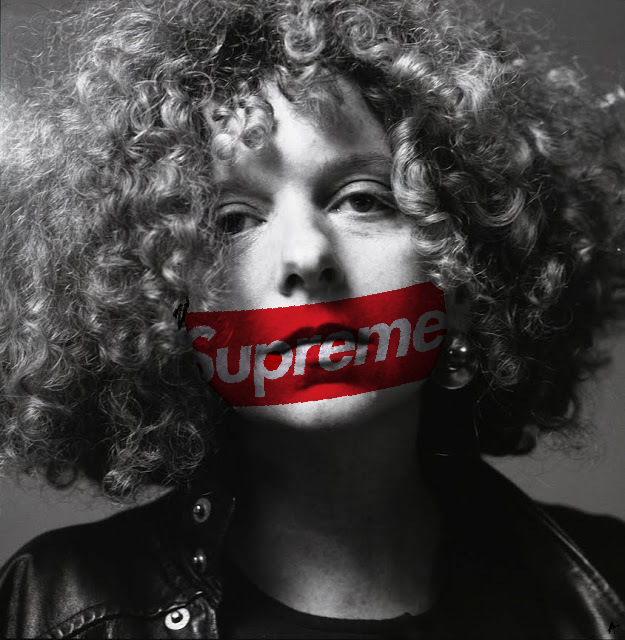
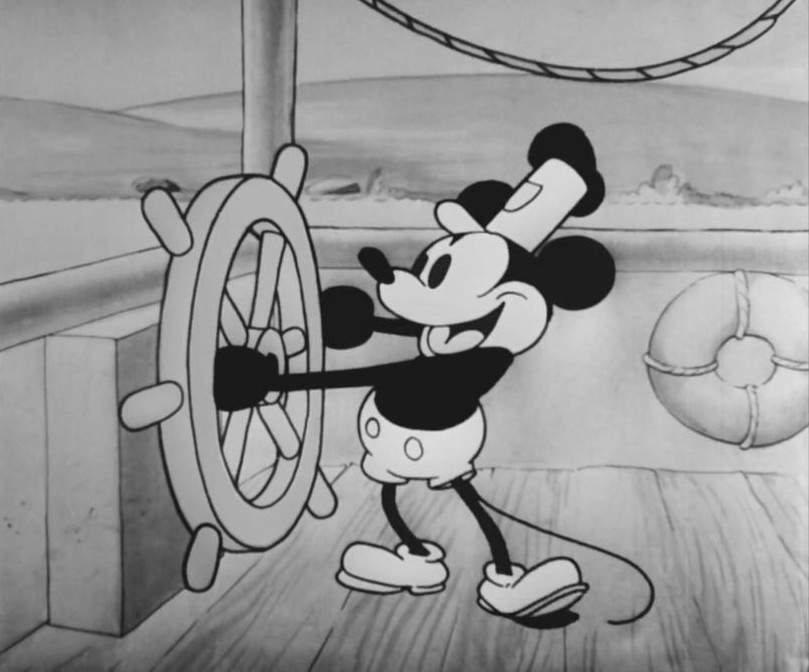
I always wondered why if, my designer friend had to settle, how Warhol got away with it.