I'm a math professor. In the US, it is near-universal that academic buildings are open to all:
- If I'm visiting someone at a university, for example to collaborate or give a talk, I'm likely to be told "Meet me in Room X of Building Y".
- Seminars are generally open to whoever, and people visiting from out of town will often attend. For example one time when I was in the area, I went to a number theory seminar at MIT, and I didn't let anyone there know I was coming beforehand: I just showed up.
I guess this is a privilege not available to most in the corporate world, but as a longtime academic this feels very sad to me.
I think it will become a lot less universal now. I know of a number of universities that closed to the public during the pandemic and have not yet reopened, or announced any plans about it, they just remain closed to the public; I bet many of them will remain permanently closed.
It is very sad, and has larger implications for our society I think. It's not just universities either. This is one of those inflection points where our society becomes less open and never goes back. I am old enough to remember 9/11 as such an inflection point too, how much more open many social institutions were prior. We seem to only go in one direction with these things, never back.
(In the pre-9/11 era it was widely assumed the direction was towards ever more openness, over time! No longer).
When I was 15 or so I spent a summer taking buses and trains into MIT for their Junction program, Reading and Writing Scifi in my case. Wandering around those halls was terrifying to anxious lil me but it was really just a wonderous experience. Got my first lecture on semiconductor physics there, although I did not very much understand wtaf was going on then.
I've worked in a math department at a major state university where it was necessary to have a key card to access anything. It was because of frequent theft. On a campus in an urban area theft is a major problem.
From your experience, would you say this is the norm for US/North American campuses?
Do non-North American campuses have different policies, in your experience?
I am asking because my experience with campuses (not in North America) has been very different. Gated entrances that filter out anyone who doesn't have a specific, sanctioned purpose. These were invariably state-run or sponsored institutions.
Yes, I'd say this is the norm nearly everywhere I've been -- although I've mostly only been to universities in higher-income countries.
There are occasional exceptions; for example, the American University of Beirut had manned gates, although the guards usually just let people walk through.
The one common exception I've seen is libraries. For example, at the main library at the University of South Carolina, there is a gate, and you have to either swipe your campus ID or register as a visitor.
In .cz, the universities are either completely open, or there are turnstiles/card entry which is possible to easily social-engineer[1]. The lectures are open and nobody asks if you actually study there (this would be even practically impossible with mass courses). The practicals/seminaries depend on particular tutor, but visitors are generally tolerated (sometimes even welcomed). In practicals where some material or resource is consumed (biology labs, welding tutorials) it's of course a different case.
I was visiting university lectures while at high-school, and then I did some totally out-of-curriculum courses when at the university.
[1] Just say "I go to lecture XYZ", or slip with someone thru, or the best strategy is probably to lie about forgetting the card at home (nobody checks it), as "I go to lecture XYZ but I don't actually study here" spawns weird conversations with the watchman. For example, at some buildings the card entry was installed only to prevent the tourists using the university toilets :) and the security is instructed to let in anyone who looks like a genuine attendant.
This might be a significant change to MIT culture. One of the things on which MIT prides/d itself was an open campus.
For example, the story goes, at 3am, some students in the Infinite Corridor could be discussing something interesting, and just walk into a classroom, to use the desks and chalkboard.
For another example, MIT (like other universities) makes many talks open to anyone interested, including the local community.
I've always marveled at how well MIT open campus has seemed to work, despite being in a urban area, and it's something I found very appealing and civilized -- like part of MIT's version of a university extending some of academia's noble ideals, outwards.
Given some other cultural changes to MIT in recent years, it'll be interesting to see how MIT thinking about open campus changes.
As a student of a nearby college, I had a fun time exploring MIT, and even took a couple courses there. I once did a project for a photography course taking photos of interesting pipes and other industrial looking stuff around MIT. Later, while living nearby (in my early 20s but no longer a student), I enjoyed occasionally visiting MIT common spaces to work for a while as a change of scenery.
Closing the campus down would definitely be a big cultural change.
Students can still roam the Infinite since all students have MIT IDs. Talks and conferences still occur, but folks will take place in areas that are easily accessible to the public, such as Stata Center, 26-100, or Kresge.
Part of the MIT experience was living and studying in the middle of a giant tourist attraction. I have classmates who were literally asked to be in pictures just because they were MIT students.
Since graduating, every time I visit I just walk around campus for an hour or so, strolling the halls. There are experiments, posters, and demos lining the walls. It's truly the densest area of knowledge I've ever seen.
This was my experience at caltech, too. The open campus was really fun to be on with the tourists and the old people, and the buildings were like a science museum.
My funniest memory of this was taking a picture with a Chinese tourist while standing next to my photo on a bulletin board.
I agree. Thinking back now, it was tough to appreciate just how unique, bizarre, and special the experience was of studying everyday at a place people travel across the world to take pictures at. Strange.
Those Korean “Dream Tours” busses jamming up the infinite as I ran to classes were a great memory in retrospect, but the bane of my mornings as I hoofed it to lectures.
Building access protocols remain largely unchanged from the spring 2022 semester, with several additional spaces now open to the public including in buildings 32, 76, and E25. MIT ID holders continue to have wide-ranging access to campus buildings; MIT campus outdoor spaces remain open to all. MIT continues to welcome visitors to open events and welcomes other guests who are registered using Tim Tickets or escorted by MIT ID holders."
The MIT campus always reminded me of The National Mall - an open grandeur, an unbreachable edifice in the name of ideas. It’s sad that both of those proud facades have been eroded recently, and both have had barriers added (temporary and permanent) in response.
In many ways those barriers feel like a formalization of division and will more deeply entrench the forces that prompted them in the first place. I understand the motivation, but I think true strength here is keeping things open in the face of serious issues, not trying to make sure they never happen again (at great cost).
MIT buildings, not the whole campus. I guess I don't see the big deal, I can't even get on the campus of my old university without a government-issued identification, and if I were caught in the non-public buildings I would certainly be arrested or at least escorted off-campus by some security tough guys. I guess MIT had a culture of openness, but that's being changed now, so kinda sad for those who went to MIT.
You and I have very different experiences. At the places where I've been a student and worked, it was possible and permitted to enter the vast majority of buildings (I think all academic buildings, but I'm hedging with "vast majority"), during working hours (something like 8am to 6pm), without any identification or permission. Importantly, this always includes libraries.
I know people who, when considering faculty job offers from universities, use "are libraries open to the public" as a proxy for other valuable properties of the university. It seems like a pretty good heuristic to me.
I've been asked for ID exactly once on a university campus---I needed security to let me into my office building in the middle of the night because I'd forgotten my wallet in there, and they needed to record my name for some record. The officer didn't seem interested in _checking_ the ID so much as copying down the name.
I would be surprised if this were true for MIT libraries, it certainly is not for Harvard. Otherwise, many academic buildings were open. But not libraries because tourists would be disruptive.
MIT's openness is a huge wedge issue in the Harvard-MIT culture wars. That sounds like stupid elitist junk, but makes since historically. MIT wasn't always... "MIT". Not too long ago, it was just another college. Its open culture combined with proximity to austere academic/government/private institutions is one of the two reasons that it grew to be the behemoth is it now. The literal openness to the public has long been a huge source of "soft power" for MIT.
(The other reason for MIT's rise being WW2 and the military-industrial-academic complex ofc)
Even with this topic set aside, MIT has been turning into just another Harvard, which is a real shame. MIT alum used to be very proud of the fact that any and all were welcome to participate in many aspects of campus life.
the other other reason for MIT's rise was its acceptance of Jewish scientists fleeing Germany in the pre WWII period, while the ivy league schools* still had (anti) Jewish quotas.
also, MIT was not a complete slouch before that, as Harvard proposed absorbing MIT in the early part of the 20th century.
* which weren't technically ivy league yet, that league being found in 1954
Interesting. My own alma mater UCL was founded on openness to women
and Jews and has thrived on that ticket of inclusivity. It was early
to the table in admitting overseas students when most UK universities
only recruited provincially.
When visiting central London I sometimes feel like a walk around the
Gower Street quad, and seem able to mooch about the campus and poke my
head into familiar lecture halls - even though it's central London
location would seem to make theft/vandalism a threat.
I think a lot of this physical security lockdown nonsense is
post-pandemic culture, and obviously the profitability of "security
industries"
pre-covid, you could go into MIT libraries as a member of the public. This was well known in Cambridge exactly because it was in stark contrast to the policy for Harvard libraries. You also could get on the wifi and access all the journals MIT had electronic access to.
The MIT library is open to anyone who can get into the cluster of buildings that contains it (along with the main building, the infinite corridors, math and CS and many other disciplines). You won't be able to check out books if you aren't from MIT, but you can stroll and read and scan at your pleasure.
Public libraries allow anyone in -- BPL for example. I used to study there all the time, but I didn't think it was that disruptive. This is just one opinion but I actually really like this as a heuristic and will probably use it myself. Libraries should be open to all!
Your experience matches mine, except for the libraries. In my experience at 3 private eastern US universities (two ivy leagues and one liberal arts), all libraries required university IDs or a pass to enter beyond the lobby. I do not know what was required for a non-university person to obtain a pass.
MIT has public spaces and a museum too that recently reopened in a new place. They hosted events at the Cambridge science festival a couple of weeks ago as well. The Cambridge symphony orchestra is using their performance hall again (after a Covid break) .
Though there were a few groups that would use their classroom space for meeting and I wonder if that is going to end. The quasi public dance events and the board game group in walker memorial might be student only (alumni and affiliates would also shut out)
The unsaid issue is of course bathroom access…
New president for MIT next year, so everything there is a little up in the air.
I'm guessing this is a private university? As long as you don't look very obviously hostile I find it hard to even wave down campus security, let alone them caring enough to ID people on campus. Computer labs and especially some science areas are locked off by specific keycards, but that's not something even existing students could do without asking for clearance.
But on the flip side, there was a private art university that did want my id when I drove on. They generally let me in no problem as long as I stated my business (Library), but I guess they wanted to make sure they were aware of any non-students coming in.
This is fucked - one thing I enjoyed about my campus access is I could waltz into almost any academy buildings... and so could anyone else. I met so many cool people who were just interested, and just wanted to have a chat.
It harks to the older age where you just show up to a place to get a glimpse and hang out...
The post 9/11 security theatre has reached new levels that weren't even imaginable back then, and people are completely desensitized as well.
For instance, there are private corporations running airport security and there are numerous ways to skip steps (such as taking off your shoes), by simply paying the government. Liquids and knives are trivial to circumvent as well.
> There is nothing so permanent as a temporary government program
> For instance, there are private corporations running airport security and there are numerous ways to skip steps (such as taking off your shoes), by simply paying the government. Liquids and knives are trivial to circumvent as well.
To be fair, you're paying the government to do a check on you, so it's clear that you aren't a terrorist.
As for Clear, all it does it move you to a shorter line.
My fondest memory of visiting Boston was sneaking around MIT and through different buildings with my brother (this was maybe 5 or 6 - maybe 7! years ago). We ended up getting lost in some building and climbing up to some random floor where the walls had bulletin boards of posters of math, science, and art club activities. I remember walking into an empty lecture hall and seeing last lecture's chalk scribblings still visible on the calk board. We ended the day eating in some dining hall. We could have passed as students ourselves!
I guess I understand why... But it's sad in a way that I won't get to ever experience that again. It's a place that I could never dreamt of being accepted by, but at least for a moment I pretended I was haha.
I knew a kid who got into MIT. I walked in on him collaborating with his girlfriend to write his own recommendations. Sometimes you have to make your own luck I guess. Funny because his girlfriend absolutely deserved to get accepted into MIT, I don't think she took this path, but it kind of let me down that she was involved in this.
Fun fact, this is how it often works in academia. By request, many recommendation letters are given as drafts to the people 'writing' them by those whom they are written about (unless he was writing them as someone without their permission, which would definitely be bad).
I googled 'MIT Tim Ticket' and got this on the first page. "New for MIT alumni: MIT alumni can now sign up for a digital MIT ID for ongoing access to MIT’s non-residential buildings and facilities on campus."
I tried this on Monday and it didn't work. Even if it did, this goes beyond access for alumni. I believe the campus should be open to everyone, as it's been for decades. It's one of MIT's values, as Reif himself said:
> Because openness is a central MIT value, our campus is open too. The vast majority of our buildings are open to the public and the campus has no visible perimeter; we are an aggressively ungated community that works around the clock and welcomes the world in.
Just got demotivated to get one. Is there a reason why they do all that? Is that because of Covid or something else? I've been kinda under the rock on this..
The biggest danger with regards to Covid is not the formal restrictions or mandates, it's its convenience as a scapegoat for various shortcomings or reductions of service level.
Even 2 years down the line I'm still seeing businesses blaming Covid for various issues instead of blaming themselves and their inability to run/manage a business properly.
I think once vaccine rollout was widespread it was time to lift many of the restrictions. But regardless of your opinions on this, MIT is not claiming the restrictions are still there because of COVID. They are outright saying they are keeping the closed campus as other restrictions are lifted, for security reasons.
I don't want anyone to arrange any passes. It creates a barrier to entry, however small, that means fewer and fewer people will gain access to MIT and be inspired by it.
The restrictions are clearly there, you can't miss the eyesore in lobby 7.
But you're right that they're easy enough to get around if you're just looking to access main group buildings. The restrictions are inconsistent across entry points and it's super easy to tailgate students during the day anyway.
Places like Hayden library are currently much harder to get into without a student ID though.
Definitely weird. The whole area is 100x more gentrified than when I attended in 2007 with a whole foods on every corner instead of star market. My guess is it's more about tourists causing issues than actual safety issues.
One issue is that today's students rely on electronic devices that are much more prone to sprouting legs when left unattended. The Athena combo and the weight of a workstation made that less of an issue in our day.
I can’t imagine leaving my laptop or phone unattended in a lecture hall. Seems a bummer to close the campus to the public because students can’t keep an eye on their property.
Don't make it harder for people to steal, just blame the victim for not watching his or her stuff more closely? Sounds a lot like victim blaming to me.
Yeah. If you leave your phone or laptop in some place unattended where you know someone might steal it, and it gets stolen, you certainly aren’t to blame for the theft itself, but closing down a campus for irresponsible behavior is not the right “fix”.
Yep, here in Japan people will leave their valuables on a table to reserve it or to go to the bathroom. It's just a different culture; here, people are taught not to steal. In western cultures (particularly America), that just isn't the case apparently.
I live in America and leave my valuables unattended in public all the time. It’s locale-specific.
It’s always a culture shock for me to travel to other places in America and see bars on store windows, homeless people, signs telling me not to leave stuff in my car. I can’t understand how people let things get that way or why they allow it to continue.
What exactly are "they" going to do about it? Set up a surveillance police state where everything in public is monitored all the time, and then catch the thieves and "disappear" them so they don't re-offend? This isn't something you can easily stop without resorting to extreme policing measures. The reason it doesn't happen in Japan is purely cultural: people simply don't think to do it, because it's culturally unacceptable. It's just like pickpocketing in America: no one does it, even people who really are thieves and would steal stuff out of your car. There are crimes in Japan, but they're other kinds of crimes (usually some kind of scam). Just like there's plenty of crimes in America, but pickpocketing just isn't one of them.
Do you mean because they're poor? There's plenty of poor people in Japan, but they don't resort to stealing people's phones or wallets. Again, it's cultural. And it's not just America; over in Europe where there's a far better social safety net than America, petty theft is commonplace, especially pickpocketing (which, to America's credit, is almost unheard of there, which again shows this stuff is cultural).
Pickpocketing is only a concern in tourist traps like if you went to visit the tower of Pisa out something.
And waking around my university buildings, it's very common to see people leaving their stuff including expensive laptops to reserve their spot in the library and random tables in hallways that have them. Though this is frowned upon if you're going for more than a few minutes.
> Pickpocketing is only a concern in tourist traps
I have not spent a huge amount of time in Europe but judging from the way certain minority groups are spoken about by many Europeans, it is not a widely held belief in Europe that pickpocketing is limited to tourist areas - although I'm sure that's mostly true.
I’m saying it’s not because we’re not “teaching” people not to do it, or not telling them not to do it, like the parent comment says. Of course we tell everybody not to steal. Clearly telling and teaching are not the gap here.
It's true that babies don't get stolen here, but laptops and phones left in public certainly do. The resale value is better and the punishment much less severe if you get caught.
(The link in the article you posted mentions 97 cases of abductions; it's important to note that 100% of abduction cases involve the child's family, e.g. in custody battles and similar. A kid getting snatched off the street is a once-in-a-decade thing or rarer, and it's never an infant.)
I leave my laptop in the cafe all the time. Depending on the location and the people around, I’ll ask someone nearby to keep an eye on my stuff.
Edit: this is in America. In Eastern Europe, where petty theft was widespread, I’d only do it in upscale locations (e.g in the de-facto ‘embassy’ district) or when I was friends with the staff and could trust them to keep an eye on my stuff.
I walked that basement corridor route so many times, as a fast and non-freezing/slipping route to grab food late at night, before going back to the lab.
As an alum living in Cambridge, I don't get the urge to go back into the buildings, but not being able to does give the feeling of one fewer positive connection remaining to MIT.
that was literally my thought looking at the map as someone who moved away in 2019. That walk down the infinite corridor, then dropping into the tunnels when I hit the Chemical Engineering department and popping out at MIT Medical was one of my favorites.
MIT has been moving into elitist territory for decades. Of course they no longer want the proles on campus. Ironically, they passed Harvard for elitism, which was the opposite of when I attended. Harvard tries to do some outreach, for example, letting kids from the local high school take classes there. MIT has a big middle finger to the city it lives in.
I think it has changed a bit, but at the same time there's no way it's "surpassed Harvard" in elitism. I recently spent time on both campuses and Harvard is still more restrictive than MIT is, and the vibe is clearly more stuffy. The socioeconomic admit stats don't lie that Harvard is way more elitist (not to say that MIT isn't at all).
Not to put blame on MBAs, but Sloan has always stood out of the pack for me. Others are more “we’re just doing more amazing things than anyone else” kinda elitist, not “we’re better/smarter/more successful etc.” kinda elitist.
Before this could any random person just walk into any MIT building? To me that is the weird part, not the fact that they are now restricting it. My (public) university enforced ID badge access on all doors like 20 years ago. And that was in a college town with next to no security problems, not the middle of a dense city like MIT.
Sometimes if I had spare time in Boston and didn’t have anywhere to be I’d go to the Barker library (under the great dome). You could just stroll by most buildings on campus. I really liked that about MIT.
Well, not just any. All of the dorms had access controls. Some of the business school buildings and floors had access control. There was a somewhat-noted case in the late aughts of MIT campus hackers (tunnel, shaft, and crawlspace-explorers and pranksters that the university somewhat turns a blind eye to) who had to fight trespassing charges after walking through an unlocked door.
Labs and some buildings were locked by most hallways and open spaces were available to the public. I've always spent time at MIT when in the area. This is a real bummer but it isn't like the institution hasn't gone down hill in many other ways already.
After hours in the winter it was always a fun routing challenge to figure out how to get from one place to another across the campus while spending the minimum amount of time out in the cold only using doors that were likely to be unlocked.
I wonder if this ultimately means the end of Mystery Hunt (at least as anything except an online event)?
True, it's not commonplace to have the buildings be open like that. But that's one of the things that set MIT apart, and it sucks to see it go away. I for one will do my best to see these policies overturned.
University of Toronto has a similar policy of buildings being open to all during business hours (or at least did a few years ago), and it's right in the middle of downtown as well.
AFAIK most Boston schools (even BU which doesn’t even have a defined campus and just exists in the city) have almost no restrictions on entry to academic buildings except libraries. There might be some rules here and there about student access only but nobody checks and nobody cares.
Pretty funny/sad that the one of maybe 2 truly redeeming qualities of overpriced tertiery education is getting gutted before student loan freebies are passed.
Good luck maintaining an open academic culture if no one can just hang out in office hours.
What about this prevents students from hanging out in office hours?
Also, MIT is one of the few private institutions in which the vast majority (85%) of undergraduates graduate debt free, which is particularly surprising given its pedigree.
> What about this prevents students from hanging out in office hours?
It's not about office hours. It's more about the connection between MIT and the massive surrounding tech community.
I was briefly an MIT employee, and I gave a departmental talk on some work I'd done as an undergrad. And if someone from one of the surrounding tech companies had wanted to drop in, nobody would have even noticed or cared.
MIT is surrounded by tons of amazing tech companies, many of them founded by MIT alumns. And there are many other major universities in the area, including Harvard. It was pretty normal for people interested in a topic to be able to casually interact at MIT.
But I guess MIT has apparently decided to add a lot of friction to these kinds of casual intellectual interactions with the larger community? Instead of just sending out an email saying, "Hey, talk on the 9th floor on multiple dispatch implementation," I guess you now need to get people to apply for visitor passes, and make it an officially scheduled event, and get everything signed off on?
This comment perfectly encapsulates what I'm talking about - thanks for capturing it so effectively.
As someone at the first MIT BTC meetup as a Maryland visiting student who just showed up and had a pass to get into the campus, which 100% makes sense, this action just makes me sad. Maybe if they make it easy to officially give passes to guests to go around campus, this would be ok, but still - definitely feels like the end of an era, especially if they are strict about it.
This is a law of nature, as entropy always increases, freedoms always decrease. 200 years ago you could walk anywhere freely, now 95% of land is restricted, and even in public spaces you are constantly watched by cameras and increasingly restricted in what you can do.
Is this COVID-driven? How sad. Pretty weird seeing “MIT ID (Covid Pass)” in almost-2023.
Does MIT know that the rest of the world is over it? That most countries have no entry measures now? When do the smart kids just start saying “no” and attend a university not run by cowards and ninnies? What a bunch of dorks (and not in the endearing sense).
That's more like one man still making decisions around COVID, and everyone else has to obey. Pretty sure most Chinese people would rather be getting on with their lives like everyone else.
I also know individuals that are immunocompromised in the US that still factor covid into decision making. What exactly does “the rest of the world” mean? World population minus 17% minus the rest of the people deemed unworthy of counting? What a neat and meaningful metric.
It's likely due to many reasons, COVID being the last straw. All schools in the US have been getting more and more locked down with every school shooting.
International Air Transport Association travel restriction map seems to imply many countries, aside from Europe, do still have travel restrictions for foreign visitors.[1]
Just spot checking a few: India still appears to require a negative PCR test.[2][3]
The USA generally requires proof of vaccination.[4]
Russia requires a negative PCR test and quarantine if you get sick while there.[5]
This is sad; I agree with other commenters about meeting interesting people thanks to open campus access. Last night on campus I met a welder from up north. He’d come to play D&D with a group that meets on campus, and we spent a couple minutes talking about the game and his character.
In France, the schools, universities and pretty much any other establishment are closed to the public. After around 7pm, the doors are actually physically chained. So it’s difficult to get in or out even if you are a university staff, student or professor. In business hours, if you are a member of the university, you must present ID and pass through security or welcome desk (a bit like in companies). The irony is that these are publicly funded institutions!
Grocery stores also have multiple security patrolling the store. Funny, sometimes the security has to lock your bag with some tools when you get in, and cut it off (or search it) when you get out!
> In France, the schools, universities and pretty much any other establishment are closed to the public. [...] In business hours, if you are a member of the university, you must present ID and pass through security or welcome desk
Which damn universities are you talking about? I sure have no issue roaming on the campus of the local university, going to libraries and administration and visiting former professors without any security check. That would be hard in the first place given how vast and open is the campus. The only place some sort of check are mandatory (half of the time) is one of the student association asking to show the membership card when buying beers.
At some point after Charlie Hebdo there was annoying security checks in the parisians univs I was attending but that stopped within a year or so.
There is usually one vigil in stores, but certainly not "patrols". For the record, countries with no immigration issue like Japan or Czech Republic don't have this kind of security in stores. Univ cafeteria in Japan is also open to all, and there are occasionally some hobo going in.
It's pretty common to have U.S. universities lock buildings at night as well, just not as early as 7pm, with exceptions such as computer labs, libraries, etc. It's generally a pretty good idea to lock up large buildings with a huge amount of capital equipment inside them when they're not being used.
I'd say most universities are open with public events but would otherwise like their resources dedicated to students, both for resource allocation and safety. It makes pretty good sense.
I'm not entirely sure I get the complaints here. Are people pining that hard to randomly walk around MIT and the buildings when they have zero affiliation with the university?
Although I don't think this is possible at MIT in particular, most U.S. universities will give you limited access to their libraries, even private ones.
I'm in the UK. I've never been to university so I don't know how it is in general, but in university towns like Oxford or Cambridge, I've visited university properties during the day and nobody has ever stopped me.
I've also never had security locking or searching bags in grocery shops. However, it's becoming (sadly) more common in museums and events that they'll do some sort of cursory bag search before you enter, supposedly due to risk of terrorism.
We do have guards in shops, depending on where you are, but they're there to catch thieves.
In Spain it is normal to have quite restricted access at night, fairly open access during the day, but there are bedels all over the place to watch who comes and goes and institutions with stealable stuff typically have quite restricted access involving a combination of key cards and physical vigilance.
I'm feeling less and less at home in the place. Besides the bad vibes, this will cause real problems for seminars and colloquia, both for the invited speakers who will have to trail locals every time they need to get into the building, and for the visitors from other places (Boston has no shortage of those) who want to attend. But apparently, no one counts visitors, so visitors don't count.
It looks like they have a system for events where invited guests get a temp pass called a Tim Ticket and someone can open the door for the general public. But I understand your feelings about the vibes.
I've had serious problems getting the machines to recognize the Tim Ticket on my tablet's screen. Guess you get used to it eventually, but it's hardly convenient.
Remember when gnu.ai.mit.edu was "open to the public" in a very real way, because everyone could -- and did -- log into Richard M. Stallman's passwordless account?
Very disappointing, unlike the school up the street with a literal fenced in Yard, MIT is embedded in Cambridge off the street. I’m sure that’s created some challenges, but accessibility seems central to hands and minds.
There used to be thousands of tech/pharma workers on campus. I used to eat lunch at the different cafes and food trucks regularly. With WFH the campus is a ghost town to what it used to be.
I recall another HN post prior to covid about the MIT administration clamping down on the culture, but don't remember what specifically.
I watched a lot of nice-to-haves get removed over the years at the school I attended too. The founders of a local business had gone to the same school, and saw similar in their time. They put in very succinctly: it's a gradual slope in one direction and it only takes 4 years for the people who remember and care to disappear.
I think a lot of "temporary" COVID restrictions are going to be permanent (more for cost reasons or because it's the coward's way to kill things they don't like than because COVID is endemic). I wouldn't be surprised if daily hotel housekeeping never comes back, except at the most upscale properties.
I wonder how this will change (if at all) for events like Mystery Hunt (January 2023). A large portion of folks are alumni, or friends who have been hunting for a long time but never attended MIT.
Then again, there's a long history of MIT killing culture via policy:
I don't know everything about the new policy, but I can say that MIT historically acted quite differently from a lot of universities (or any other institutions). The campus was more open than basically any space. Groups with tenuous ties to MIT held meetings on campus, theater and arts groups used facilities for practice, etc.
In some ways, MIT's history feels like chaos and this openness was part of that chaos. It's a part of the MIT culture that it seems the administration is trying to extinguish. Sometimes, this culture is harmless fun like measuring the Harvard Bridge in Smoots (https://en.wikipedia.org/wiki/Smoot) or how some dorms allow residents a lot of freedom to customize their space (in ways that other universities would go crazy over). Other things were more controversial like Senior House. Depending on who you ask, Senior House was a place of support and community for minorities and marginalized students or a place that had an issue with drugs and alcohol that was responsible for a much lower graduation rate.
I think part of MIT's culture and success was its open and sometimes chaotic nature. It certainly endeared the school many people in the surrounding community who saw it as a place of the community rather than an ivory tower set apart from it. I think it also created an environment where students felt free to try things. Sometimes this was great stuff, but it could also mean students taking on too much or doing things that might not be as great. From what I've heard (and sometimes seen), it looks like the administration wants to push MIT in a more "normal" and controlled direction.
Some people will say that MIT is a private organization that can do as it likes. Legally, they're not wrong. However, MIT gets a huge amount of governmental support - all the grants from the US government for research (which could be directed to publicly-controlled universities instead), all the money to students, all the tax advantages they enjoy, and MIT is one of few private land-grand universities. One could even argue MIT wouldn't have risen to prominence except for the US's funding of defense research at MIT. This occurred because Vannevar Bush (MIT graduate, MIT Vice President, and Dean of the MIT School of Engineering) became head of the Office of Scientific Research and Development during World War II and directed defense research disproportionately to MIT. The government often chooses winners and losers and they chose to boost MIT. As a contrast, when William & Mary in Virginia needed money, the Commonwealth of Virginia conditioned that money on it becoming a public university. Likewise, Rutgers is now a public university despite hundreds of years as a private school. Similarly, sometimes governments pick who can get the government's money without concessions.
Regardless, it's certainly a big shift for the school. Academics from other schools can't just pop by and will need to be escorted to meet with someone, it likely won't present the same atmosphere where alumni in the area would feel like they've retained a deeper connection with the school than most schools' alumni, and it just won't feel like a welcoming space within the city. I'm not going to say that this is the wrong decision because I don't know everything that went into the decision and I don't generally, but it will make things very different. I know MIT has struggled with certain issues on campus, but most of those issues don't seem to come from its open-campus policy as much as internal stuff. I feel like I should have a conclusion, but I guess it just feels sad. Whether they're doing this because they just want MIT to be more normal and controlled or whether they're doing it in response to issues, it's a sad change.
I never really got this glorification of 'elite' universities. Like it's a cult. It's a social imagination that people think highly of for the sole reason that it only selects a small percentage of students.
This is pretty much true at all colleges and universities today, not only private institutions like MIT, though the campus and administration buildings seem to be fully open during business hours. Years ago things were more open, up until the late 1990's even dorms were open at all hours, but then 9/11 happened and everyone got scared and paranoid, and there have been a lot of mass shootings at schools, then COVID, so it isn't all that shocking. If you had or have children at university, do you really want an open door policy with non-students allowed to go where they want on campus at any time without appointments or permission and unescorted? It's really a different world, and I think the most prudent position to have is not to expect and you won't be disappointed.
I graduated in the 2010s after attending two universities and this is not my experience at all. Every campus I've been on has been wide open. Technically you're supposed to get permission before auditing a lecture, but no one actually checks and every building is officially open to the public. This is still true in 2022 in the three closest universities to me.
You know, I'm not supposed to be snarky, but in all seriousness, there is a saying about encountering jerks everywhere you go.
My college experience was also quite open, as a state school it was in some sense a public institution and you pretty much could just open a door to a classroom and attend lectures as you wished. A closed campus wouldn't really be practical as students might want to work at any given time of the day - and I sometimes did as an architecture major who spent long hours meticulously finishing projects.
I didn't live on campus, but obviously the dorms were a bit more like apartments with their own ability to manage access and I don't know about admin offices and things - most professors were pretty accessible but I'm sure the doors could lock if they wanted to. But overall academia tries to foster a sense of openness both literally and metaphorically.
> You know, I'm not supposed to be snarky, but in all seriousness, there is a saying about encountering jerks everywhere you go.
The saying you refer to and your comment are both obtuse ad hominems, and I'm not sure who would mistake it for wisdom. I'm far more like hemorrhoids: I endlessly irritate assholes.
This viewpoint is very US-centric, but that said, the rest of the world is moving in the same direction, although much less.
As a current US resident, I can see how cities and their residents can be scary at daytime in ways that eg Europeans can't comprehend (eg Tenderloin in SF), but it's almost exclusively due to the lack of social programs for the homeless, drug addicts and mentally ill, and to a smaller a extent, about the prevelance of firearms.
The American solution, to keep the poor poor, is eating it from the inside. Hiding in your cars, locking down campuses, hiring private security for things like schools and living in gated communities is a terrible living experience, it reduces the reachable living space to the bare minimum. But almost every collective problem has an individual solution here, and few people even believe it's possible to change it.
As a US citizen and resident who has only experienced college campuses in the US, I am forced to agree, but at the same time I would like to divorce myself from any government policies, and especially from whatever is happening in N. California. I also must inform you that I have no ability, personally, to implement social programs.
But I agree with you if you are saying that economic inequality is a huge problem in the US, though your examples of security aren't in a vacuum and at least somewhat are a reaction to and justified by crime, which is probably related to economic inequality. And yet crime is not justified by economic inequality. In a lot of ways, the problem here is appetite: everyone has an endless appetite for wealth, are gluttons for it, jealously, and can never get enough. Personally, I don't think it would be a bad thing if there were no rich and there were no poor, and everyone was gradients of middle class. I don't know how we get there from here.
> If you had or have children at university, do you really want an open door policy with non-students allowed to go where they want on campus at any time without appointments or permission and unescorted?
Dear god, yes. University without an open culture sounds terrible and pointless. Might as well send your kid to some sterile LAC and put them out to pasture.
Then would you want an open door policy on your home with non-residents allowed to go on your property at any time without appointments or permission and unescorted? Does your home sound pointless and terrible without an open culture? How about your place of work? Because while they are students living on campus, it is their home, and while instructors are instructing and administrators administrating on campus it is their place of work.
While I would love to live in a world absent of gun crime and rape and other violent crime, without theft, vandalism, and white collar crime, where no one need lock their doors and no one need protect themselves or their property, unfortunately, a lot of people suck. Universities are organizations and businesses, and it would be great if what is theirs was mine, it is not this way and I have no right to trespass there. As much as it would bother you or me that someone just decided to hang out in our yards on a nice day, or come inside to see what was on the television in the interests of learning, it very well may disturb students and instructors who are all there for a reason, and whatever the heck the non-student is doing there, their reasons for doing so could not be as important.
You are acting like having universities be open to the public is some sort of insane thing. Prior to COVID it was EXTREMELY common. I worked at 3 universities, my partner worked at 3 other universities, and ALL of them had all academic buildings and libraries open to the public during normal business hours with very few exceptions.
Blocking carte blanc access to regular academic buildings was abnormal and even a major academic cultural faux pas prior to 2020. I can't think of a single building access door that was locked. Portions of buildings, lab spaces, classrooms while lectures were in a session -- sure. But not buildings. Everything was always very open to the public and someone had to be really causing issues to be kicked out.
MIT was an outlier in this respect because even things like seminars were always presumed to be open to the public unless stated otherwise.
> Then would you want an open door policy on your home with non-residents allowed to go on your property at any time without appointments or permission and unescorted?
My home is not an academic building at a university, and dorm buildings are not the same as academic buildings.
I don't want random people playing football or taking a piss in my home, but I have no problem with parks or public bathrooms.
> and while instructors are instructing and administrators administrating on campus it is their place of work.
As someone who worked at a university for many, many years: stop lecturing me; I'm supposed to be the one that does the lecturing! ;-)
Also, I can tell you don't work at a university or are yourself a deanlet because no academic says things like "what about the poor administrators?!" ;)
> ...at any time without appointments or permission and unescorted? Does your home sound pointless and terrible without an open culture? How about your place of work?
I have lived and/or worked on university campuses for going on three decades now, and yes, this is entirely normal and I wouldn't have it any other way.
I am quite certain that this was done by administrators who aren't part of and don't understand MIT culture and are just implementing what was done in the previous place they worked.
I spent time at Oxbridge - I was shocked that you couldn’t just walk into a campus. Very tight security. I thought it said something about Americans v Europeans. I guess it still does.
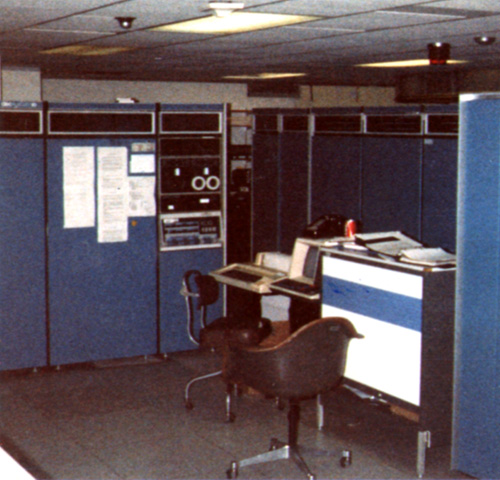
I deeply appreciate and am greatly privileged to benefit from the MIT AI Lab's "Tourist Policy" and general openness, generosity, and encouragement of education, which allowed me to use the lab's PDP-10s over the ARPANET as a high school student.
I could connect remotely over the ARPANET by dialing up a local ARPANET TIP and connect to any computer without a password, then apply for a free account on each of the MIT-AI Lab's PDP-10s, by saying that I wanted to learn Lisp or MDL or Macsyma, and use the computers read email (mine and other people -- there was no file security and snooping was encouraged) and play games (like Zork, Adventure, Guess The Animal, and Doctor) after business hours.
As a high school student living in Maryland, I'd occasionally go on a pilgrimage to MIT and visit the MIT-AI Lab at 545 Tech Square, the Media Lab, and other places on campus, including exploring the steam tunnels (like the ones depicted in Real Genius).
They welcomed me to the lab, and I could easily get into the machine room and offices at the AI Lab simply by knocking on the door in the elevator lobby, and somebody using a Lisp Machine would press [Terminal]-D to automatically buzz open the door without getting up from their seat or looking who it was, just to make the knocking stop. (You could also press [Terminal]-E on a Lisp Machine to summon an elevator to your floor.) Then I could walk around the lab, and find a free Lisp Machine, Knight TV, or Ann Arbor Ambassador terminal to log in with, and even sleep on a bean bag chair or couch in an office, if it wasn't already occupied by RMS or some other random tourist or grad student.
Members of the MIT-AI Lab would take the time to help and tutor me with Emacs and Lisp, invite me to go out and eat pot stickers and Suan La Chow Show at Mary Chung's and get ice cream at Toscanini's, encourage me to pick up free papers from the publications department, use the Dover laser printer and Velu Binder to print out and bind my own copies of the online ITS manuals and other documents (long before the consumer laser printers were available), and they'd even let me use the gigantic cappuccino machine (I heard one MIT grad student claim "I had offers from Harvard and Stanford, but I came here because of LCS's cappuccino machine!").
I've written about how the MIT machines were a nerd magnet for kids who had access to the ARPANET, and how I logged in over the ARPANET to play Zork:
How ITS's open approach to security through obscurity encouraged hacking but discouraged vandalism because it really wasn't much of a challenge to break in or crash the machines:
In my exploration of other people's home directories, I ran across an inexplicable (even to the author) TECO implementation of a Universal Turing Machine in Marvin Minsky's home directory "AI:MINSKY;":
Once my friend and I were hanging out in Norman Margolus's office with the lights out playing with his CAM-6 cellular automata machine, when his wife opened the door, turned on the light, and was surprised to see us there instead of her husband. She asked if we'd seen Norman, and we answered no, then she politely turned the lights back off and closed the door, leaving us to our fun.
How Jerry Pournelle got kicked off the ARPANET and MIT-AI Lab's computers for being an obnoxious antisocial unappreciative entitled drunken right-wing jackass, taking his unique precious privileges for granted while making impotent threats and accusing the same generous lab members who had welcomed, supported, and mentored him of being "communists":
>"One thing that is known about ARPA: you can be heaved off it for supporting the policies of the Department of Defense. Of course that was intended to anger me. If you have an ARPA account, please tell CSTACY that he was successful; now let us see if my Pentagon friends can upset him. Or perhaps some reporter friends. Or both., Or even the House Armed Services Committee." -POURNE (Jerry Pournelle)
>"The man has learned nothing from his presence on MC and sets a bad example of what people might potentially accomplish there. I'd rather recycle his account for some bright 12-yr-old...)" -KMP (Kent Pitman)
At the other end of the politeness spectrum, Rob Griffith's memories of touring the MIT-AI Lab and encountering Zork as a 15-year-old kid:
>"I believe on one trip we were touring the MIT Artificial Intelligence Lab, and we saw some people gathered around this terminal. And we inquired what they were doing, and out of that came this game Zork, and my friend, since he was at MIT, had us get an account, and we were able to log in and figure out what to me looked like an extremely arcane set of commands to actually get this game running. From then on we were pretty much hooked from the first time we actually saw it. I believe we saw it when we were walking through the MIT AI Lab. I was a guest. Even back then there was some pretty amazing stuff in there. To see all these students and professors huddled around this terminal. What are the doing? They had all these incredibly cool Lisp Machines with big gorgeous displays, and a bunch of people were huddled around a machine that's got text. And we were sort of intrigued. I believe that was the first time I actually saw the game, so to speak. You know, I never got names, so I don't know. I was a petrified little 15-year-old kid walking around the MIT lab, so it was a bit of a feeling of "Am I supposed to be here?", and if I am supposed to be here, I'm pretty sure I'm not supposed to talk, so perhaps I'll just be quiet and observe." -ROBG (Rob Griffith)
>>Cadging passwords and deliberately crashing the system in order to glean evidence from the resulting wreckage, Stallman successfully foiled the system administrators’ attempt to assert control. After one foiled “coup d’etat,” Stallman issued an alert to the entire AI staff.
>>“There has been another attempt to seize power,” Stallman wrote. “So far, the aristocratic forces have been defeated.” To protect his identity, Stallman signed the message “Radio Free OZ.”
>>The disguise was a thin one at best. By 1982, Stallman’s aversion to passwords and secrecy had become so well known that users outside the AI Laboratory were using his account as a stepping stone to the ARPAnet, the research-funded computer network that would serve as a foundation for today’s Internet. One such “tourist” during the early 1980s was Don Hopkins, a California [Maryland at the time, actually] programmer who learned through the hacking grapevine that all an outsider needed to do to gain access to MIT’s vaunted ITS system was to log in under the initials RMS and enter the same three-letter monogram when the system requested a password.
>>“I’m eternally grateful that MIT let me and many other people use their computers for free,” says Hopkins. “It meant a lot to many people.”
>>This so-called “tourist” policy, which had been openly tolerated by MIT management during the ITS years, fell by the wayside when Oz became the lab’s primary link to the ARPAnet. At first, Stallman continued his policy of repeating his login ID as a password so outside users could follow in his footsteps. Over time, however, the Oz’s fragility prompted administrators to bar outsiders who, through sheer accident or malicious intent, might bring down the system. When those same administrators eventually demanded that Stallman stop publishing his password, Stallman, citing personal ethics, refused to do so and ceased using the Oz system altogether.
>TOURIST POLICY AND RULES FOR TOURIST USE OF ITS MACHINES
>It has been a long standing tradition at both the Laboratory for Computer Science and the Artificial Intelligence Laboratory at MIT to allow non-laboratory people to use the laboratories’ computers during off hours. During the early days of the laboratories’ existence a non-laboratory person (such people have come to be called tourists) could gain access to one of the computers by direct personal contact with a laboratory member. Furthermore, tourist access was controlled because access to the laboratories’ computers was de facto achieved through on site terminals. A tourist sponsored by a laboratory member would generally receive some guidance and tutelage concerning acceptable behavior, proper design techniques for hardware and software, proper programming techniques, etc. The expectation on the laboratories’ part was that a large percentage would become educated in the use of the advanced computing techniques developed and used in our laboratories and thereby greatly facilitate the technology transfer process. A second expectation was that some percentage would become interested and expert enough to contribute significantly to our research efforts. Tourists in this latter group would at some point in time graduate out of the tourist class and become laboratory members. In actual fact a number of former and present staff members and faculty earned their computational wings in just this fashion.
If an intellectual thinks in a forest, did he really think? A core part of intellectual work [1] is that it must be disseminated to other people.
University do disseminate academics to students, but students often pay for that privilege. Allowing the public free access to the library, to seminars and other intellectual events on campus is a different way of spreading knowledge and learning [2]. More importantly, by allowing public the university reminds itself that it is not just a commercial institute that produces a product, a mindset very common in universities now.
There are other ways that universities can resist being commercialized, but public access is a visible canary, which once it dies signals the end.
[1] especially work funded partly by tax payer dollars
[2] Public outreach should be a core goal of any university. See [1]
I agree that sharing what you know is important, but a lot of it can be done online. If you want to see a lecture, watching a video is probably a better way to do it, and it can reach a lot more people. Access to academic papers is better done online.
If you read the MIT library access policy for visitors [1], it's pretty restrictive anyway. University libraries mostly aren't public libraries.
So it seems like the question isn't whether a university provide benefits to the public, but rather, what does the public actually gain from physical access? Are physical visits important for practical reasons, or are they primarily symbolic?
Would much rather seen a lecture in person than have to listen to it in a shitty mid-2000s recording (which seems to be the case for a lot of MIT online videos, especially non-CS ones)
The disease is not going to go away just because we are bored of it. I’m continually shocked at how cavalier everyone is about a deadly communicable disease. Billions of people covering their eyes singing “la la la I can’t see COVID so it doesn’t exist!” Future historians will earn PhDs explaining this decade.
Academics & students who've visit always mention the obvious countermeasures to campus shootings. Far more security, sequestered academic offices, cameras.
While this proposal is radical... it's not unexpected.
At the risk of sounding heartlessly numerate: campus shootings are so rare that they should mostly be ignored. The danger level is very, very low. If you must worry, then worry about something boring but important like traffic accidents instead.
For terrorists, causalities are a means rather than an ends.
Trying to characterize terrorism in terms of body bags isn't going to work for many reasons. One is that terrorism works even with small numbers of total body bags. Another, perhaps more important, is that terrorists will increase their violence to match the population's threshold.
Anyways. I don't have any answers. But dismissing terrorism because it doesn't kill that many people kind of misses the point of terrorism in a lot of important ways.
I interpret "works" to mean that it accomplishes its goal. For instance, if somebody threatens to break your storefront windows unless you pay protection money, so you pay the money, then the threat worked. We used to use a different word than "terrorism" for that, but you get the idea.
But you rarely hear that grafitti works. Or that road rage works. They might accomplish some goal, but that goal may be difficult to discern. So we tend to qualify the success. "If the goal is..."
If the goal of running a marathon is to improve personal performance...
When the point is unclear to say the least, it is pointless to say it works without saying what it works to accomplish. It's like saying, "dying your hair works."
For example this modern misuse of the word terrorism is designed to strike fear into a population, but the point of that terrorism is not just to scare people, it is to coerce them into agreeing to give more power and money to the ruling class.
Hurting and scaring people just to hurt and scare people isn't terrorism, it's probably driven some kind of mental defect like psychopathy though.
Why are you focusing on "terrorists" as the only ones with agency, rather than the media that hypes up the event, makes it into a spectacle, and encourages the next mentally ill person to go for their own 15 days of fame? The ones that buy ink by the barrel never critically examine their own role, but we certainly can.
There's nothing in your post I particularly disagree with. I'm simply making factual statements about the social phenomena exploited by terrorists. Stop shooting at the messenger.
While you are making a factual statement, you're doing so while pushing a paradigm that absolves the media. The entire point of looking at numbers is to objectively judge the actual harm to people, rather than buying into the sensationalism. By the paradigm you're advocating, "the terrorists win".
It’s only “works” if you let it. And it doesn’t “work” on me. I don’t give a shit and won’t let it impact singe choice I make. So please don’t just declare how it “works”.
> I don’t give a shit and won’t let it impact singe choice I make. So please don’t just declare how it “works”.
You missed the point.
There will always be many people like you, who aren't personally convinced to shift their security/liberty tradeoff by exactly the current level of terrorism deemed acceptable or unpreventable. There will always be people at far extremes of that spectrum. Probably even some further to the liberty side of that spectrum than you are, believe it or not.
Terrorism doesn't work by targeting you in particular, or by targeting the tails of the distribution. That's not how terror functions. It functions by targeting the fat portion of the distribution. It targets societies, not individuals.
Anyways, if you want to prove me wrong it's easy. Get the TSA to be disbanded by letting lawmakers know about your personal risk tolerance. I'm sure it'll work ;-)
Terrorism works to... what? Sell xray machines? Decrease tourism? Convince Lithuanians to quit interfering in Kentucky? Fund the security industrial complex?
To attack. To hurt. To cause fear. To degrade a perceived enemy's sense of safety, order, civility, etc. To destroy social fabric. To cause maximum damage to that from which the terrorist feels alienated.
Real life isn't a Tom Clancy novel, and many terrorists are not agents of transnational militant organizations with specific and articulated geopolitical aims.
For many terrorists, the terror is the goal.
You can yell and scream and plead that we shouldn't be afraid. And look: I'm not here to disagree. Not at all. I'm just here to tell you that if your appeals started to work, future terrorists would switch to different tactics. And also that terrorists are likely choosing the tactics they are precisely because they think you're wrong about your ability to get the vast majority of people to not be afraid.
Again, no solutions here. But ignoring the fundamental goal of terrorism and mass violence probably isn't a good starting point.
In the US, terrorism is generally understood to be distinct from random violence specifically due to the political goal. So, this excludes most school shootings. Also, when we have a lone shooter with a manifesto or whatever, which could I guess arguably be seen as political, generally the media will skip it I think. Deter copycats and all that.
Are you sure you aren't thinking about high schools? My high school--which was always a bit closed as no one ever particularly wanted random people showing up and interacting with kids--went into a ridiculous lockdown after Columbine and never recovered with access restricted to a single entrance with a stationed guard, limited access to hallways... and it has only gotten worse over the years.
The college I'm at, however, has always been set up where, during the day, you can just wander into any building and go into any room and no one really cares. When I was a student I sometimes would just go explore random areas of campus to try to see what people were working on, and most of the doors everywhere are just open (not unlocked... open). If you want to crash a class, the question was really only whether the room was small enough that the professor would notice and simultaneously care to call you out ;P.
Other than COVID--which has led to weird incentive systems that might not go away soon :(--the only time I've seen people care much about having things locked or with limited access has been due to issues of theft, not due to shootings (which HAVE happened in my area--my college even got nationally famous due to one in 2014-ish--but like, that didn't even happen on campus anyway: all similar incidents I'm aware of happened in the college town next to campus).
The only effective countermeasure to campus and school shootings is to elect strong ethical leaders who resist and oppose and prosecute the deeply corrupt NRA's influence, propoganda, fraud, bribes, tax evasion, Russian influence, and mentally ill gun culture, that arms and encourages insane mass murderers, psychopathic right-wing gun nuts, and hateful racist MAGA incels, makes it quick and easy for them to get and use and fetishize guns, ammunition, high capacity magazines, automatic weapons, body armor, and military equipment, and relentlessly protects and defends gun manufacturers, sellers, owners, and mendacious mass shooting deniers like Alex Jones from all forms of liability, responsibility, and accountability.
Also, the nice parts of campuses like MIT are the outside and "welcome center" buildings. I imagine most of the closed-off areas are old, bleak classrooms and laboratories. There's really no reason or benefit for anyone whose not actively using those spaces to walk around them. My campus has those areas too, and they're not closed off but you'd never see anyone from the general public there unless they are lost.
As alum, I don’t think any of the buildings are particularly great. Lots of things to love about the university. The physical campus was always kinda meh (but functional).
As a (non-MIT) alum, i am way more curious to see how the "regular" buildings and places on my college campus look today compared to how they were back in the day. As a student, I couldn't care less for the "welcome center" type of buildings, and neither do I care about them now.


- If I'm visiting someone at a university, for example to collaborate or give a talk, I'm likely to be told "Meet me in Room X of Building Y".
- Seminars are generally open to whoever, and people visiting from out of town will often attend. For example one time when I was in the area, I went to a number theory seminar at MIT, and I didn't let anyone there know I was coming beforehand: I just showed up.
I guess this is a privilege not available to most in the corporate world, but as a longtime academic this feels very sad to me.