see, this is the narrow minded view of so many europeans. Well just go to a closer sports club....is not an answer to the problem that thousands of people experience with small cars, and small roads.
Many more thousands have no issues with small cars or going to a closer sports club.
If the roads in cities are wide enough in cities for literal trucks, then they're wide enough for your car. Widening roads and making cars bigger makes pretty much everyone less safe.
Don't get me wrong, you're free to live in the boonies and drive 400km to your sports club, but don't call me narrow minded because I can load up 5 people in my VW passat and drive 500km for a 10 day vacation, or because I prefer not to get bulldozed by a car with a higher hood than me while walking to my local sports club.
Is there a cheap and convenient way to have a front/back camera on your bike, yet? Or a bike helmet with inconspicous front+rear camera? I'm aware of the Garmin Varia line, but it's quite expensive and I don't care about the radar.
Also expensive, but the best options for cyclists are the Cycliq front and rear cameras/lights. They're best fitted to the bike and provide excellent footage along with being easy to manage (they overwrite old recordings automatically unless they're marked as being an incident where the camera goes onto its side).
Helmet cameras may compromise the "protection" provided by a cycle helmet though cycle helmets are next to useless in a multi vehicle collision anyway.
You can just get some ball mounts and an action camera or two. The new cameras have such good stabilization that a handlebar mount is very acceptable now.
https://www.amazon.com/dp/B0BPMBL924 + a ball for the handlebar and a short extension. You can use the smaller ball size, it is still plenty sturdy.
I love the line drawings. They immediately seem more real than current games. Just the land use aspect alone (buildings vs farmed land). Modern sims never get that right, either, with coal power plants the same size as a high school. And so many other things out of proportion.
Most people are just crap at parenting. Whenever I am moving a car backward to park or unpark my car, I ask everybody to stand at a specific place where I see them, regardless if they are adults or kids.
So yes everyone is right, yes a lots of people are just bad at taking basic safety measures but backup cameras are still a necessity because this will not change, it is even worse with people doomscrolling their smartphone while driving.
> Whenever I am moving a car backward to park or unpark my car, I ask everybody to stand at a specific place where I see them, regardless if they are adults or kids.
How does that help other people walking down a sidewalk?
Tonie boxes are extremely widespread in Germany, and while the media are similarly priced, there's a huge used market and public libraries have them as well. Nothing is tied to a specific account or box, so there are no restrictions on resale or lending. Almost shocking in this day and age.
Per capita emissions in the US are what, twice as high as in the EU? And given that the US is ruled for the foreseeable future by outright climate change denialists, that's unlikely to change.
Same setup in the Netherlands, there are right of way signs everywhere that apply when the lights don't work.
One interesting effect is that there are also often pedestrian crossings that have priority over everyone. Normally those are limited by lights, but without lights a steady stream of pedestrians stops all traffic. Seen that happen in Utrecht near the train station recently, unlimited pedestrians and bikes, so traffic got completely stuck until the police showed up.
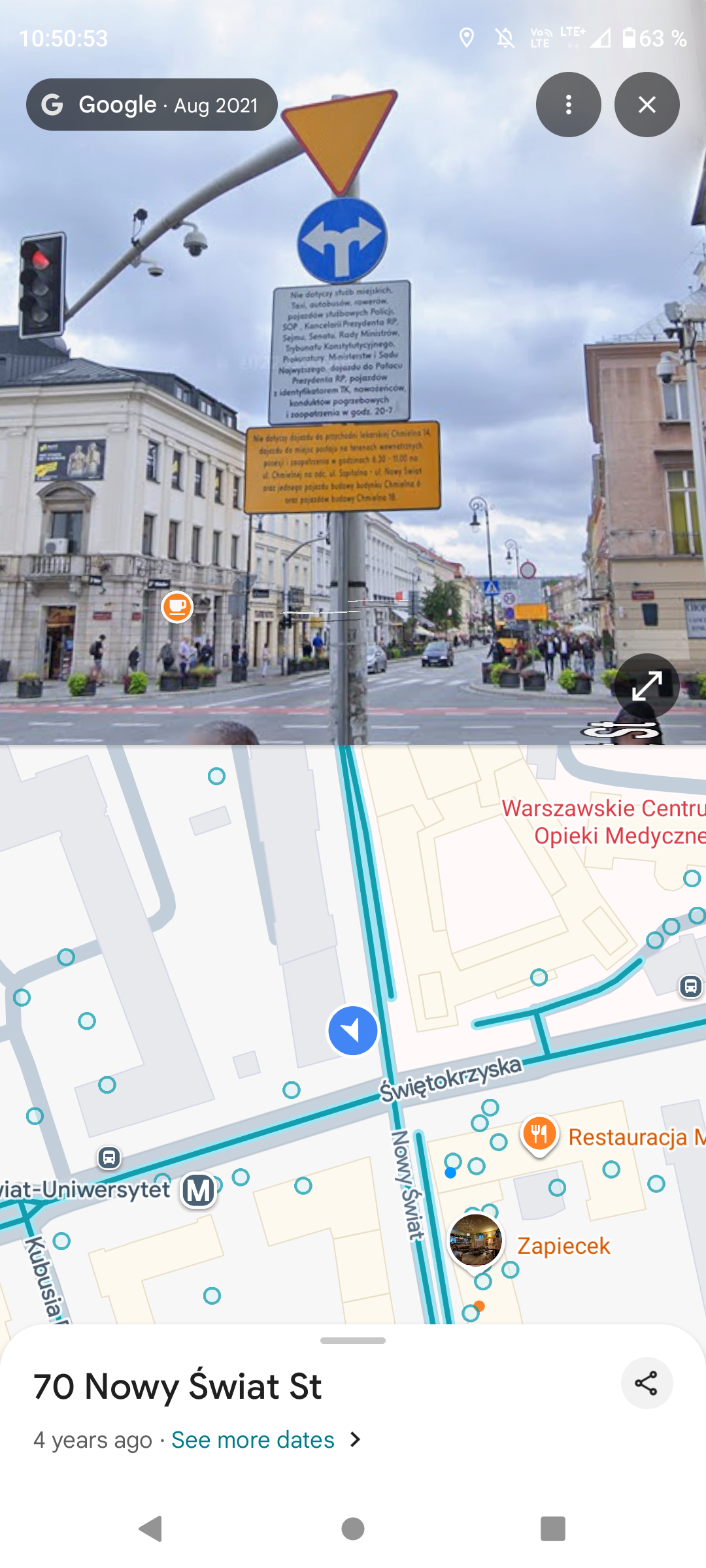
Except in NL you guys actually have someone sit and think about the flow of traffic, in most other countries the design is usually pretty much random. In my parents' city in Poland they decided to turn off the traffic lights at night and the result is much higher number of accidents. Funnily, my father failed to yield the right of way exactly when talking about the issue. Yes, theoretically all intersections do have full set of signs, but in practice the visibility of those signs is extremely limited.
> Same setup in the Netherlands, there are right of way signs everywhere that apply when the lights don't work.
Most places in Poland have this exact setup. And I say most because I have not seen one that does not, but I am guessing they exist. Maybe some of them have bad visibility even?
If one does not respect the yield sign that does not seem a signaling problem.
Some don't in Finland. But then it is back to basic rule of yielding to traffic from right. Which is pretty common on smaller roads so drivers should think about it enough.
The words sum up to "don't go straight unless you have business being there" but still, it really sums up the approach to signaling. Nobody in the whole command chain sat and thought "that might be a tiny bit difficult to parse".
I mostly read those signs as “don't go there unless you already know you can” which as a “tourist” I just assume can't (unless I'm a local, and figure it out).
What I've recently found troubling is the places that use similar signs for emissions controls. With a rental you usually have a recent enough car that you can ignore those.
Being able to distinguish between “low emissions zone, but any car from this decade can go in” and “local traffic only, you need to live in this neighborhood to enter” in a foreign language, bit me a couple of times while traveling.


Unless you're going surfing, 3 kids and their sporting equipment fit in a small hatchback, with room to spare.
reply