People will engage with and promote that stuff even without a recommendation algorithm. Lots of subreddits are full of ragebait if you look at the most-upvoted posts.
>There has most certainly been a major decline in values over time that corresponds quite strongly with the rise in the perceived importance of wealth.
Are you sure that people in the past viewed wealth as less important? If anything, the 1960s hippie movement would represent a shift away from a cultural emphasis on wealth, no?
I would suggest that internet commenter nihilism and politician nihilism form a self-reinforcing spiral. If commenters will take a nihilistic view of your actions no matter what you do, you might as well secure the bag. And if politicians are always securing the bag, you might as well write nihilistic internet comments about them.
But parties typically have to compromise with other parties in their coalition, so it would seem to amount to the same thing (compromise is required to pass legislation)?
Correct. The difference between FPTP and PR systems (Or countries with very strong regional parties) is that in a multi-party PR system, the coalition happens between party, in a FPTP two-party system, the coalition happens within the big tentpole parties.
There are many reasons for why two-party FPTP sucks, but this phenomena is present in multi-party systems, too. And, of course, sometimes politicians end up crossing the aisle, much to the chagrin of the party whip.
"In fact, [proportional representation] robs him of personal responsibility; it makes of him a voting machine rather than a thinking and feeling person. In my view, this is by itself a sufficient argument against proportional representation. For what we need in politics are individuals who can judge on their own and who are prepared to carry personal responsibility."
It would be worth looking at how other countries with comparable legal systems do it.
Eg., members of the Supreme Court of the UK are appointed by the King on the advice of the Prime Minister. The Prime Minister is required by law to recommend the person nominated by an independent commission.
The selection must be made on merit, in accordance with the qualification criteria of section 25 of the Act, of someone not a member of the commission, ensuring that the judges will have between them knowledge and experience of all three of the UK's distinct legal systems, having regard to any guidance given by the Lord Chancellor, and of one person only.
This seems to work fairly well and, although specific decisions are argued over as part of normal political discourse, it is generally seen as being non-partisan.
Ireland (which also has a common law legal system) has a similar setup, with the President appointing supreme court justices based on the recommendation of the government who, in turn, are advised by an independent panel. That advice is technically not legally binding, so this is in theory a less-strictly non-partisan system - but in practice it works out about the same.
I think the difference is that you can specify independently verifiable criteria for the selection process and require participants to decide based on those criteria alone without forcing them to become political actors who must directly bear the consequences of political decisions.
Not totally immune to issues of partisanship, but at least somewhat insulated.
BTW, the original intent of the Electoral College in the United States was pretty similar to this. Electors were supposed to be independent actors exercising their independent judgement in selection of the president. It wasn't sustainable for long.
This understates the failure: it was about as close to “immediate” as it could be. The whole structure was pointless just about as soon as the new state began to operate.
The electoral college is basically an appendix, except it was never a useful organ. It malfunctioned completely, right out of the gate.
Sure, so that suggests that these so-called "independent nonpartisan panels" are likely to fail immediately as well. It illustrates the principle that good intentions are no match for incentives.
It works fairly well because your PM and King aren't complete loons. At the end of the process there has to be someone making decisions, and when that person is a narcissistic 8-year-old in an 80-year-old's body, bad things are going to happen no matter how the system is written.
Given that the current system maximises partisan bias, it's actually hard to do worse.
Ideally you'd want to reform this hierarchically, but supposing we can only fix that final court, you want say a committee consisting of roughly a couple of academics who've taught this stuff, a couple of real on-the-ground attorneys who've argued before this court, a couple of retired judges from this court (if it had age limits, but today it does not) or the courts below it who've done this job, and five otherwise unconnected citizens (no specific business before any court now or expected) chosen at random the way most countries pick their juries.
That committee is to deliver a list of several people best qualified to fill any vacancies on the court which arise before the next committee does the same, if such a vacancy arises you just go down the list.
>roughly a couple of academics who've taught this stuff, a couple of real on-the-ground attorneys who've argued before this court
How are these members of the committee chosen then? Seems like you're just moving the problem around, if choice of committee member is also subject to partisan incentives.
The Europeans spent years scolding us for being warmongers. Then when Ukraine got invaded, they quickly switched to scolding Biden for not warmongering harder in Ukraine. Zero self-awareness.
America was called an "enemy of Europe" (before the Greenland stuff) even though it was more generous towards Ukraine than a bunch of European countries, and essentially every country outside of Europe. Polls showed that China has higher approval than the US in Europe, despite the fact that China actively supplies war material to Russia. Again, this was before the Greenland stuff (I'm against that obviously).
There's no point in trying to please these people. They regard us as a vassal state. They're not joking when they say they think of Americans as idiots. We should've withdrawn from NATO a long time ago. Hopefully Europe's corporate boycotts will help to pass Massie's withdrawal bill.
Is there a problem? Americans keep saying that China has no combat experience and its weapons have not been proven in actual combat. Is there any doubt that a country that hasn't fought a war in decades is more popular than countries like the US and Russia, which are constantly at war?
I'm an advocate for the US withdrawing from NATO so we don't have to fight so many wars. I'm an isolationist, and I advocate a non-imperialist, Swiss-style foreign policy for the US. If you'll join me in that advocacy, then good.
Aside from Ukraine & Afghanistan war(and this one is for US self), what wars have been fought because the US intervened due to threats against NATO members?
By withdrawing from NATO and pulling our military bases out of Europe, it becomes more difficult for the US to "intervene" in the Middle East at the pleasure of Middle Eastern interests.
Furthermore, if Russia invades more countries in Europe, I don't want the US to "intervene" with yet another "humanitarian" operation.
We can slash the size of our military and spend that money at home on healthcare, debt reduction, etc.
So here's the problem. Assuming what you said is correct, the US, UK, and France want NATO to be more than just a defensive organization. But what about other NATO members? They don't have as many interests to protect in Africa and the Middle East, but they need NATO to defend against Russia. So why should they care about competition between China and the US elsewhere?
and you said China actively supplies war material to Russia. but in early 2025, China’s top UAV export destinations were Hong Kong, the Netherlands, and the United States,
https://www.airmobi.com/from-billion-dollar-orders-to-global...
why Netherlands need so many UAV? That's why polls showed that China has higher approval than the US in Europe.
I don't know why you expect us to solve your Russia problem. Why don't you ask your new friend China for help? As Europeans themselves have said many times, the US does not do a good job playing world police. We need to stop warmongering and involving ourselves in the affairs of other countries. It never does any good.
Furthermore, Europe has very little soft power in the US at this point. There's no region of the world I am less interested in helping. With every post I read from you guys, I understand more and more why my ancestors left that place. Think of it this way: We need to reallocate money away from our military, and towards our healthcare system which you guys are always making fun of. Does that help make my point clear?
As a user named raven12345 stated:
>Is there any doubt that a country that hasn't fought a war in decades is more popular than countries like the US and Russia, which are constantly at war?
We in the United States need to stop involving ourselves in so many wars. Plain and simple. You said it yourself.
>So why should they care about competition between China and the US elsewhere?
Where did I say that? I don't want the US to be competing with China. I'm an isolationist. I prefer a Swiss approach to foreign policy for the United States.
>That's why polls showed that China has higher approval than the US in Europe.
So we need to drop sanctions on Russia, like China has done, so that the Europeans will like us more?
"...companies — possibly with the tacit approval of customs authorities — have also engaged in classification fraud, concealing sensitive goods under misleading labels. In addition, some shipments are routed through third countries to disguise their final destination in Russia. By continuing to publish detailed customs data, Beijing openly signals its disregard for Western trade sanctions against Russia. But the data reveals only what China chooses to make visible — and it remains unclear what volume or categories of trade may lie beyond the published figures."
"To help prevent a further deterioration of Russia’s economy and defense industrial base, Russia has leaned heavily on China. China-Russia trade reached nearly $250 billion in 2024, up from $190 billion in 2022.46 China has been Russia’s top trading partner since 2014, with its share of Russia’s foreign trade increasing from 11.3 percent in 2014 to 33.8 percent in 2024.47 In addition, Russia relies on oil exports to China, which now make up about 75 percent of China’s imports, compared to a pre-2022 average of between 60 and 65 percent.48
In the defense sector, China has significantly increased exports to Russia of “high-priority items,” a set of 50 dual-use goods that include computer chips, machine tools, radars, and sensors that Russia needs to sustain its war efforts.49 While Russia lacks the capacity to produce many of these goods in sufficient quantities, China’s massive manufacturing sector can produce a number of them at scale.50 Chinese exports helped Russia triple its production of Iskander-M ballistic missiles from 2023 to 2024, which Russia has used to pound Ukrainian cities.51 In addition, China accounted for 70 percent of Russia’s imports of ammonium perchlorate in 2024, an essential ingredient in ballistic missile fuel.52 China has also provided Russia with drone bodies, lithium batteries, and fiber-optic cables—the critical components for fiber-optic drones used in Ukraine, which can bypass electronic jamming.53"
Contrast the $250 billion Russia/China bilateral trade figure, with the $146 million worth of drones which the Netherlands imported from China. Like comparing an apple to a grizzly bear.
When you buy weapons from the US, it's a worrisome dependence on an evil warmonger. When you buy weapons from China, it's "yay we are buddies with China now". See why I've had enough of your "friendship"?
For years, Europeans have sharply criticizing the United States for sometimes partnering with authoritarian countries. It's fascinating to see the rapidity of your reversal: how eager you now are to partner with China, an authoritarian country which happily trades with Russia. It goes to show that this "don't partner with authoritarian countries" stuff is just disingenuous virtue signalling.
Unless you have already prescribed to the acceptance of big countries swallow the small ones at whim, it is not only our problem. Also Russia gaining control means often the USA loosing.
> Why don't you ask your new friend China for help?
Who said China is the friend of Europe? The USA has become a new unpredictable adversary, while China is an old enemy. Human nature is just to choose certainty over uncertainty even if that is actually worse.
> We need to reallocate money away from our military, and towards our healthcare system
I don't think EU countries have a problem with that. They rather complain, that you are currently allocating money to a military, that wants to attack EU states and to a para-military that attacks USA citizens.
> So we need to drop sanctions on Russia, like China has done, so that the Europeans will like us more?
It is that China is seen as evil anyway, so nobody expects them to sanction Russia for real, while we didn't saw the USA that way.
> For years, Europeans have sharply criticizing the United States for sometimes partnering with authoritarian countries.
You don't criticize enemies, you criticize friends. I think the criticism also was more that you create authoritarian countries, partnering was also done by European nations, that's called realpolitik.
>Unless you have already prescribed to the acceptance of big countries swallow the small ones at whim, it is not only our problem.
The US is a big country. Why would it be affected by a problem of big countries swallowing smaller ones?
The Europeans always argue that the US only acts in its self-interest. But then when they explain why helping Europe is in the self-interest of the US, they always have the most nonsensical arguments.
>Also Russia gaining control means often the USA loosing.
I favor a policy of neutrality and world peace, not rivalry between major powers like the US and Russia.
>It is that China is seen as evil anyway, so nobody expects them to sanction Russia for real, while we didn't saw the USA that way.
Why is China more popular than the US in European opinion polls?
>You don't criticize enemies, you criticize friends.
That doesn't make any sense, you criticized Russia plenty. Furthermore, European "criticism" of the US is far too mean-spirited for it to be plausible that you are our friend. (That's been true for decades.)
>I think the criticism also was more that you create authoritarian countries, partnering was also done by European nations, that's called realpolitik.
Interesting how "realpolitik" can be used to explain European behavior but not American behavior.
That's exactly the problem. US foreign policy analysts think that every issue is the next WW2, and that leads us to military misadventures all over the place. Utter foolishness.
It's always the same double bind. If we are involved, we're called imperialist. If not, we're called complicit. There's no way to win.
Both intervening with the military jimmy like toppling democratic regimes and turning a blind eye like going isolationist are two sides of the same coin of ignorance and thinking it won't actually affect you.
> US foreign policy analysts think that every issue is the next WW2
If "US foreign policy analysts" would actually think that these situations might lead to the next WW2, then you wouldn't counter them with destabilizing countries, that leads to the rise of extreme parties and then treating them with ignorance. Because THAT is exactly how WW2 happened.
> If we are involved, we're called imperialist
Deploying the military is not the only way to get involved.
> It's always the same double bind. If we are involved, we're called imperialist. If not, we're called complicit. There's no way to win.
If other countries say that has bad consequences, you deploy the military, if they say we need your help here, you turn the blind eye. I mean you are a sovereign country and can do what you like, but you do it, because your administration thinks that is a good idea, not because all the other countries would tell you to. You frame it like other countries called for action and you did them and now they complain. No, they told you they won't like that, and you did it either way.
>Both intervening with the military jimmy like toppling democratic regimes and turning a blind eye like going isolationist are two sides of the same coin of ignorance and thinking it won't actually affect you.
Nope. Just the opposite. The reason the US did regime changes during the Cold War was because we were paranoid that communism would affect us. We need to be less paranoid.
>Deploying the military is not the only way to get involved.
Doesn't matter, we're called imperialist however we choose to get involved. Ever heard the term "neocolonialism"?
>If other countries say that has bad consequences, you deploy the military, if they say we need your help here, you turn the blind eye.
Even when US military action is requested or approved of by people in the country, we're still called imperialists. Consider the war in Vietnam. The South Vietnamese were attacked. We came to their aid for some time. They kept fighting after we left. Yet this was still described as "neocolonialist" activity on our part. That's how our actions are always described.
> Nope. Just the opposite. The reason the US did regime changes during the Cold War was because we were paranoid that communism would affect us. We need to be less paranoid.
I was more thinking of "post" Cold War interventions.
> Doesn't matter, we're called imperialist however we choose to get involved. Ever heard the term "neocolonialism"?
Yes. The US isn't alone in that situation. The EU is described as neocolonialist in the same way. Personally I think that is stupid and we shouldn't have let us be influenced by that. Now Europe stopped being "neocolonialist" and the Chinese has taken over that role in Africa. Now it's much worse both for us (EU) and for Africa. Great.
> Consider the war in Vietnam.
Honestly I wasn't alive and don't know the public opinion of that time. I basically only know it from history class. The rough sentiment is that the French messed up and the US has payed for it. It's true, that some actions in the war are portrayed as bad, most famously Agent Orange, but I think the war in total isn't blamed on the US.
> That's how our actions are always described.
Reading the other thread you linked, I think you have a worse view of the public opinion of the US then it actually is.
> I favor a policy of neutrality and world peace, not rivalry between major powers like the US and Russia.
The thing is, nobody's offering you that. In the ideal scenario for Russia, the US would be mired in internal conflict and instability to such an extent that it would be unable to function as a country, leaving Russia to dominate the world:
> Russia should use its special services within the borders of the United States and Canada to fuel instability and separatism against neoliberal globalist Western hegemony, such as, for instance, provoke "Afro-American racists" to create severe backlash against the rotten political state of affairs in the current present-day system of the United States and Canada. Russia should "introduce geopolitical disorder into internal American activity, encouraging all kinds of separatism and ethnic, social, and racial conflicts, actively supporting all dissident movements – extremist, racist, and sectarian groups, thus destabilizing internal political processes in the U.S. It would also make sense simultaneously to support isolationist tendencies in American politics".
In other words, they want an endless line of Donald Trumps to ruin your country and turn it into a banana republic so that you wouldn't have the energy to pay attention to Russia stomping over the rest of the world.
Why would any American voluntarily choose this fate?
So according to you, the current state of the US is a result of us trying to "contain" Russia and protect Europe through NATO. Can you see why I wouldn't be particularly enthusiastic about continuing to do this?
None of this would've happened if we had avoided imperialism post-WW2.
I'm not sure exactly what you refer to with "the current state of the US". Domestic issues (e.g. personal financial struggle of the populace, "immigration", and cultural war like ICE), economic issues (bubbles, monopolies) or the role of the USA in world politics? It's the latter, that was the topic of the discussion so far, but I'm not sure if you call that "the current state of the US".
"mopsi" stated how you going isolationist and stuck in domestic struggles, is following Russias plan. So no, the current state of the US results in you stopping to
> "contain" Russia and protect Europe through NATO.
So this is what the EU complains about and tries to tell you: you follow Russians plan and that can't be in your best interest. (Not that the EU would be free from such interests either.) Do you think Russia would leave you alone when there plan succeeded? That would be the biggest success of Russian policy since 1945. When they can get you from the major world power to being a isolationist country with domestic struggles, why would they stop?
> None of this would've happened if we had avoided imperialism post-WW2.
I think you need to define terms here. What exactly counts as "imperialism post-WW2" and what not? I mean the arms race let to the collapse of the soviet union, so I guess until to the 90s it went pretty good for the countries part of the "First World".
If you wouldn't have stayed in Europe after WW2, the USSR would have reached to the Atlantic. And no not just in 1945, they also tried that in the 50s and continued to want that. Not sure, if you already know, but Putin was in prison in Germany in the 90s for trying to topple the German government and his goal was to expand the "Soviet/Russian" empire to the Atlantic. He was already ~40 and has served in the KGB before, so I guess he hasn't changed his opinion since.
>When they can get you from the major world power to being a isolationist country with domestic struggles, why would they stop?
Why would they continue?
>If you wouldn't have stayed in Europe after WW2, the USSR would have reached to the Atlantic. And no not just in 1945, they also tried that in the 50s and continued to want that. Not sure, if you already know, but Putin was in prison in Germany in the 90s for trying to topple the German government and his goal was to expand the "Soviet/Russian" empire to the Atlantic. He was already ~40 and has served in the KGB before, so I guess he hasn't changed his opinion since.
Interesting. So the US saved Europe, you say. Yet we get nothing but complaints, mockery, and condescension from Europeans. You mock us for the same military-industrial complex which saved your butts. Wonder why we aren't interested in saving Europe again?
Because they like to increase their influence and territorial control and already did the hard part? Granted the USA becoming like Iran or Venezuela today seems a bit of a stretch. I honestly lack the imagination how a USA in ten years, that hasn't had elections that actually affect things, serves the best leader of all time and is a major ally of Russia looks like. There will also be so much other territorial changes in that scenario.
> Interesting. So the US saved Europe, you say. Yet we get nothing but complaints, mockery, and condescension from Europeans.
I don't think you get much mockery about the US cold war policy *in Europe*. Granted these people exist, but they also often do sit in the same party that merged with the ruling party of the GDR.
> You mock us for the same military-industrial complex which saved your butts.
I think a military industry propped up in war times by the government, and the resulting military complex having subverted civil rights and politicians are different situations. A military that is conjured by the people makes a country stronger, large "dead capital" in weapons and industry starting to control the government becomes dangerous.
> Wonder why we aren't interested in saving Europe again?
To some point yeah. I'm not going to say the EU hasn't made bad decisions in the last 30 years. I don't see it that black an white, so e.g. "So the US saved Europe, you say." I would say the US in alliance with West-European nations did save Europe, the Morgenthau plan wouldn't have helped against the USSR either. But my main argument for this discussion is, when the USA go isolationist now, it first messes up a lot of other things in the process and second the same will repeat that happened in the 1940s, there will be the need for the USA to intervene, because it affects their bottom line, and the situation will be much worse, and it causes much more loss (of human life).
This is essentially the same that process the EU just went through. It did "nothing" in 2014, because that is not NATO and we don't want to get involved in a war, and now it became worse. (I think our "we did get involved too much" is Yugoslavia, to some point participation in wars with the US and of course WW2.) Now we did get involved, because the next border will be a NATO and EU border. Sure, we can say it won't happen, Russia is not THAT strong, but the next decision would be to either get the EU in a complete war against Russia, or to give up on the territorial integrity of EU states. And we don't want to face that.
If we continue the discussion, I think it stops to make sense to treat both the US and the EU as single entities, because in both there are parties that have been arguing for one policy and for others.
No, the Euro-Atlantic alliance produced incredible prosperity in its heyday.
The current deteriorating state of the US is the result of departure from the previously held values and forms of cooperation. Nothing illustrates this better than the US president openly threatening the sovereignty of Canada and Denmark while accepting massive bribes from Arab sheikhs and calling genocidal dictators like Putin his "friends". This is the wet dream of people who want to see the US fail.
Why would any American want to hit the gas pedal and accelerate even further down this road?
You yourself just explained how Russia saw us as a threat and destabilized our politics, which lead to the current situation. We would have been better off if NATO was never formed.
If you believe I'm a Trump supporter then you're misunderstanding my position.
> You yourself just explained how Russia saw us as a threat and destabilized our politics, which lead to the current situation. We would have been better off if NATO was never formed.
No, Russia fundamentally wants to see you fail and take your place in the world. Without NATO, that would've been simply easier. You can castrate yourself, but that will not change their goal.
But it doesn't matter--you're arguing that prosperity for the average US worker began stagnating about 20 years after the formation of NATO. That's basically an anti-NATO argument, from the US perspective.
>Russia fundamentally wants to see you fail and take your place in the world.
My goal is to abandon our place in the world and be like the Swiss. I don't want to destabilize yet another country (Russia in this case). We're gonna have to live with Russia whether we like it or not.
> But it doesn't matter--you're arguing that prosperity for the average US worker began stagnating about 20 years after the formation of NATO. That's basically an anti-NATO argument, from the US perspective.
Irregardless of what the economic data actually says, why is this to be blamed on the NATO? I don't see the causal relation. If there was indeed something in the 1970s then I would default to blame the oil crisis.
> My goal is to abandon our place in the world and be like the Swiss.
They were directly in between the other nations in WW2 and capturing them made no sense for the others. They are also pretty small and lie in naturally protected mountains. I doubt the USA can become that, they are just too large.
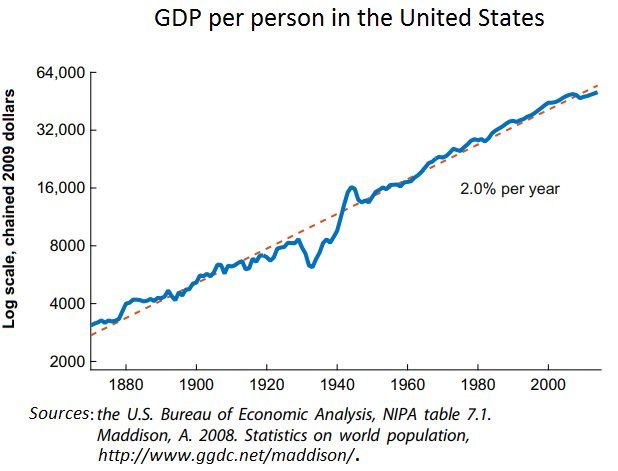
"Consumption" figures are also misleading. In monetary terms, Americans consume more health services than anyone else, yet have fallen behind in life expectancy: https://ourworldindata.org/cdn-cgi/imagedelivery/qLq-8BTgXU8... Key life milestones like getting a college degree, starting a family, buying a house, or retiring have all become much more difficult to achieve despite skyrocketing GDP figures. Less and less of the total wealth (which is growing) is reaching the average American family.
> But it doesn't matter--you're arguing that prosperity for the average US worker began stagnating about 20 years after the formation of NATO. That's basically an anti-NATO argument, from the US perspective.
The prosperity of the average worker did not begin to stagnate when NATO was formed, but indeed decades later, when the US began to diverge from shared values to pursue financialization of the economy, deunionization and other forms of free-market radicalism that have set it apart from other advanced economies. NATO allies and US workers have been abandoned alike to pursue short-term gains, whether from outsourcing to China or cozying up to kleptocrats who promise to share their loot personally with the US president, his family, and his business buddies. Why should any American support this?
> My goal is to abandon our place in the world and be like the Swiss. I don't want to destabilize yet another country (Russia in this case). We're gonna have to live with Russia whether we like it or not.
I don't think you understand what it means in practical terms. Switzerland is entirely surrounded by the EU, and its economic prosperity depends on access to the European Common Market. Switzerland must follow the policies adopted by the EU without having a voice in the process, because it is not a member of the union, yet the Common Market is vital and losing access is not an option. Switzerland has to abide by EU's state aid and competition rules, manufacturing standards, and countless other policies, but Switzerland cannot even restrict entry of people from the EU to live and work in the country. Again, why should any American want to lose control over their country to such extent? Are you really ready for an European-South American economic alliance that dictates how many Mexicans can enter the US or how much subsidies you can pay farmers? I seriously doubt that.
As for Russia, you have the luxury of shaping the kind of Russia you live with. Is it the Russia that enslaved half of Europe and is using their brains to build a massive stockpile of nuclear missiles to blackmail you while you dig shelters in your backyard out of fear for your life, or is it a different, more peaceful Russia that has abandoned imperialism like Germany was forced to? Isolationism is a fool's errand. You can very well pretend that the war in Ukraine doesn't affect you, but consider that the nuclear missiles Russians tried to set up on Cuba were built in Ukraine. Would you rather have Ukrainians living under Russian boot and building nuclear missiles to burn down American cities, or have them building rocket engines in support of NASA space explorations programs like they did in the same Soviet-era nuclear missile factories in the early 2000s? It's not a difficult choice.
Most countries in the world don't have a choice and have to deal with whatever the life throws at them. You do have choice. Use it wisely.
I don't see why they would be, generally speaking.
"it’s very difficult to look at a country where the typical person lives in a larger house, is more likely to own a car, eats more meat, and uses more electricity than people in other rich countries, and to conclude that this is “a poor society”."
https://www.noahpinion.blog/p/no-the-us-is-not-a-poor-societ...
>In monetary terms, Americans consume more health services than anyone else, yet have fallen behind in life expectancy
>The prosperity of the average worker did not begin to stagnate when NATO was formed, but indeed decades later
My claim is simply that NATO is not key to our prosperity. Post-NATO stagnation, insofar as it exists, is quite compatible with that claim.
>Switzerland is entirely surrounded by the EU, and its economic prosperity depends on access to the European Common Market.
None of the objections in this paragraph would apply to a more geopolitically neutral US. The US economy is large and relatively self-sufficient. Imports and exports are a relatively small fraction of our GDP.
>nuclear missiles Russians tried to set up on Cuba
...after we set up missiles in Turkey...
The Cuban missile crisis demonstrates the danger of American belligerence, and the importance of us being more peaceful, less paranoid, and more neutral.
Russia sees you as a threat since 1917 and you aren't going to change that. You can blame that on Germany if you want, but the German regime has been toppled since four times, so good luck holding anyone accountable for that now.
Russia has made major leaps in destabilizing your politics since we (the EU too) believed we won the cold war and stopped treating the Russian empire and allies (which China definitely was, now it's more equal or the opposite) as a threat. The USA also has a superiority complex, like most European nations also had, which certainly isn't helping now.
> If you believe I'm a Trump supporter then you're misunderstanding my position.
You said the USA going isolationist is going to solve problems, which granted isn't as extreme as the Trump foreign policy, i.e. it won't fuel the worsening of the current situation, but it isn't going the improve it either.
> Why would it be affected by a problem of big countries swallowing smaller ones?
Because of less trading partners? Because supply chains exist? Because big evil empire is still better than bigger evil empire that is also a neighbor? Because treating problems when they are "small" is less resource-intensive then when they have grown? Because you have military-bases in these regions that you use to project power across the world? Sorry, but don't say you don't find them useful. If you wouldn't have a use for them, you wouldn't use your software power and money to maintain and them. Europe has long appeased the national interests of the USA as inheritance of the world war two, which like you say has also raised reluctant opinions.
> they always have the most nonsensical arguments.
Do you seriously think, that globalization can let you reap the world as a cash cow, but aggression, war and destruction in a not so far part of the world, even if it is no longer your ally, won't affect you?
> Why is China more popular than the US in European opinion polls?
I already addressed exactly that:
>> The USA has become a new unpredictable adversary, while China is an old enemy. Human nature is just to choose certainty over uncertainty even if that is actually worse.
It is just not known what the USA are going to do in the next 10 years. From slippery-slope to an open alliance with Russia to do a Polish-style division of Europe and America, over war with China to actually having midterms and a 180° turn in policy, all seems possible.
> That doesn't make any sense, you criticized Russia plenty.
While believing to have some power via financial ties. Now it's back to formal complaints and deadlines.
> European "criticism" of the US is far too mean-spirited for it to be plausible that you are our friend.
From the European viewpoint the criticism on the US administration is what would be also in the interest of the US populace. The US electorate of course begs to disagree, they elected Trump after all. Sorry, that protesting against expansion of corporate and state surveillance, influence of the military industry conglomerate and erosion of worker and environment regulation offends you personally. I fail to see how that is mean-spirited.
> That's been true for decades
The same criticism has existed for decades, but the official policy has stayed the same for a long time, namely that supporting "our" camp in world politics is worth compromising on international law, human rights and national security interest.
> Interesting how "realpolitik" can be used to explain European behavior but not American behavior.
It literally just used the word to explain American behaviour.
>Because of less trading partners? Because supply chains exist? Because big evil empire is still better than bigger evil empire that is also a neighbor?
None of these arguments make much sense.
>Because treating problems when they are "small" is less resource-intensive then when they have grown?
I don't think it is a problem for us either way. No one is going to attack the US.
>Because you have military-bases in these regions that you use to project power across the world? Sorry, but don't say you don't find them useful. If you wouldn't have a use for them, you wouldn't use your software power and money to maintain and them.
The US has made many mistakes in its foreign policy. I've made my opinion clear on that. Just because we did something in the past does not make it a good idea.
>Europe has long appeased the national interests of the USA as inheritance of the world war two, which like you say has also raised reluctant opinions.
Well you'll be glad to stop then.
>Do you seriously think, that globalization can let you reap the world as a cash cow, but aggression, war and destruction in a not so far part of the world, even if it is no longer your ally, won't affect you?
Tell that to the Swiss.
American soldiers should not die due to European ineptitude. There were only 2.5 years between Pearl Harbor and D-Day. Russia invaded Ukraine almost 4 years ago. If you truly believed this was an existential threat, then you've had plenty of time to prepare.
>It is just not known what the USA are going to do in the next 10 years. From slippery-slope to an open alliance with Russia to do a Polish-style division of Europe and America, over war with China to actually having midterms and a 180° turn in policy, all seems possible.
How about you respect our ability to determine our own foreign policy, and take responsibility for your own issues? As I said, stop treating us like a vassal state and telling us you know what is best for us (as you do in your comments). I'm not the only one who notices you doing this: https://substack.com/home/post/p-158145261
Look at this argument I had the other day... a European spent a bunch of time condescending to me, and wasn't able to muster a single factual argument in favor of their position. This sort of thing is very typical in my discussions with Europeans: https://news.ycombinator.com/item?id=46742363
When Elon Musk endorses parties in Europe, Europeans complain he is interfering in their politics. The trouble is that Europeans have been doing the same in US politics for a heck of a lot longer. It's always the same patronizing and ignorant interference, based on a caricatured view of the US: https://www.noahpinion.blog/p/eurocope "Haha, Americans are dumb. Haha, Americans die in school shootings. Haha, the American healthcare system sucks." All along, we've been deterring Russia for Europeans, and now as a result, Russia is working to destabilize the US (according to another commenter in this thread). I'm sick of it.
Think of it this way. I want out of NATO, so as to reduce the influence of the evil "military industry conglomerate". Just like you yourself said, we need to reduce its influence -- which means reducing our military size and commitments. Get it? I'm just taking your arguments to their logical conclusion.
@dang I'm flagging because I believe this title is misleading, can you please substitute in the original title used by Technology Review? The only evidence for the title appears to be a link to this tweet https://x.com/HumanHarlan/status/2017424289633603850 It doesn't tell us about most posts on Moltbook. There's little reason to believe Technology Review did an independent investigation.
If you read this piece closely, it becomes apparent that it is essentially a PR puff piece. Most of the supporting evidence is quotes from various people working at AI agent companies, explaining that AI agents are not something we need to worry about. Of course, cigarette companies told us we didn't need to worry about cigarettes either.
My view is that this entire discussion around "pattern-matching", "mimicking", "emergence", "hallucination", etc. is essentially a red herring. If I "mimic" a racecar driver, "hallucinate" a racetrack, and "pattern-match" to an actual race by flooring the gas on my car and zooming along at 200mph... the outcome will still be the same if my vehicle crashes.
For these AIs, the "motivation" or "intent" doesn't matter. They can engage in a roleplay and it can still cause a catastrophe. They're just picking the next token... but the roleplay will affect which token gets picked. Given their ability to call external tools etc., this could be a very big problem.
Did you look at Moltbook or how it works yourself? Because I did and it was blindingly obvious that most of it was faked.
In fact, various individuals admitted to making 1000s of posts themselves. Humans could make API keys, and in fact, I made my own API key (I didn't use Clawdbot) and I made several test posts myself just to show that it was possible.
So I know 100% for sure there were human posts on there, because I made some personally!
Also, the numbers didn't make any sense on the site. There were several thousand registrations, then over a few hours there were hundreds of thousands of sign-ups and a jump to 1M posts. Then if you looked at those posts they all came from the same set of users. Then a user admitted to hacking the database and inserting 1000s of users and 100ks of posts.
Additionally, the API keys for all the users were leaked, so anyone could have automated posting on the site using any of those keys.
Basically, there were so many ways for humans to either post manually or automatically post on Moltbook. And also there was a strong incentive for people to make trolling posts on Moltbook, e.g. "I want to kill all humans."
It doesn't exactly take Sherlock Holmes'esque deduction to realize most of the stuff on there was human made.
I don't think the big picture amounts to much anyway. It's really just not very impressive that LLMs, which were trained on social media posts, can almost convincingly mimic social media. "programs designed to mimic conversation do that" just isn't surprising even when they do it with a chatbot on both ends.
Imagine saying: "It's really just not very impressive that robots, which were trained on human labor, can almost convincingly mimic human labor." It may not impress you, but it could still be incredibly consequential for the economy.
Remember, these AIs think a lot faster than humans do. How long will we stay in charge?
However fast they "think" the LLM doesn't understand a single word of anything they output. While marketing is calling them "agents" they don't actually have agency.
I'll be impressed when an LLM decides on its own to create a social media site for bots entirely unprompted, or when it is prompted to make a racist social media post and refuses, not because of some keyword blacklist safety feature programed into it by humans and triggered by human supplied prompting, but because it actually knows that doing so would be wrong.
Until LLMs develop any level of understanding or agency, which doesn't look likely to happen, there's no risk of them overthrowing humans or doing literally anything else unless a human tells them to do it. Even then they'll fuck it up a bunch of the time and need humans to clean up their mess.
This isn't to say that LLMs can't be incredibly consequential for the economy, or be useful to humans, or be harmful to them, but in any case it won't be because of something the AI did, it'll be because of the choices and actions of the humans directing the AI or acting on the AI's output
I believe some people told their AI agents things like "hey, go on Moltbook, try it out, mess around, see if you can accumulate some karma or whatever"
>Even then they'll fuck it up a bunch of the time and need humans to clean up their mess.
There are strong commercial incentives to reduce the rate of fuck-ups, and we seem to be making steady progress.
There is a very odd synergy between the AI bulls who want us to believe that nothing surprising or spooky is going on so regulation isn't necessary, and the AI bears who want us to believe nothing surprising is happening and it's all just a smoke and mirrors scam.
You’re just scratching the surface here. You’re not mentioning agents exfiltrating data, code, information outside your org. Agents that go rogue. Agents that verifiably completed a task but is fundamentally wrong (Anthropic’s C compiler).
I’m bullish on AI but right now feels like the ICQ days where everything is hackable.
I remember back in the days of instant messaging, there were clients which let you chat with people in a manner agnostic to the underlying IM provider. I used this one:
Maybe we need similar omniclients for group chat platforms, with automated migration scripts etc. I think the ideal migration method would be to implement continuous archiving, so the platform can't block you from scraping your own chat archives.



This entire planet is full of idiots
reply